How to Test Food Grade Tableware: A Complete Guide for Buyers
When sourcing tableware for international markets, one of the most critical factors is ensuring it meets food-grade safety standards.
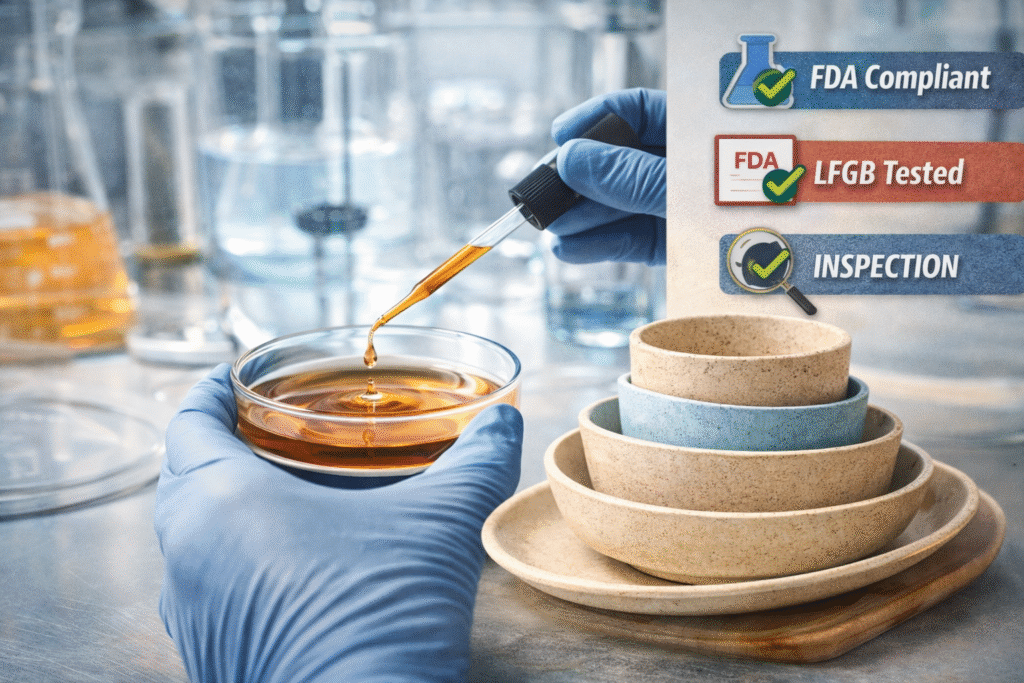
Understanding how to test food grade tableware helps importers, wholesalers, and brands avoid compliance risks, ensure product safety, and build customer trust.
How to Test Food Grade Tableware (Quick Overview)
To verify food-grade safety, testing typically includes:
- Material composition testing
- Chemical migration testing
- Odor and taste evaluation
- Heat resistance testing
- Certification verification
👉 Let’s break down each method in detail.
1. Material Composition Testing
This test ensures the raw materials used are safe for food contact.
What to Check:
- Food-grade plastics (PP, etc.)
- Natural fibers (e.g., wheat straw)
- Absence of harmful additives
👉 Poor materials are the root cause of most safety issues.
2. Chemical Migration Testing
This is the most important test for food safety.
Purpose:
To measure whether harmful substances transfer into food.
Common Tests:
- Heavy metals
- BPA
- Phthalates
3. Odor and Taste Testing
Especially important for EU (LFGB standard).
What It Detects:
- Chemical smell
- Taste contamination
👉 High-quality tableware should be odorless and tasteless.
4. Heat Resistance Testing
Tests whether the product can withstand temperature changes.
Typical Range:
- -20°C to 120°C
What to Observe:
- Deformation
- Cracking
- Surface damage
5. Durability Testing
Ensures the product can handle daily use.
Includes:
- Drop tests
- Pressure tests
- Repeated use simulation
6. Certification Verification
Always request official documentation.
Key Certifications:
👉 Make sure reports are valid and up-to-date.
How To Test Food Grade Tableware for Buyers Can Perform Basic Testing
Even without a lab, you can do simple checks:
✔ Visual Inspection
- Smooth surface
- No defects
✔ Smell Test
- No chemical odor
✔ Hot Water Test
- No deformation
- No odor release
🔗 Recommended Solution for Buyers
Looking for reliable food-grade tableware supplier?
We provide:
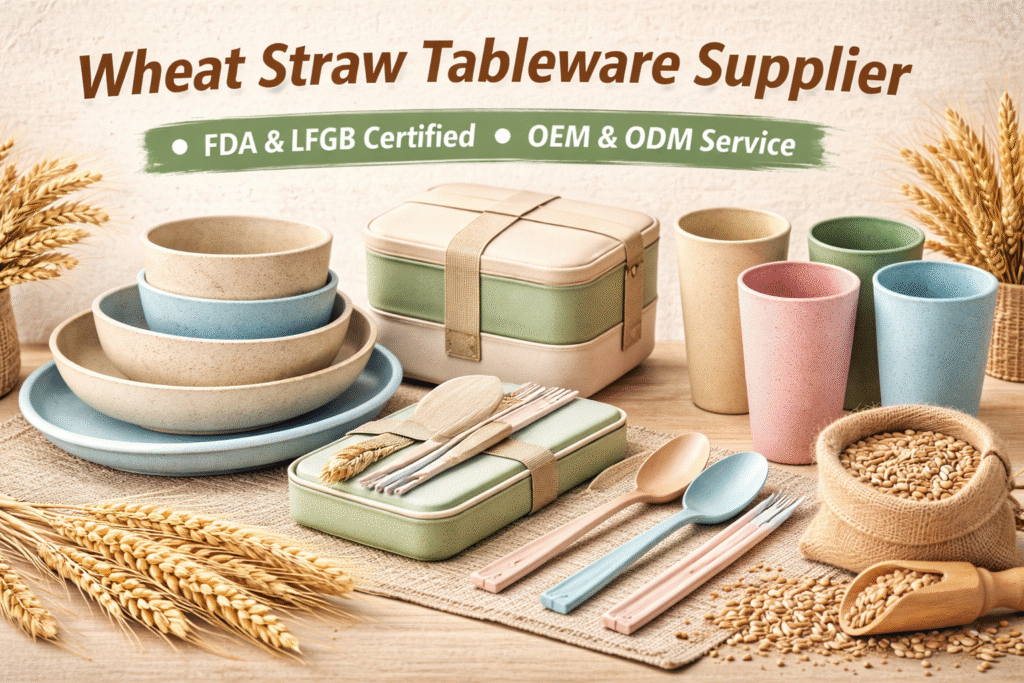
- FDA & LFGB certified products
- Full lab testing reports
- Strict quality control
- OEM & ODM customization
👉 Contact us today for free samples and quotations.
Why Food Grade Testing Matters
For B-end buyers, testing ensures:
- Compliance with regulations
- Reduced product risk
- Better customer satisfaction
- Stronger brand reputation
Final Thoughts
Knowing how to test food grade tableware is essential for safe and successful sourcing.
👉 Always combine:
- Lab testing
- Certification verification
- Supplier evaluation
This ensures your products meet global standards and market expectations.
FAQ
1. What is food grade tableware?
Tableware safe for direct food contact without harmful substances.
2. What is the most important test?
Chemical migration testing.
3. Can I test without a lab?
Basic checks are possible, but lab testing is required for certification.
4. Which certification is needed?
FDA for the U.S., LFGB for Europe.
CONTACT US

Bulk Wheat Straw Dinnerware Order: 30 Supplier Questions
Ask these 30 bulk wheat straw dinnerware order questions before you sign. Avoid costly mistakes with our supplier checklist. Send your inquiry with confidence now.

Complete Wheat Straw Dinnerware Product Line: Build Guide
Build a complete wheat straw dinnerware product line with plates, bowls, cups and cutlery. Learn assortment strategy, SKU planning and margin optimization. Get your line quote.

Wheat Straw vs PLA vs Bamboo Tableware: Material Guide
Compare wheat straw vs PLA vs bamboo tableware for B2B sourcing. Learn heat resistance, cost, and safety differences. Get material recommendations now.

Kids Wheat Straw Tableware: Safety, Design & Packaging Guide
Kids Wheat Straw Tableware: Safety, Design & Packaging Guide If you are a brand owner or distributor entering the children’s market with kids wheat straw tableware,

OEM vs ODM Wheat Straw Tableware: Which Model Wins?
OEM vs ODM Wheat Straw Tableware: Which Model Wins? The first question every new brand owner asks me is not about colors or materials. It

Diagnosing Wheat Straw Tableware Quality Issues: Odor, Color & Brittleness
Diagnose and fix wheat straw tableware quality issues — odor, color difference, and brittleness. Root cause analysis with factory troubleshooting protocols. Download our QC standard.