Description
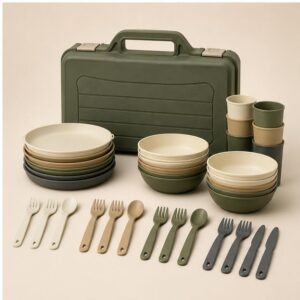
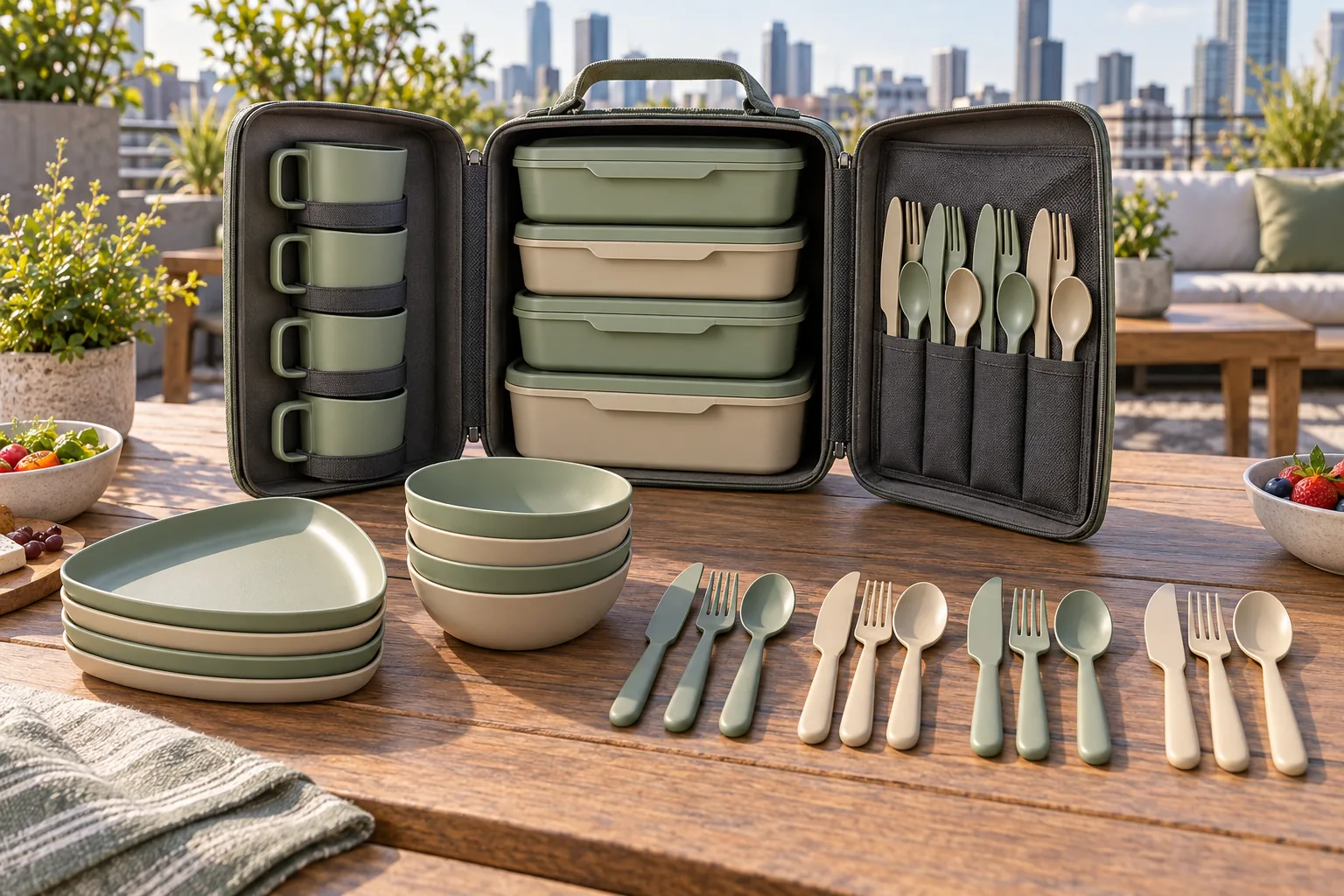
Book-case camping dinnerware set: this configurable family concept organizes personal place settings, shared storage and a detachable utensil sleeve across a central compartment and two hinged wings. The final component combination, materials, dimensions, case interfaces, artwork, packaging and market evidence remain to be confirmed for the project.
PRODUCT PARAMETER
| Product concept | Book-case family camping dinnerware set for configurable four-user programs |
|---|---|
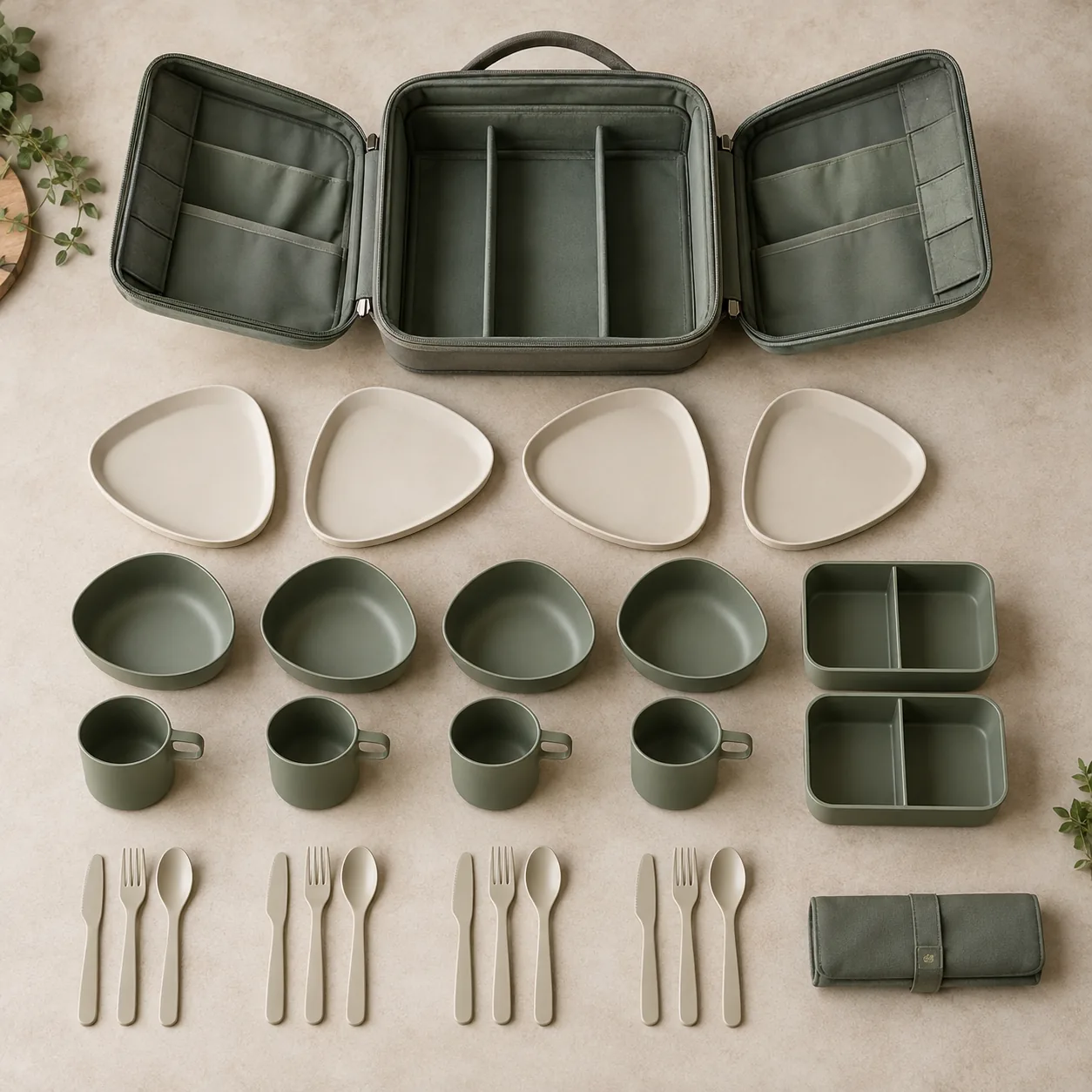
| Reference components | Rounded triangular plates, nesting bowls, low handled cups, selected polymer utensil groups, divided lunch boxes, detachable utensil sleeve and expanding case |
| Material direction | PP-oriented dinnerware concept with separate textile, reinforcement and retention parts; exact formulations to be confirmed for the project |
| Storage architecture | Central compartment with two hinged side wings and removable retention zones |
| Color direction | Sage, warm sand and charcoal; production colors to be confirmed for the project |
| SKU, dimensions, capacity and weight | To be confirmed for the project |
| Logo and decoration | Position and process subject to component surface, artwork and feasibility review |
| Packaging | Retail presentation and transit pack to be confirmed for the project |
| MOQ, price and lead time | To be confirmed for the project; no universal values are stated |
| Markets | Europe, North America, Australia and comparable B2B programs, subject to destination requirements |
REFERENCE CONFIGURATIONS
The book-case family camping dinnerware set is a development direction for buyers who want a complete family allocation to open as an organized workstation. It is a concept/application program, not a stocked SKU, customer order, factory photograph or proof of tested compatibility.
| Program direction | Individual group | Shared/storage group | Project control |
|---|---|---|---|
| Four-user dining program | Plate, bowl, handled cup and selected utensils for each user | Center nest, side-wing pockets and case | Meal matrix, piece count and packed drawing |
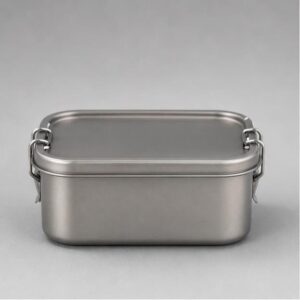
| Family meal-and-storage program | Four coordinated place settings | One or two divided lunch boxes and detachable sleeve | Container task, closure boundary and clearance |
| Rental or guided-use program | Color-grouped settings for visual counting | Replaceable zones and controlled component codes | Loss plan, cleaning workflow and service packs |
| Retail assortment variant | Channel-selected dinnerware shapes | Case finish, insert, carton and artwork | Shelf target, evidence file and sample sequence |
Book-case camping dinnerware set architecture
The defining direction is a low central compartment joined to two side wings by textile living hinges. When opened, the wings expose plate, cup and utensil zones while the center holds nested bowls or food containers. The layout supports visible inventory and table setup without requiring users to unload a deep vertical bag.
The concept must be engineered around selected components. Plate corners, bowl rims, cup handles, lunch-box lids, hinge radius and zipper clearance can interfere. Compatibility to be confirmed by project sample and drawing.
Hinged storage and retention detail
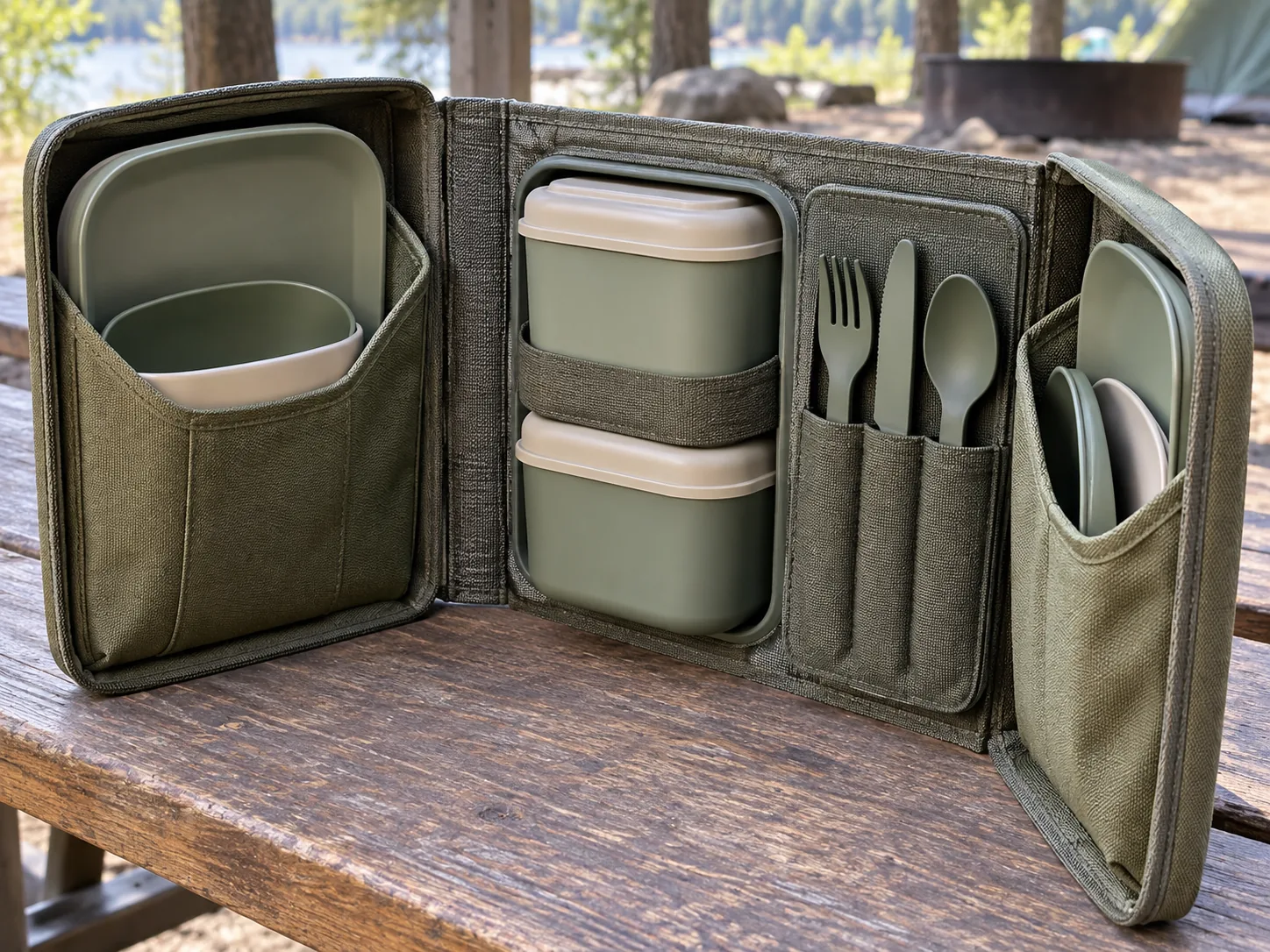
Side-wing pockets can separate flat dinnerware from the center nest, and a detachable sleeve can keep personal utensils grouped. The purpose is organized access, not an unsupported claim of impact resistance, waterproofing or silent transport. Retention geometry and textile construction remain project decisions.
Review the case open, closed, upright and flat. Confirm that components do not press against closure hardware, that wet items have a defined handling instruction and that the wings do not twist when loaded unevenly.
Build the component combination around users
Start with the declared user count and meal tasks. Give each user the required plate, bowl, cup and utensil allocation, then add lunch boxes or shared pieces only when they have a defined role. Do not use accessories merely to increase the headline count.
The central compartment can be planned for divided containers or a bowl nest, while side wings carry flatter pieces. A buyer may also request replacement-friendly color groups. Every version needs its own approved BOM and pack sequence.
Customization decisions for B2B programs
- Component architecture
Choose shapes and quantities from the user/meal matrix. - Case organization
Define center, wing and sleeve responsibilities. - Color program
Approve coordinated or user-coded color references. - Logo placement
Review artwork on actual surfaces before commitment. - Retail packaging
Align component display with the exact shipped BOM. - New tooling review
Assess drawings, interfaces and project feasibility before claims.
Customization may include component selection, color direction, artwork, packaging and evaluation of new geometry. This page does not confirm a universal molding capability or a finished tool. Any new-mold request requires a written technical and commercial review.
Material and compliance boundaries
Material names do not prove food-contact suitability. For EU projects, buyers can scope evidence against Regulation (EC) No 1935/2004 and, where relevant to plastic components, Commission Regulation (EU) No 10/2011. United States programs should reconcile the final materials and uses with the FDA framework for food-contact substances.
These sources do not certify this concept. Evidence must match final resin, color, decoration, component and intended use. The textile case and retention parts need their own specification boundaries and must not be used to imply unsupported dinnerware performance.
Development controls before artwork or tooling
Freeze the component matrix, nested order and case zones before approving decoration. A change to a cup handle or container lid can alter wing thickness, zipper path and carton depth. Record every assumption and mark unknown data “To be confirmed for the project.”
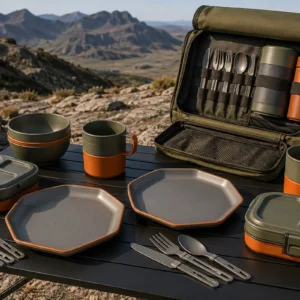
For a new geometry, request dimensioned drawings, interface sections, material direction and a sample plan. Do not approve tooling solely from a scenic image. The image communicates design intent; the controlled drawing and representative sample govern the project.
Sample approval sequence
- Approve the user-to-component matrix and commercial counting rule.
- Review representative dinnerware shapes and meal functions.
- Check center nesting, wing loading and utensil retention.
- Confirm colors and artwork on relevant surfaces.
- Reconcile the complete pack-out with carton and evidence files.
- Sign the final BOM, drawings and golden sample status.
If any component changes after approval, repeat the affected fit, use, evidence and packaging checks. A verbal substitution is not sufficient revision control.
Control every case-to-component interface
The book-style case creates several interfaces that should be reviewed separately. A plate edge meets a wing pocket, a cup handle meets its retention band, a lunch-box lid meets the central wall and the utensil sleeve meets the closed-case envelope. One successful fit does not prove that the complete loaded system will close or reopen consistently.
Create an interface list alongside the BOM. For each contact, identify the two component codes, intended clearance, retention method and evidence source. Where values are not established, state “To be confirmed for the project” and assign the question to drawing or sample review rather than guessing.
Review access as well as storage. A user should be able to remove a component without unloading unrelated groups or forcing a hinge. The correct acceptance method depends on the final construction and use scenario, so this concept makes no universal force, cycle or durability claim.
Align retail packaging with the open-case story
The product image may show every component outside the case, while the shipped set arrives nested and retained. Packaging should reconcile those two views. Use an exact component list, a clear open-case diagram based on the approved configuration and instructions that do not depict accessories excluded from the sales unit.
A retail box may prioritize shelf communication, while an e-commerce mailer may prioritize transit protection and compact volume. Neither direction is automatically included. Buyers should provide channel, carton, handling and display requirements before packaging is quoted or sampled.
Artwork approval should follow physical pack approval. If a bowl, handle or lunch-box lid changes, the component image, quantity list, case diagram and evidence references may also need revision. Hold a final reconciliation among the product BOM, case BOM, artwork file and packed sample.
Plan replacement pieces before launch
A family program can remain useful longer when frequently lost personal pieces are identifiable and replaceable. Assign a component code to each plate, bowl, cup and utensil group, and distinguish shared containers from individual items. Do not promise future availability without a written commercial arrangement.
The case itself also needs a service boundary. Decide whether the utensil sleeve, wing insert or central retention part can be replaced independently, and ensure the parts are tied to the correct revision. A replacement from another case generation may look similar but fail to fit.
For rental and guided-use channels, add a return-count sheet and define what constitutes a complete set. For retail, determine whether replacements are sold, supplied through service or not offered. This decision affects claims, customer support and the spare quantities considered during procurement.
Review handling across the intended user group
The open case occupies table area as well as storage volume. Review whether the two wings can remain open on the target table, whether cups and plates can be removed without crossing another user’s place setting, and whether the central compartment is accessible from the intended side. These observations should become layout requirements rather than promotional claims.
Handled cups and rounded triangular plates create recognizable geometry, but they also establish orientation. Confirm that handles do not catch pocket edges, that plate corners do not concentrate pressure and that the packed order is easy to repeat. Compatibility to be confirmed by project sample and drawing.
If the program includes children or users with limited dexterity, request a separate handling review using the intended component sizes and supervision assumptions. Color and appearance do not establish suitability. The buyer must define the use group and obtain evidence appropriate to the final market and product.
Quotation structure for a book-case program
Request line-level pricing by component family, case construction, retention parts, artwork and packaging. Ask the bidder to identify assumptions and options separately. MOQ, price and lead time remain to be confirmed for the project and must never be inferred from this concept page.
Compare quotations only after quantities, materials, evidence responsibilities and case scope are normalized. One offer may include a detachable sleeve and lunch boxes while another covers only dinnerware, so headline totals can be misleading.
Buyer control checklist
| Check | Question | Why It Matters |
|---|---|---|
| User allocation | Does each declared user receive a complete functional group? | Prevents a partial family claim. |
| Wing loading | Which components belong in each hinged panel? | Controls balance and closure clearance. |
| Center nest | Are bowls and containers compatible in the approved order? | Limits movement and pack-height surprises. |
| Utensil sleeve | Is every tool retained and replaceable by code? | Supports inventory and replenishment. |
| Evidence scope | Do records match final materials, colors and uses? | Generic statements do not cover a complete set. |
| Revision | Are BOM, drawing and sample levels aligned? | Prevents unreviewed substitutions. |
Outdoor application and misuse limits
This concept is dinnerware and food-storage organization, not cookware. No component is represented as suitable for a burner, stove, campfire or direct flame. Temperature, microwave, dishwasher, leak, stain, odor or breakage claims require product-specific evidence.

Related procurement resources
Use the published camping set component guide to define personal and shared quantities. Compare the architecture with the drawer-case camping dinnerware set and the roll-top modular set to understand how case direction changes component access and packing.
Procurement FAQ
1. Is the pictured configuration a stocked SKU?
No. It is a configurable concept/application direction. Availability, specifications and component fit must be confirmed for the project.
2. Can buyers change the family piece count?
Yes, subject to meal, user, pack-out and feasibility review. Every changed configuration needs a controlled BOM and sample.
3. Are dimensions or capacities fixed?
No. They are to be confirmed for the project after component selection and drawing review.
4. Can a custom logo be added?
Logo position and process can be evaluated against the actual material, surface, artwork and intended use. No universal method is promised.
5. Is the case waterproof or impact-tested?
No such claim is made. Define a project-specific requirement, method and acceptance limit if those properties matter.
6. Can new component shapes be assessed?
A new-shape brief can be reviewed, but tooling, feasibility, cost and timing must be confirmed in writing.
7. What information is needed for quotation?
Provide user/meal matrix, component list, material direction, markets, color/artwork brief, case layout, packaging target, evidence request and sample plan.
Develop a book-case family set around your matrix
Send the intended users, meals, components, case zones, materials, destination markets, artwork and packaging brief. We will separate confirmed inputs from project questions before a documented quotation or sample plan.
RELATED SOURCING PATHS
Compare Products and Plan Your Project
Review related product formats, then compare material, set configuration, logo, packaging, testing scope and order quantity with our B2B team.