Description
PRODUCT PARAMETER
| Product concept | Drawer-case camping dinnerware set for configurable four-user programs |
|---|---|
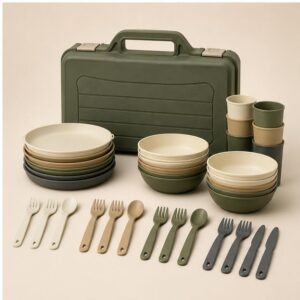
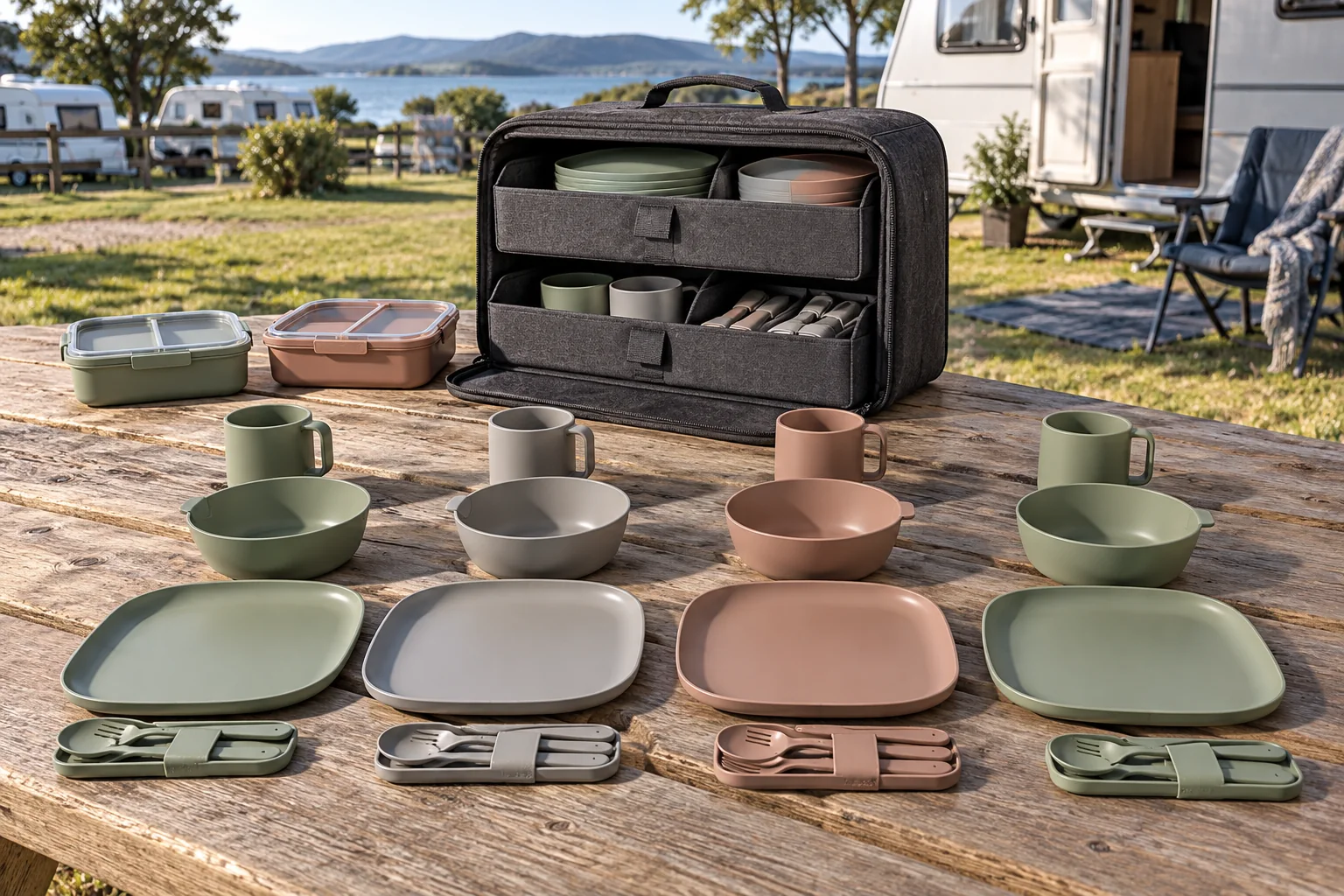
| Reference component direction | Rounded-square plates, deep grip-tab bowls, short handled cups, compact fork/spoon/knife groups, divided lunch boxes, removable trays and semi-rigid carry case |
| Material direction | PP-oriented dinnerware concept with separate textile, reinforcement and retention components; exact formulations to be confirmed for the project |
| Storage architecture | Two removable shallow trays arranged vertically behind a zip-around front panel |
| Reference color direction | Sage, warm gray and muted clay; production colors to be confirmed for the project |
| Dimensions, capacity and weight | To be confirmed for the project after component and packed-set review |
| SKU | To be confirmed for the project |
| Logo and decoration | Placement and process subject to surface, material, artwork and project feasibility review |
| Packaging | Retail presentation and transit pack to be confirmed for the project |
| MOQ, price and lead time | To be confirmed for the project; no universal values are stated |
| Markets | Europe, North America, Australia and comparable B2B programs, subject to destination requirements |
REFERENCE CONFIGURATIONS
The drawer-case camping dinnerware set is a development concept for buyers who want every component visible and removable in groups. It is not presented as a stocked SKU or as proof that any pictured combination has completed tooling, compatibility or compliance review.
| Program | Individual allocation | Shared and packing elements | Decision to confirm |
|---|---|---|---|
| Four-user dining set | Plate, bowl, handled cup and selected utensil group for each user | Two removable trays and zip-around case | Meal tasks, piece count, tray load and repacking sequence |
| Family meal-and-storage set | Four coordinated place settings | One or two divided lunch boxes plus tray allocation | Container role, closure claim and packed clearance |
| Rental or tour set | Color-grouped place settings for quick inventory | Visible drawer zones and replaceable component schedule | Counting workflow, loss plan and cleaning process |
| Retail assortment variant | Channel-selected shapes and utensil combination | Case finish, insert, carton and artwork package | Shelf dimensions, merchandising story and evidence file |
Drawer-case camping dinnerware set with removable trays
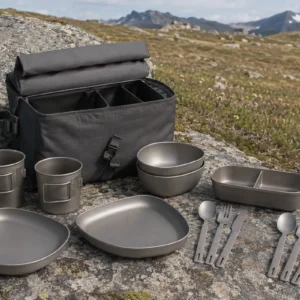
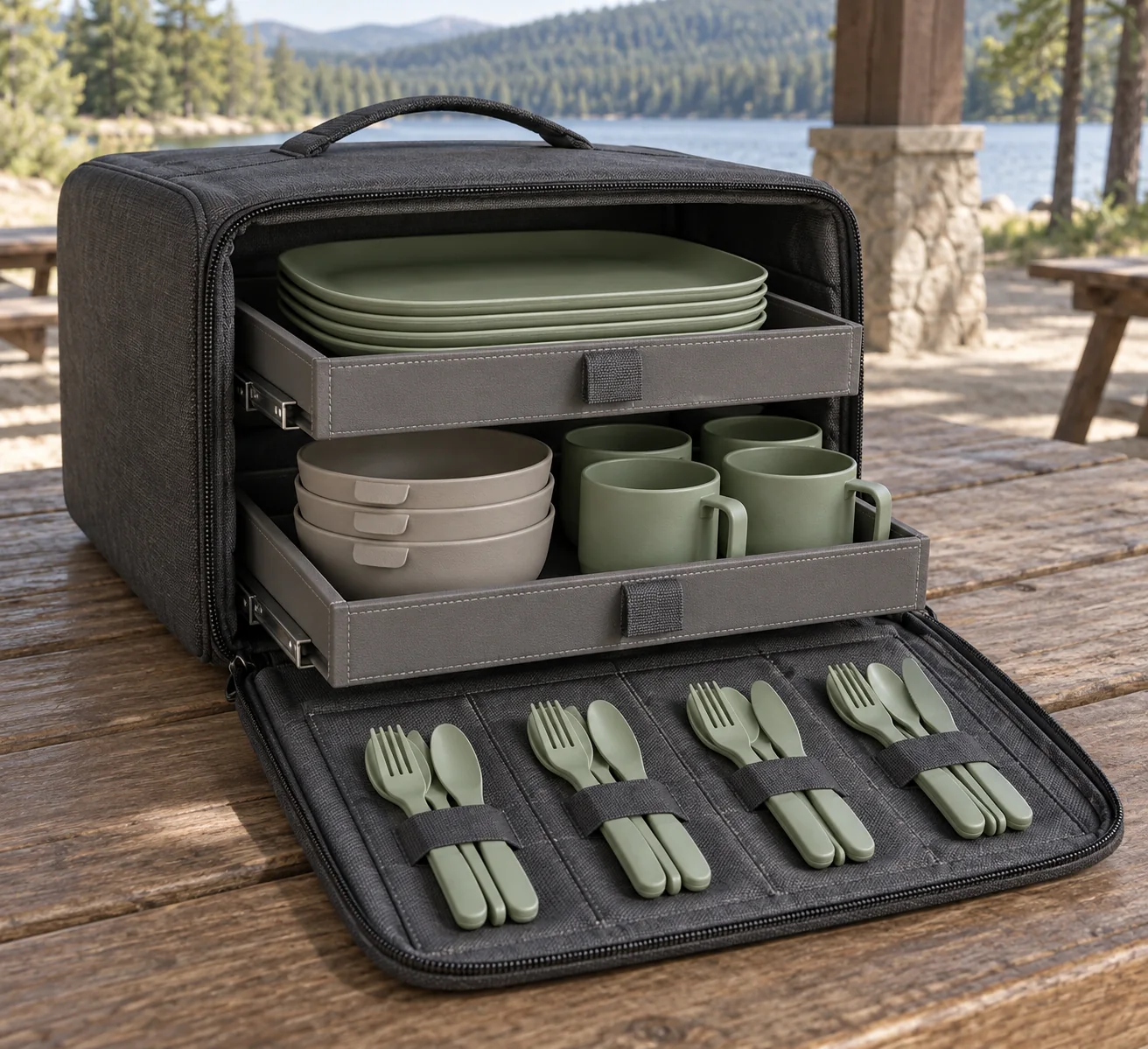
The distinctive design direction is a low semi-rigid case with a front panel that opens to reveal two independently removable trays. Instead of pulling nested pieces from the bottom of one tall bag, a user can remove the plate tray and the bowl-and-cup tray as separate service groups. This may simplify table setup, inventory checks and repacking for family, rental or guided-use programs.
The architecture remains a concept until representative components are measured and sampled. Tray rails, wall stiffness, zipper path, handle load, plate corners, bowl tabs and cup handles all interact. Compatibility to be confirmed by project sample and drawing.
The trays can also support controlled assortment development. A buyer might specify one tray for four individual place settings and the other for food-storage or shared pieces, but every arrangement should be documented in a component matrix. Changing a cup handle or lunch-box lid can affect the complete case envelope.
Drawer retention and repacking logic
The proposed trays use shallow walls and defined zones rather than a single loose cavity. Plates can be retained as a low stack, bowls and cups can occupy a second zone, and utensil bundles can sit in dedicated loops on the inside panel. The objective is organized access, not an unsupported promise of impact resistance or silent transport.
Buyers should test the set upright, flat and during realistic carry movements. Observe whether pieces migrate, whether rims contact hard edges, whether drawer fronts stay aligned and whether a wet component can be separated before storage. Any rattle, abrasion or load claim needs a project-specific method and acceptance limit.
Component combination for a new outdoor set
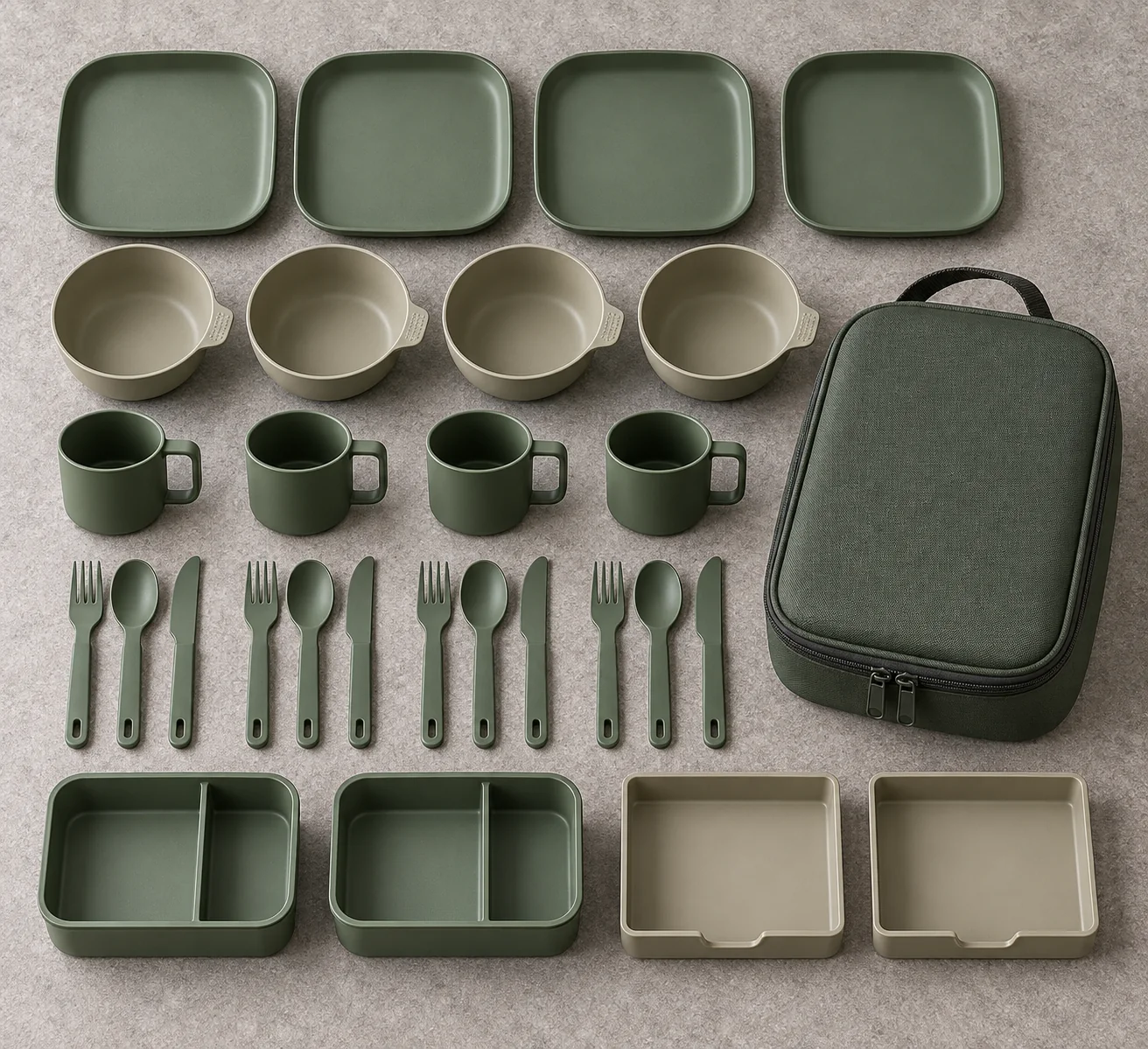
A B2B development brief should start with users and meals, then assign a functional role to every plate, bowl, cup, utensil and container. Buyers can request a 20-piece individual baseline, a 24-piece complete place-setting version or a mixed individual-and-shared program. The commercial count must state whether lids, trays and the case are included.
Naike Dinner can review a proposed combination against verified company records and project inputs. The review separates components supported by available information from adaptations, new shapes, packaging development and any tooling question. It does not assume that a visual concept is producible, compatible or available.
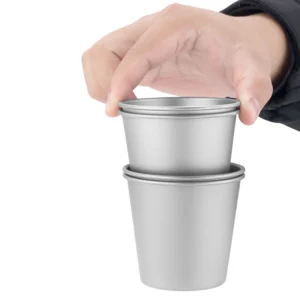
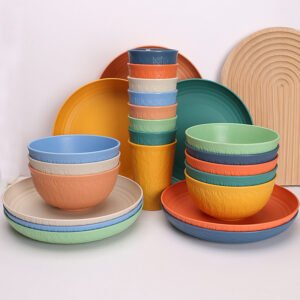
Rounded-square plates provide a different nesting and presentation language from the round shallow plates used in recent concepts. Grip tabs change bowl handling and pack clearance; short handled cups create another interface; removable drawers change the carry sequence. These are material design differences rather than recoloring an existing product image.
Customization decisions for B2B programs
- Component mix
Choose individual, shared, food-storage and organization pieces from an approved matrix. - Shape development
Review existing information first, then identify any geometry requiring engineering or tooling evaluation. - Color system
Coordinate tableware, tray and case colors through controlled targets and approved samples. - Artwork
Assign logo zones by component, surface and decoration method after feasibility review. - Carry construction
Confirm tray access, retention, zipper, handle and internal-cleaning requirements. - Packaging
Develop the retail and transit pack around the approved component and drawer envelope.
Unknown values should remain “To be confirmed for the project.” That includes SKU, exact dimensions, weight, capacity, material grade, color code, artwork size, case construction, carton, MOQ, price and lead time. Keeping open fields visible is more useful than filling a specification table with unverified numbers.
Material and compliance boundaries
The images communicate configuration and use context; they do not establish material identity or regulatory compliance. Each final food-contact component must be mapped to its actual formulation, color, decoration, manufacturing record and intended contact conditions. Carry textiles, reinforcement, zippers and retention parts should be documented separately from dinnerware.
For European programs, buyers can begin evidence planning with Regulation (EC) No 1935/2004 and, when the final articles are plastic, review the scope of Regulation (EU) No 10/2011. For United States programs, the FDA’s primary information on packaging and food-contact substances helps frame the evidence pathway. Applicable requirements must be confirmed for the destination and final product.
No dishwasher, microwave, freezer, leak, stain, impact, load or heat claim is made by this page. Direct flame, stove and burner use are outside the described dinnerware application unless product-specific evidence explicitly supports them. Any proposed claim should be written with conditions and linked to suitable verification.
Development controls before artwork or tooling
First freeze the functional component matrix and counting convention. Next create interface records for nested stacks, grip tabs, cup handles, lunch-box closures, drawer zones and utensil loops. Then perform a representative packing trial before approving the case envelope or retail graphics.
Tooling discussion should identify the exact component that cannot be met by an accepted existing form, the reason for the change, ownership expectations, revision control and validation plan. A request for a different visual outline does not by itself prove that new tooling is necessary or feasible.
Artwork should follow shape and material review because logo area, curvature, texture and contact location affect decoration decisions. Packaging should follow the packed-set trial because drawer depth, handle clearance and insert protection determine the real envelope. The component count must be approved before either package artwork or a commercial piece-count statement is frozen.
Sample approval sequence
A first review sample should answer functional questions rather than imitate final retail photography. Check whether every user receives the intended pieces, whether grip tabs and handles remain accessible, whether drawer removal is intuitive, and whether the case closes without forcing rims, lids or utensils. Record open issues by component and interface.
A later coordinated sample can control color relationships, surface appearance, logo placement and packaging presentation. Approval records should identify exactly which attributes are frozen and which remain provisional. A color-approved plate does not automatically approve a bowl, cup, tray or textile case made by a different process.
The packed sample should be reviewed in the same orientation proposed for transport and merchandising. Lift it by the intended handle, place it in the expected vehicle or storage area, remove each tray, set the table, repack used components and inspect contact points. Observations can then be translated into engineering requirements or acceptance checks.
Quotation structure for a drawer-case program
Request a line for each tableware component, each lunch-box part, each tray, the reinforced case, retention elements, artwork operations and packaging level. This lets buyers compare the same scope and see which additions drive changes. A single set price cannot explain whether a proposal includes identical drawer construction or only a visually similar bag.
Every line should show quantity per set, proposed material status, drawing or sample status, decoration requirement and evidence responsibility. Dimensions, capacities, weights and performance values must come from controlled project data. If they are not established, mark them “To be confirmed for the project” rather than converting an image proportion into a specification.
Ask bidders to identify assumptions and exclusions in writing. A proposal may depend on adapting an existing component, changing the tray depth, using a different case reinforcement or revising the lunch-box arrangement. Those conditions should be visible before samples, artwork or tooling decisions create sunk cost.
Buyer control checklist
| Check | Question | Why it matters |
|---|---|---|
| Component matrix | Does every plate, bowl, cup, utensil, box, tray and case part have a role and quantity? | It prevents the visual concept from becoming an ambiguous quotation. |
| Interface map | Which rims, tabs, handles, lids and retention points touch in the packed set? | Small geometry changes can alter the complete pack-out. |
| Drawer access | Can each tray be removed and returned with the intended load? | Access sequence affects use, wear and repacking. |
| Material record | Is the actual formulation and construction recorded for every final part? | Material names inferred from images are not evidence. |
| Claims | Are cleaning, transport and performance claims linked to defined methods? | It limits unsupported marketing statements. |
| Artwork | Has each decoration zone been reviewed on the approved surface? | Curvature, texture and contact location affect feasibility. |
| Packaging | Does the carton reflect the verified closed case and protection needs? | Concept dimensions cannot establish the shipping envelope. |
| Revision control | Will BOM, drawings, samples and artwork share one revision? | It prevents mixed configurations at approval and production. |
Outdoor application and misuse limits
The drawer case is aimed at vehicle-accessible camping, caravan sites, picnic shelters, parks, rental programs and outdoor catering where organized group service is more important than ultralight carry. Two removable levels may help a group stage components on a table without emptying the entire carrier.
The concept is not automatically suitable for backpacking, open-flame cooking, extreme cold, heavy commercial dishwashing or leakproof food transport. Those applications change weight, material, closure, cleaning and evidence requirements. They should be written into the brief rather than inferred from a campsite image.

Related procurement resources
Use the camping dinnerware component matrix guide to define roles and quantities before selecting tray zones. Compare the operating format in Camping Mess Kit vs Camping Dinnerware Set. Buyers can also review the different carrier logic of the roll-top modular set concept instead of treating two bags as equivalent.
These links support comparison; they do not confirm that components shown on different pages fit together. Compatibility to be confirmed by project sample and drawing. For a documented review of a new combination, send one controlled brief through the Naike Dinner contact page.
Procurement FAQ
Is this drawer-case configuration a finished stock SKU?
No. It is a configurable concept/application direction. Availability, components, dimensions, materials, colors and commercial terms must be confirmed in writing for the project.
Can the two trays use different component combinations?
That is a valid development question. The final allocation depends on component geometry, load, access order and case envelope, and must be confirmed through drawings and representative samples.
Can buyers change the plate, bowl and cup shapes?
Buyers may submit target shapes and functional requirements for review. The response should distinguish verified existing information, adaptation possibilities and any new-development or tooling evaluation.
Are logo and custom packaging options available?
Artwork placement, decoration route and packaging format can be reviewed after surface, material, component and packed-set requirements are defined. No process is promised until feasibility is documented.
Does the case prevent all movement or breakage?
No such claim is made. Retention and protection require a scoped packing and handling test with the approved configuration and agreed acceptance criteria.
What compliance documents are supplied?
The required evidence depends on final materials, articles, colors, decorations, intended use and destination market. Request a document index mapped to the approved configuration rather than a generic certificate statement.
What information is needed for a quotation?
Provide users, meals, component matrix, piece-count convention, material direction, target dimensions or pack limits, colors, artwork, case and tray requirements, packaging, market, evidence needs and forecast context. MOQ, price and lead time remain to be confirmed for the project.
Develop a set around your component matrix
Send the intended users, meals, component list, tray logic, pack target, colors, artwork, market and evidence requirements. We will separate verified options from open development questions and prepare the basis for samples or a written quotation.
RELATED SOURCING PATHS
Compare Products and Plan Your Project
Review related product formats, then compare material, set configuration, logo, packaging, testing scope and order quantity with our B2B team.