
How to Create Your Own Eco-Friendly Tableware Brand: Step-by-Step Guide for Beginners
With sustainability becoming a major global trend, launching an eco-conscious product line is no longer optional—it’s an opportunity. If you’re planning to build a brand, understanding how to create your own eco-friendly tableware brand can help you enter the market faster and more profitably.
This guide walks you through product selection, branding, sourcing, and scaling your eco-friendly tableware business.
Why Start an Eco-Friendly Tableware Brand?
Consumers today prefer sustainable products over traditional plastic.
According to initiatives from United Nations Environment Programme, reducing plastic waste is a global priority.
Key Opportunities:
- Growing demand for eco products
- Strong brand storytelling potential
- Higher perceived value
👉 Wheat straw tableware is one of the most popular entry points.
Step 1: Choose the Right Product Category
Start with high-demand products:
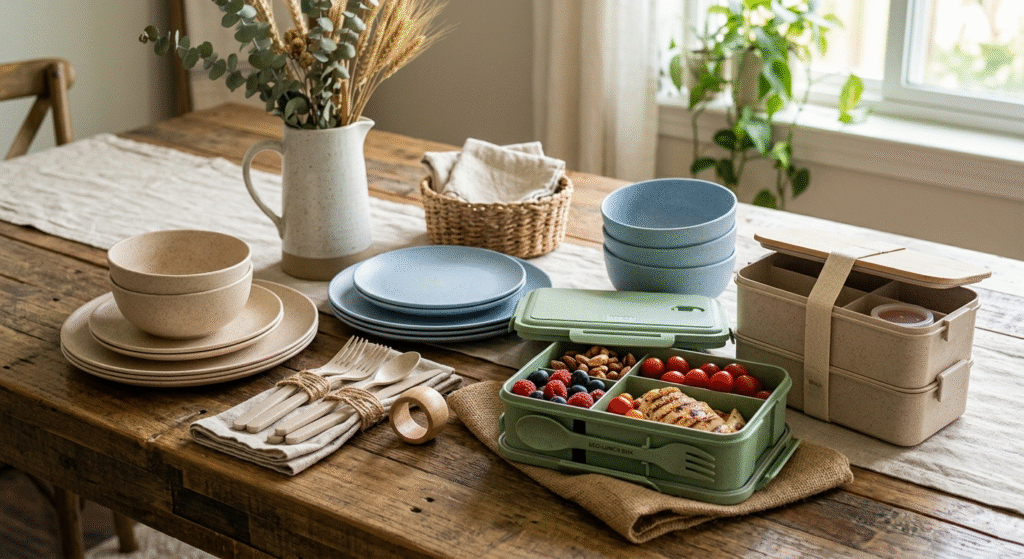
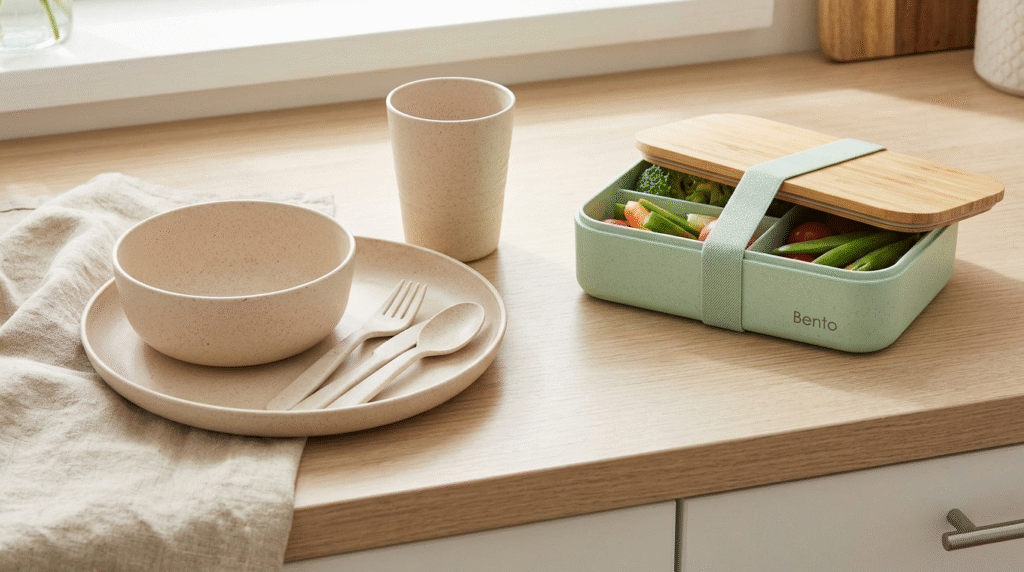
- Wheat straw dinnerware sets
- Lunch boxes
- Cups & bowls
👉 Focus on simple, scalable products first.
Step 2: Define Your Brand Positioning
Ask yourself:
- Who is your target customer?
- What problem are you solving?
- What makes your brand unique?
Example Niches:
- Kids eco tableware
- Outdoor & camping
- Minimalist lifestyle
👉 A clear niche helps you stand out in competitive markets.
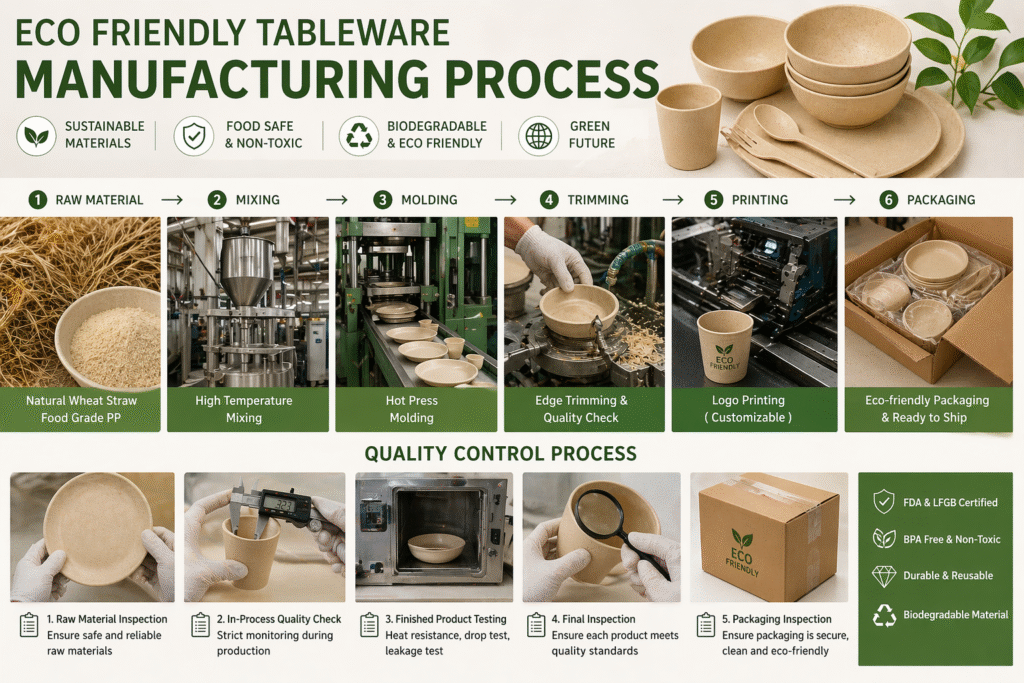
Step 3: Work with the Right Manufacturer
Your supplier determines your product quality and scalability.
What to look for:
- Experience in eco materials
- OEM & ODM capability
- Stable production capacity
- Quality certifications
👉 Explore our solutions:
👉 /wheat-straw-dinnerware-manufacturer
👉 /wheat-straw-tableware-quality-and-certification
Step 4: Customize Your Products (Private Label)
Customization is key to building a brand.
Options include:
- Logo printing
- Custom colors
- Packaging design
- Product shape
👉 Learn more:
👉 /blog-custom-wheat-straw-dinnerware-for-private-label-brands
Step 5: Ensure Certifications and Compliance
To sell globally, your products must meet safety standards.
Key certifications:
👉 Refer to standards from U.S. Food and Drug Administration and European Commission.
Step 6: Build Your Sales Channels
Choose where to sell:
- Amazon / eCommerce
- Retail stores
- Wholesale distribution
👉 Start with one channel, then expand.
Step 7: Create Strong Branding & Marketing
Your brand should communicate:
- Sustainability
- Quality
- Lifestyle
Key elements:
- Clean packaging design
- Consistent brand colors
- Storytelling (eco mission)
👉 This builds emotional connection with customers.
Common Mistakes to Avoid
❌ Choosing low-quality suppliers
❌ Ignoring certifications
❌ Weak branding
❌ No market research
👉 These can delay your brand growth.
🔗 Recommended Solution for Eco-Friendly Tableware Brand
Looking to launch your eco-friendly tableware brand?
We offer:
- OEM & ODM customization
- FDA & LFGB certified products
- Low MOQ for startups
- Full private label support
👉 Contact us today to start your eco brand journey.
Final Thoughts
Learning how to create your own eco-friendly tableware brand is the first step toward building a sustainable business.
👉 Focus on:
- Product quality
- Reliable supplier
- Strong branding
- Market positioning
With the right strategy, you can build a scalable and profitable eco brand.
FAQ
1. What is eco-friendly tableware?
Products made from sustainable materials like wheat straw.
2. Is wheat straw tableware profitable?
Yes, due to growing demand and premium positioning.
3. Do I need certifications?
Yes, especially for U.S. and EU markets.
4. Can I start with low MOQ?
Yes, many manufacturers support startups.
Discuss Your Project
Tell us about your project.

Rental-Fleet Sets: How Many Spares Should Be Held?
Calculate rental camping dinnerware spare parts with buyer-entered loss, damage, deployment, review-cycle, buffer, stock and pack-multiple inputs.

Plan Replacement Pieces for a Portable Dinnerware Line
Plan replacement pieces for a portable dinnerware line with a service matrix that controls demand, compatibility, evidence, packaging and revision risk.
Which Camping Dinnerware Add-Ons Belong in the Base Set?
Use a buyer-side decision table to keep essential camping dinnerware functions in the base set and move optional, channel-specific or unverified add-ons into separate bundles.

Build Good–Better–Best Camping Set Tiers by Function
Build good, better and best camping dinnerware tiers from functional upgrades buyers can verify, rather than cosmetic changes or unsupported claims.

What Makes a Camping Tableware RFQ Quotable?
Use a complete camping tableware RFQ checklist covering controlled components, use conditions, decoration, packaging, commercial terms, evidence and approval fields.

Calculate Landed Cost Without Hiding Replacement Parts
Use a buyer-entered landed-cost model that keeps replacement parts, freight, duty, fees and channel costs visible instead of hiding them in the base set.