
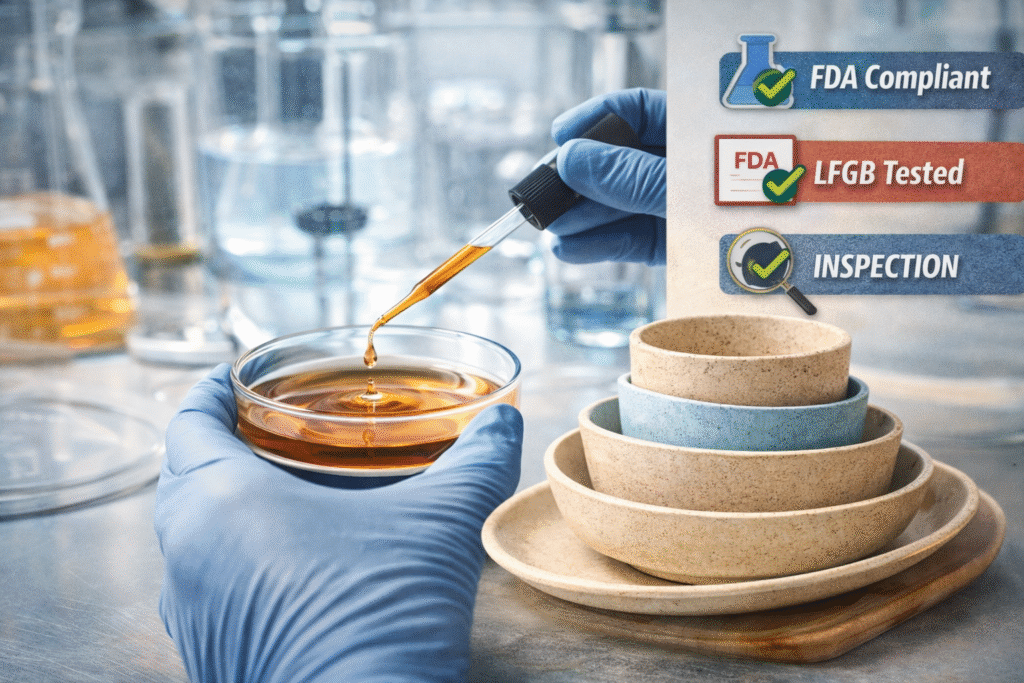
How to Test Food Grade Tableware: A Complete Guide for Buyers
When sourcing tableware for international markets, one of the most critical factors is ensuring it meets food-grade safety standards.
Understanding how to test food grade tableware helps importers, wholesalers, and brands avoid compliance risks, ensure product safety, and build customer trust.
How to Test Food Grade Tableware (Quick Overview)
To verify food-grade safety, testing typically includes:
- Material composition testing
- Chemical migration testing
- Odor and taste evaluation
- Heat resistance testing
- Certification verification
👉 Let’s break down each method in detail.
1. Material Composition Testing
This test ensures the raw materials used are safe for food contact.
What to Check:
- Food-grade plastics (PP, etc.)
- Natural fibers (e.g., wheat straw)
- Absence of harmful additives
👉 Poor materials are the root cause of most safety issues.
2. Chemical Migration Testing
This is the most important test for food safety.
Purpose:
To measure whether harmful substances transfer into food.
Common Tests:
- Heavy metals
- BPA
- Phthalates
3. Odor and Taste Testing
Especially important for EU (LFGB standard).
What It Detects:
- Chemical smell
- Taste contamination
👉 High-quality tableware should be odorless and tasteless.
4. Heat Resistance Testing
Tests whether the product can withstand temperature changes.
Typical Range:
- -20°C to 120°C
What to Observe:
- Deformation
- Cracking
- Surface damage
5. Durability Testing
Ensures the product can handle daily use.
Includes:
- Drop tests
- Pressure tests
- Repeated use simulation
6. Certification Verification
Always request official documentation.
Key Certifications:
👉 Make sure reports are valid and up-to-date.
How To Test Food Grade Tableware for Buyers Can Perform Basic Testing
Even without a lab, you can do simple checks:
✔ Visual Inspection
- Smooth surface
- No defects
✔ Smell Test
- No chemical odor
✔ Hot Water Test
- No deformation
- No odor release
🔗 Recommended Solution for Buyers
Looking for reliable food-grade tableware supplier?
We provide:
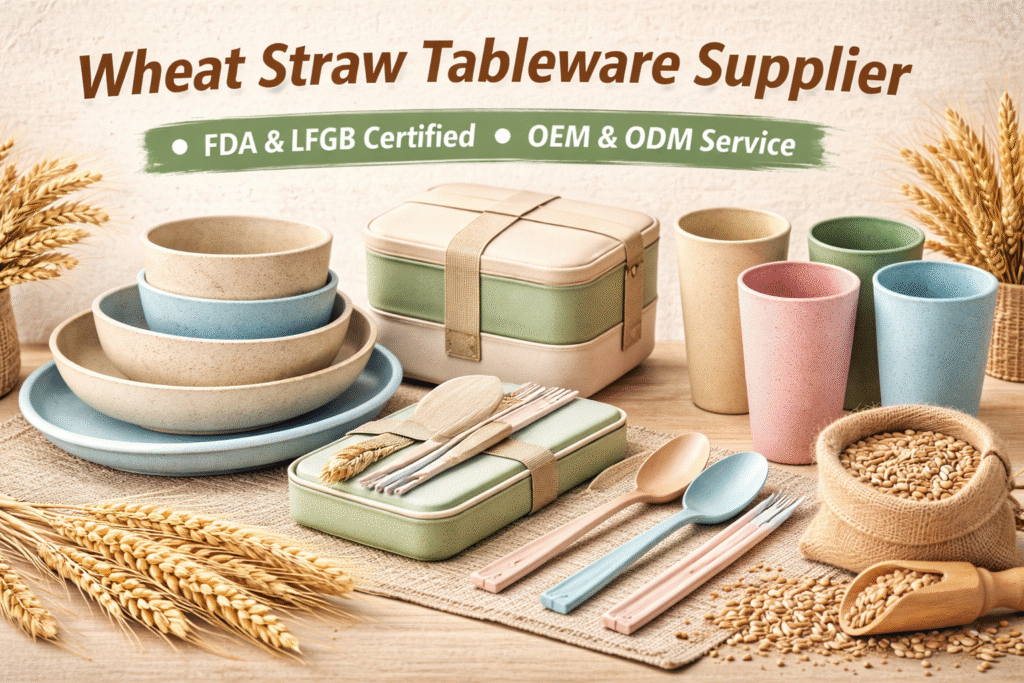
- FDA & LFGB certified products
- Full lab testing reports
- Strict quality control
- OEM & ODM customization
👉 Contact us today for free samples and quotations.
Why Food Grade Testing Matters
For B-end buyers, testing ensures:
- Compliance with regulations
- Reduced product risk
- Better customer satisfaction
- Stronger brand reputation
Final Thoughts
Knowing how to test food grade tableware is essential for safe and successful sourcing.
👉 Always combine:
- Lab testing
- Certification verification
- Supplier evaluation
This ensures your products meet global standards and market expectations.
FAQ
1. What is food grade tableware?
Tableware safe for direct food contact without harmful substances.
2. What is the most important test?
Chemical migration testing.
3. Can I test without a lab?
Basic checks are possible, but lab testing is required for certification.
4. Which certification is needed?
FDA for the U.S., LFGB for Europe.
CONTACT US

Shared Serving Pieces vs Individual Place Settings for Group Camping
A procurement framework for deciding which camping dinnerware components should be issued per person and which should remain shared across a group.
How to Prevent Rattle in a Nested Camping Dinnerware Set
A practical diagnostic for finding and controlling movement, impact and rubbing inside nested camping dinnerware sets without hiding problems behind unsupported claims.
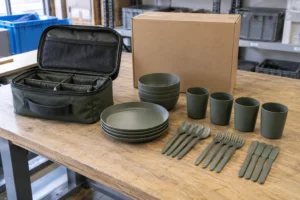
How to Calculate Pack Volume for Camping Tableware
A practical procurement worksheet for measuring the complete camping tableware sales unit, calculating its external cube and separating real pack efficiency from unsupported freight claims.
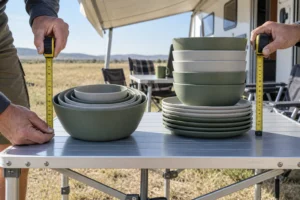
Nesting vs Stacking: How the Two Designs Change Pack-Out
A buyer-focused geometry and pack-out comparison for choosing nested, stacked or hybrid camping dinnerware systems without confusing compact appearance with approved performance.
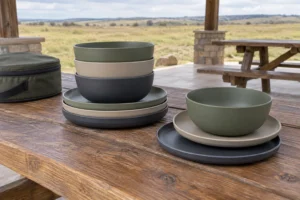
What Makes Camping Dinnerware Truly Stackable?
A procurement acceptance framework for reviewing stack rise, contact interfaces, separation, stability, mixed-component order, drainage and retained pack-out.
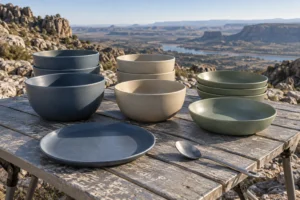
Deep Bowls vs Shallow Bowls for Outdoor Meal Sets
A procurement decision table for selecting deep and shallow camping bowl profiles by meal function, user access, stability, cleaning and packed-set architecture.