OEM vs ODM Wheat Straw Tableware Explained: Which Option Is Right for Your Business?
When sourcing sustainable products, understanding the difference between OEM ODM Wheat Straw Tableware is crucial for your brand’s growth. At Naike Dinner, we provide comprehensive OEM ODM Wheat Straw Tableware services to meet diverse global market demands.
As eco-friendly products continue to gain global popularity, wheat straw tableware has become a fast-growing category for importers, retailers, and private label brands.
When sourcing these products, buyers often face a critical decision:
👉 Should you choose OEM or ODM manufacturing?
Understanding the difference between OEM vs ODM wheat straw tableware is essential for controlling costs, managing risks, and building a competitive product line.
This guide explains everything you need to know—from definitions and cost differences to how to choose the right model for your business.
What Is OEM in Wheat Straw Tableware?
OEM (Original Equipment Manufacturer) means that you provide the product design, and the factory manufactures it according to your specifications.
This model gives you full control over the product.
Key Features of OEM
Custom product design (shape, size, structure)
New mold development required
Exclusive product ownership
High level of brand differentiation
When to Choose OEM
OEM is ideal if you:
Want unique, non-duplicated products
Have your own design or product concept
Plan long-term brand development
Need full customization (structure + appearance)
What Is ODM in Wheat Straw Tableware?
ODM (Original Design Manufacturer) means the factory already has ready-made product designs, and you customize them with your brand.
This is the fastest way to launch products.
Key Features of ODM
Ready-made molds and designs
Faster production time
Lower upfront investment
Easier for beginners
When to Choose ODM
ODM is suitable if you:
Want to test the market quickly
Have limited budget
Need faster delivery
Are new to the eco-friendly tableware business
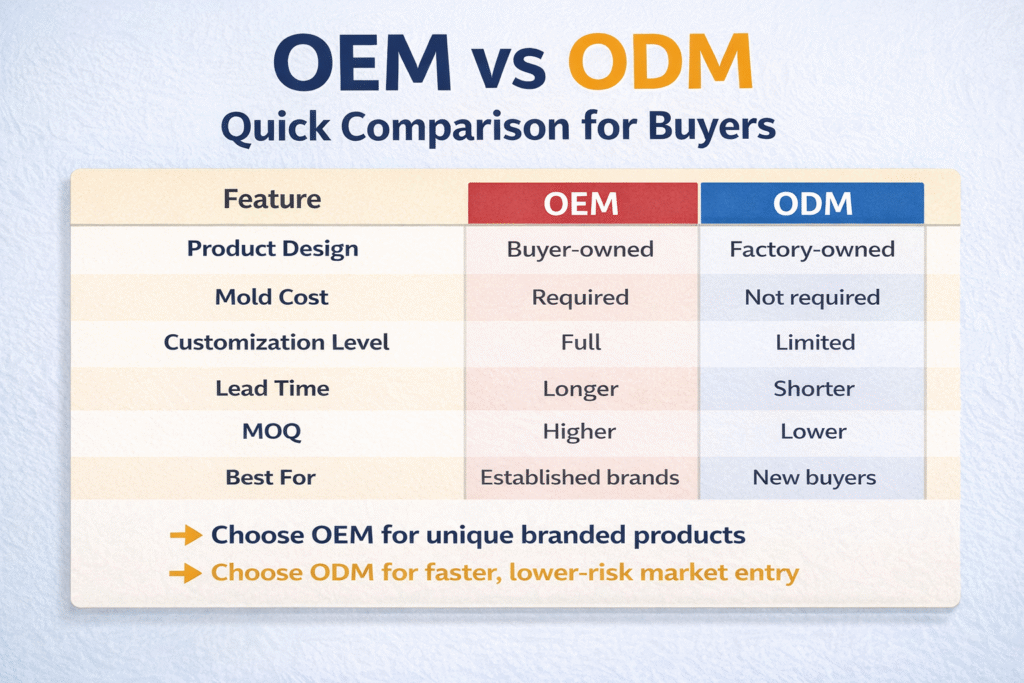
OEM vs ODM: Quick Comparison for Buyers
| Feature | OEM | ODM |
|---|---|---|
| Product Design | Buyer-owned | Factory-owned |
| Mold Cost | Required | Not required |
| Customization Level | Full | Limited |
| Lead Time | Longer | Shorter |
| MOQ | Higher | Lower |
| Best For | Established brands | New buyers |
👉 Quick Answer (Featured Snippet Logic):
Choose OEM for unique branded products
Choose ODM for faster, lower-risk market entry
Cost Differences Between OEM and ODM
OEM Costs
Mold development fees
Product design costs
Higher MOQ
Longer development cycle
ODM Costs
No mold cost
Lower MOQ
Lower initial investment
👉 Practical Strategy:
Many successful buyers start with ODM, then switch to OEM after validating demand.
Lead Time Comparison
| Stage | OEM | ODM |
|---|---|---|
| Sample Time | 10–20 days | 3–7 days |
| Mass Production | 20–35 days | 15–25 days |
👉 If speed is critical, ODM is the better option.
Customization Options Explained
Even with ODM, you can still customize:
Common Customization Options
Logo printing (silk screen, heat transfer)
Color matching (Pantone system)
Packaging design (eco box, retail packaging)
However:
OEM = full structural customization
ODM = appearance-level customization only
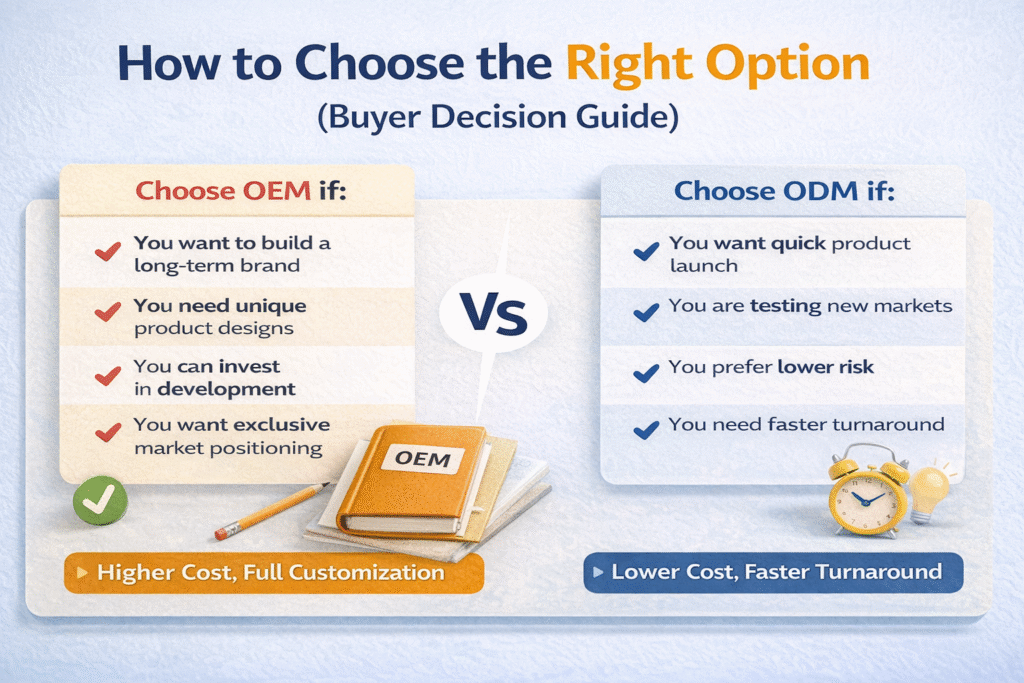
How to Choose the Right Option (Buyer Decision Guide)
Ask yourself these questions:
Choose OEM if:
You want to build a long-term brand
You need unique product designs
You can invest in development
You want exclusive market positioning
Choose ODM if:
You want quick product launch
You are testing new markets
You prefer lower risk
You need faster turnaround
Common Mistakes to Avoid
1. Choosing OEM Too Early
High cost + high risk for new businesses.
2. Ignoring MOQ Requirements
OEM projects usually require larger orders.
3. Not Verifying Factory Capability
Not all suppliers can handle OEM development.
4. Focusing Only on Price
Low-cost suppliers may compromise quality.
CONTACT US

Wheat Straw Lifecycle Claims: Marketing Without Greenwashing
Wheat Straw Lifecycle Claims: Marketing Without Greenwashing In 2026, an eco-friendly tableware brand cannot afford a single inaccurate sustainability claim on its packaging. EU regulators

Compare Tableware Suppliers: B2B Factory Audit Guide
Compare Tableware Suppliers: B2B Factory Audit Guide I have been on both sides of the factory audit table. For 15 years as a manufacturer of

Wheat Straw Plates Wholesale Guide: Dinner, Kids & Restaurant Use Cases
Wheat Straw Plates Wholesale Guide: Dinner Plates, Kids Plates and Restaurant Use Cases If you are sourcing wheat straw plates wholesale, you are not just buying

Retail Packaging for Wheat Straw Dinnerware Sets: Box, Sleeve, Label and Barcode Options
Retail Packaging Wheat Straw Dinnerware Sets: Box, Sleeve, Label and Barcode Options In the B2B tableware industry, the packaging is often more expensive to produce

Dishwasher & Microwave Claims for Wheat Straw Dinnerware: Testing Standards
Dishwasher & Microwave Claims for Wheat Straw Dinnerware: Testing Standards and Buyer Notes If you are a brand owner or a category manager sourcing microwave safe

Pre-Shipment Inspection Checklist for Wheat Straw Dinnerware Buyers
Pre-Shipment Inspection Checklist for Wheat Straw Dinnerware Buyers: Ensuring Quality Before Loading If you are sourcing wheat straw dinnerware from overseas, there is one moment that defines
One Response