Description
Last updated:
The Z-fold panel camping dinnerware set separates plates, cups and utensils across three connected retention zones so a buyer can review access, protection and folded thickness as one system.
CONFIGURABLE OUTDOOR DINNERWARE CONCEPT
Z-Fold Panel Camping Dinnerware Set
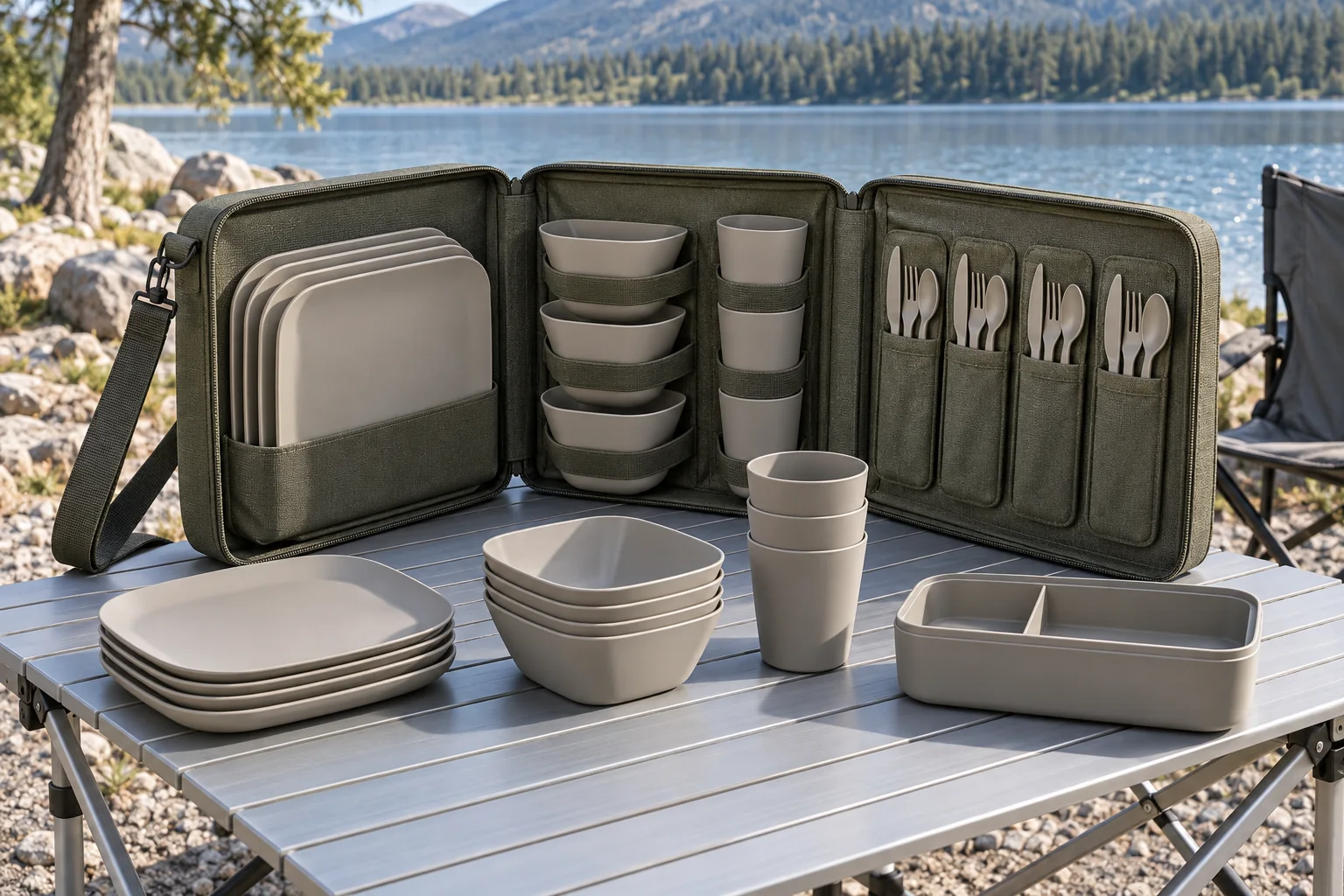
A slim rectangular shoulder case opens across three connected panels so plates, cups and cutlery remain visible and separated. Rounded-square tableware and a divided lunch box form a distinct four-person configuration for buyer review; the concept is not a verified production SKU.
- Rounded-square plates, angular bowls and tapered cups
- Divided lunch box plus complete knife, fork and spoon groups
- Three-panel textile case with sleeves, bands and utensil pockets
- Materials, dimensions, interfaces and component count remain project decisions
PRODUCT PARAMETER
| Product concept | Portable Z-fold panel camping dinnerware set |
|---|---|
| Reference components | Three-panel case, plates, bowls, cups, divided lunch box, knives, forks and spoons |
| Material | To be confirmed for the project |
| Dimensions and weight | To be confirmed for the project |
| Color and finish | To be confirmed against approved samples |
| Logo and packaging | To be confirmed for the project |
| MOQ, price and lead time | To be confirmed for the project |
| Compatibility | Compatibility to be confirmed by project sample and drawing. |
REFERENCE CONFIGURATIONS
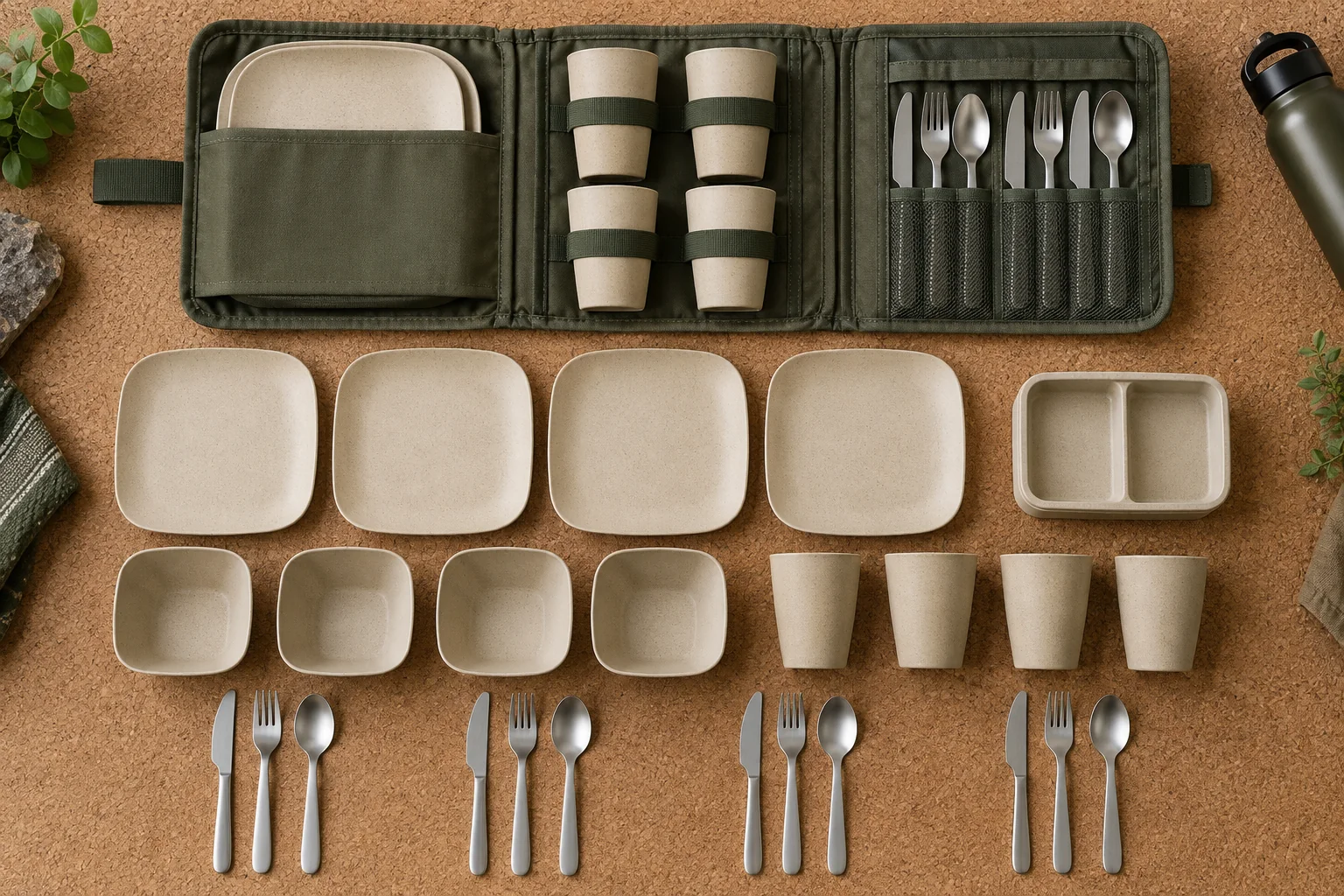
| Configuration | Buyer decision | Evidence before approval |
|---|---|---|
| Compact pair set | Two place settings with a shared container | Panel balance, removal order and closed thickness |
| Four-person set | Four plates, bowls, cups and cutlery groups | Retention, carry mass and zipper clearance |
| Lunch-led set | Prioritize divided containers and utensils | Lid interface, food-contact conditions and cleaning |
| Retail assortment | Select count, finish and packaging by channel | Approved component matrix and written specification |
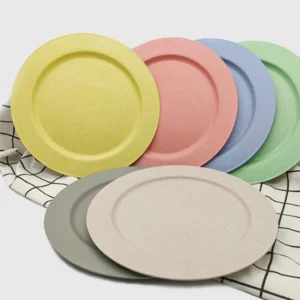
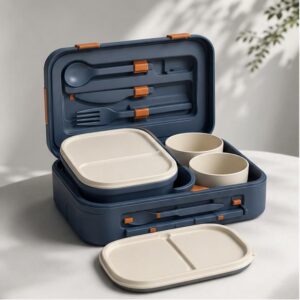
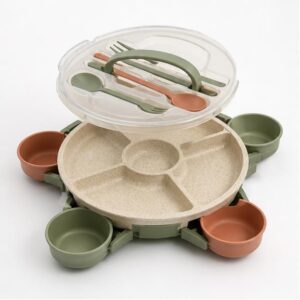
Reference images illustrate configuration logic only. Final count, form, material, construction and claims require project samples and written approval.
Three retention zones in one slim case
The Z-fold architecture separates broad plate storage, elastic cup or bowl retention and narrow utensil pockets. Buyers should confirm whether each panel remains balanced during opening, whether retained pieces can be removed without disturbing adjacent components and whether the folded thickness fits the intended carry and carton envelope.
The Z-fold panel camping dinnerware set should be approved only after the selected component count, panel sequence and closing path have been demonstrated on a revision-matched sample.
Component architecture for set development
Rounded-square plates and angular bowls create a visual and nesting system different from round stacks. Tapered cups can be retained by adjustable bands, while the divided lunch box remains an independent module. Every component change affects panel position, strap tension, zipper clearance and carrying balance.
Compatibility to be confirmed by project sample and drawing.
For food-contact scope, connect the final material and intended conditions to the U.S. FDA food-contact substances overview and the applicable target-market framework. The EU food-contact framework regulation provides another primary reference; neither source certifies this concept.
Panel hinge, sleeve and pocket details
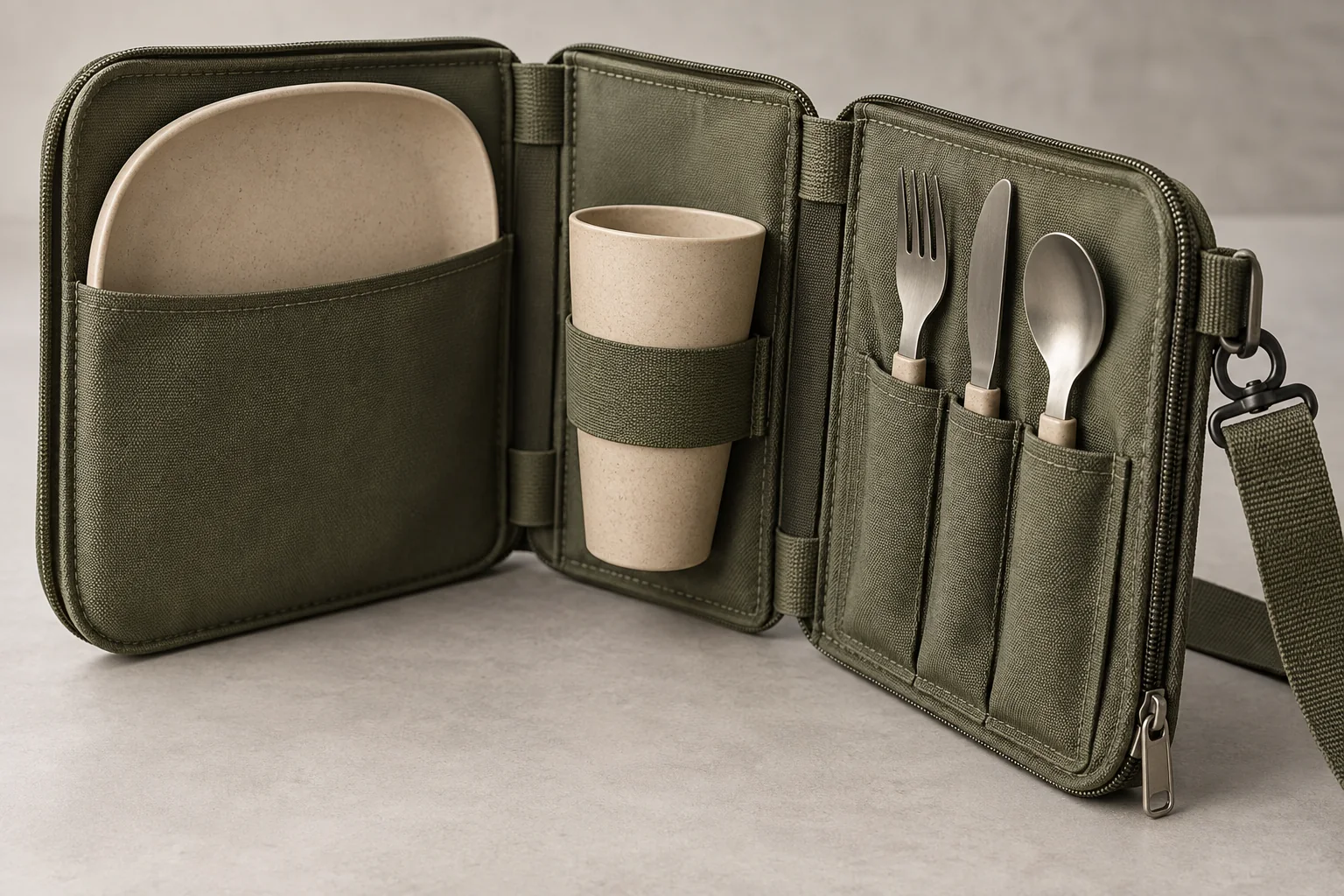
Flexible hinges, edge binding, sleeve depth, elastic recovery, pocket width and strap anchors are development controls. Review repeated folding, exposed edges, cleanability, component contact, closure clearance and the way wet items can be separated before approving the case construction.
The NIOSH ergonomics overview is a useful primary reference for considering the carrying task, tool and user together, but it does not validate this case or establish a load rating.
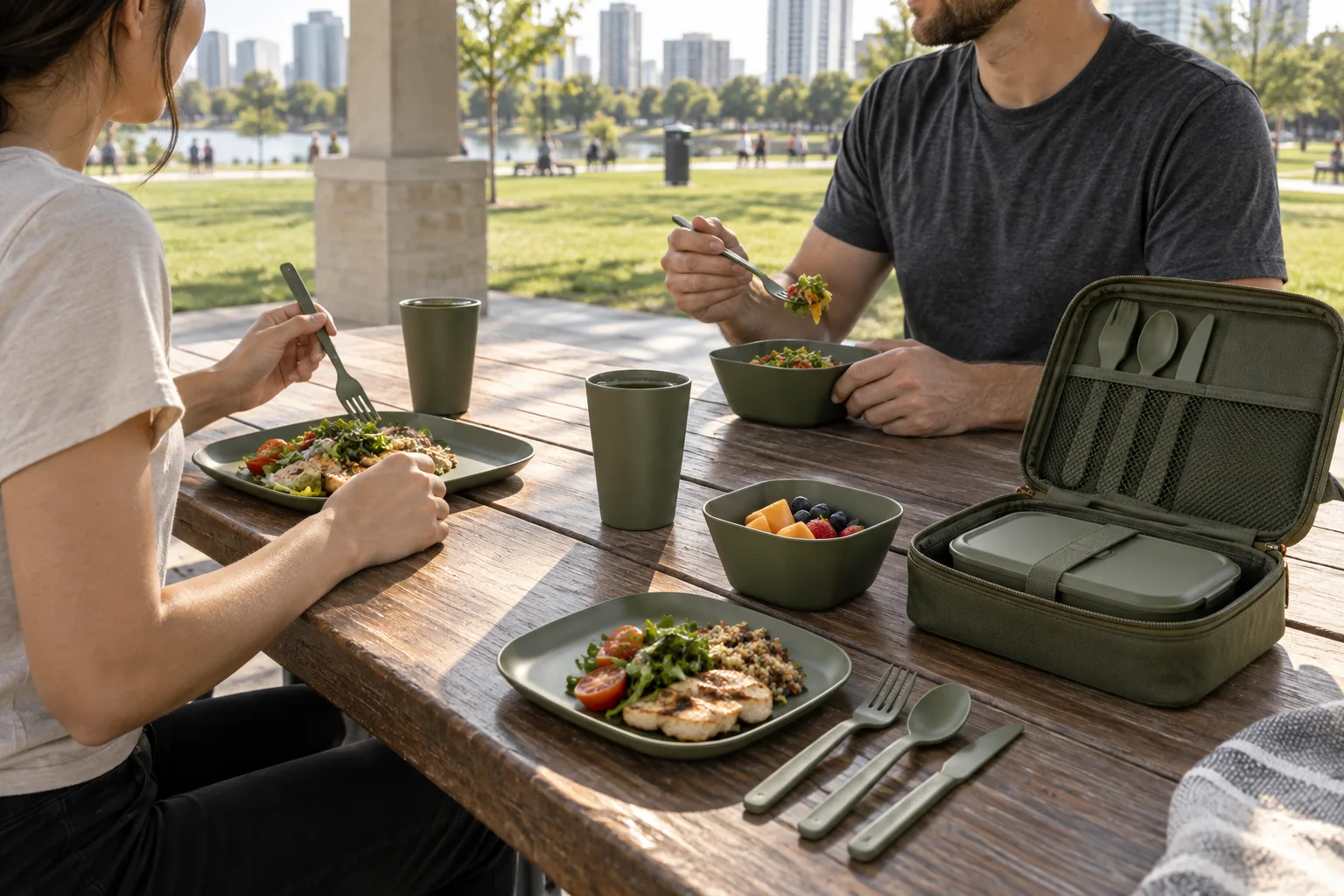
Application concept: the open case keeps a coordinated set accessible during a park meal. The image is not a verified customer case or production SKU.
Customization and connected procurement choices
| Control | Options to review | Dependency |
|---|---|---|
| Set composition | Pair or four-person count, shared pieces, lunch-box priority | Panel area, carry mass and closure |
| Tableware geometry | Plate corners, bowl depth, cup taper and divider layout | Nesting, forming and cleaning access |
| Retention | Sleeve depth, band position and pocket width | Rattle, removal order and wet-item separation |
| Branding | Logo position, color system and packaging hierarchy | Material/process suitability and approved artwork |
| New tooling review | Revised component or case geometry | Drawings, tolerances, samples and written feasibility |
B2B development controls
- Freeze the component matrix before fixing panel and pocket sizes.
- Review folded thickness, zipper clearance and carrying balance with representative components.
- Confirm retention, removal order, rattle and exposed food-contact surfaces on samples.
- Approve logo, packaging and labeling only after material and process review.
- Separate dinnerware claims from cookware or direct-heat claims.
Use a written gate for the Z-fold panel camping dinnerware set: component matrix approved, retention observations complete, cleaning boundary recorded, closed-case fit checked and evidence requests assigned.
Connect the configuration to the published core-set component review, carry-case opening guide and module compatibility review before freezing the case drawing.
Material and compliance boundary
No material, certification, migration result, mechanical result or market claim is represented by the concept images. Define target markets, food types, temperatures, contact duration and cleaning conditions so the applicable evidence can be identified.
This is dinnerware and carrying equipment. Do not infer direct-flame, burner, campfire, stove, oven or cookware suitability. Approve each requested statement only against evidence that names the final material, construction, market and intended conditions.
Procurement FAQs
Can the number of place settings change?
Yes as a development request, but panel area, retention, folded thickness and carry balance must be reviewed again.
Can the lunch box be removed?
It can be considered as an alternative configuration. The remaining panel layout and retention require a revised sample.
Are the elastic bands replaceable?
No construction is assumed. Define service expectations, then review the attachment method and replacement route in drawings and samples.
Can buyers specify materials and colors?
Preferences can be submitted. Availability, suitability, evidence and color matching remain subject to confirmation.
Does the concept include custom tooling?
New geometry may be evaluated, but capability, tooling route, cost and schedule are not assumed.
What should accompany a quotation request?
Send the component matrix, users and markets, food-use conditions, material preferences, pack envelope, retention priorities, logo and packaging brief, evidence expectations and sample plan.
Build the Z-fold set around your component brief
Share the place-setting count, component drawings or references, folded case envelope, retention priorities, target markets, food-contact conditions, logo and packaging requirements. Naike Dinner will review the request against verified capabilities and identify drawings, samples and written confirmations needed before approval.
For a Z-fold panel camping dinnerware set quotation review, include the panel sequence, retained component list, cleaning assumptions and expected carry method. Send the written project brief.
RELATED SOURCING PATHS
Compare Products and Plan Your Project
Review related product formats, then compare material, set configuration, logo, packaging, testing scope and order quantity with our B2B team.