Description
WASH-DRY FOUR-PERSON DEVELOPMENT CONCEPT
Wash-Dry Tray Four-Person Camping Dinnerware Set
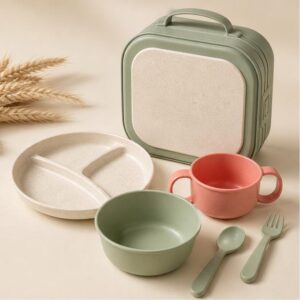
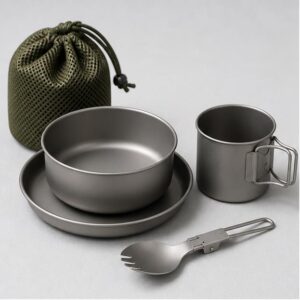
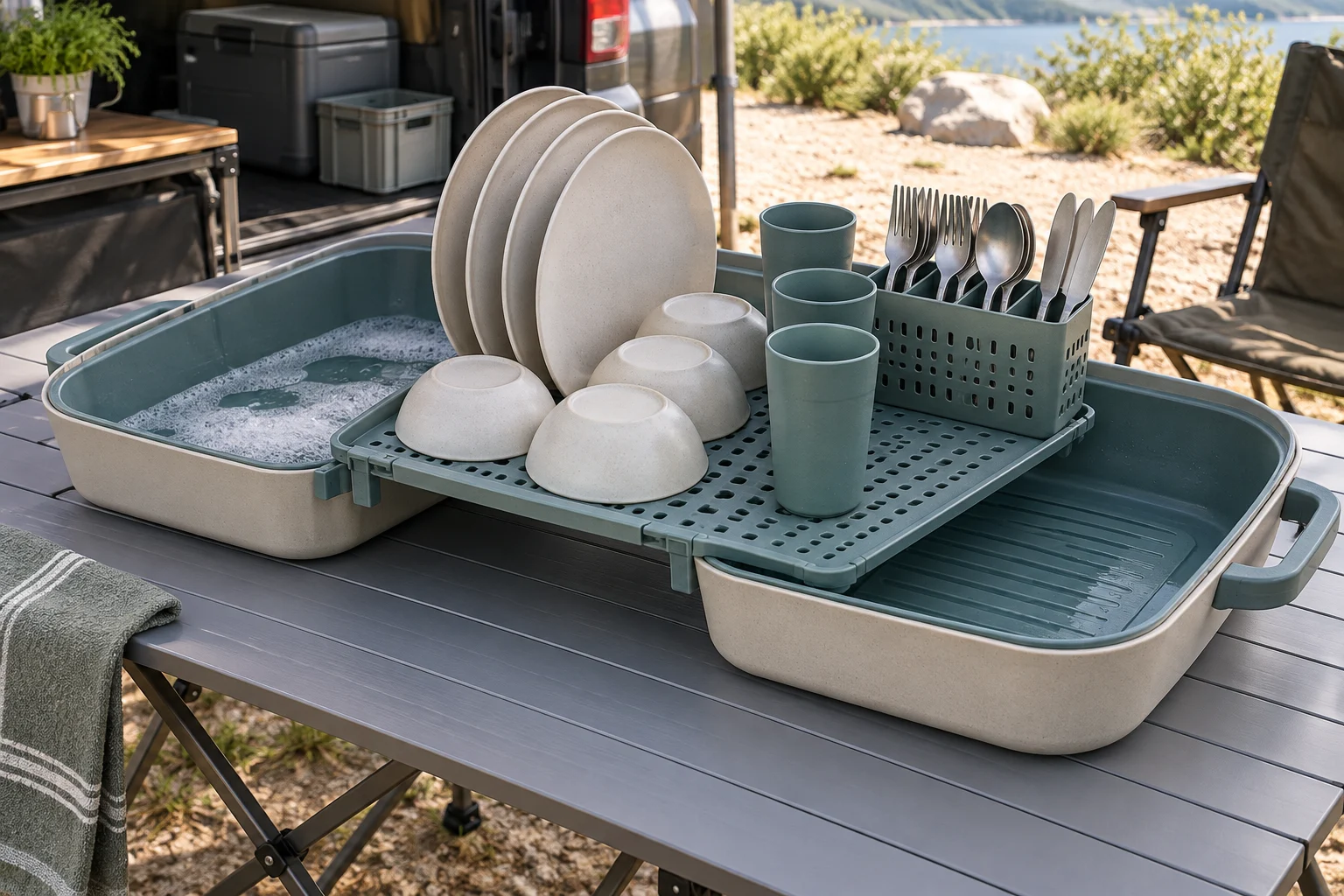
This camping dinnerware set uses a shallow clamshell carry shell that opens into two separate basin-style halves. A rigid perforated lift-out tray can bridge or stand between them to organize washing, separation and drying review. Reference components include four rounded plates, four low bowls, four straight handleless cups and four cutlery groups in a removable vented cassette. It is a development concept, not a verified production SKU.
- Two shallow shell halves separate the carry envelope from the lift-out component tray
- Tray loading, drainage, shell stability, closure, drying and carry balance require drawing and sample review
- Materials, dimensions, MOQ, price, lead time and verified claims: To be confirmed for the project
Camping dinnerware set review contents
Use this camping dinnerware set page to define the component matrix, two-half shell geometry, tray perforation and support points, utensil cassette, open and closed envelope, washing intent, drying sequence, logo, packaging and evidence scope. The visuals communicate an organization direction only.
PRODUCT PARAMETER
| Set format | Two shallow basin-style shell halves with one rigid perforated lift-out tray |
|---|---|
| Reference components | Four rounded plates, four low bowls, four straight handleless cups, four cutlery groups, one vented utensil cassette, one perforated tray and two carry-shell halves |
| Materials | To be confirmed for the project |
| Dimensions and weight | To be confirmed for the project |
| Color, finish and logo | To be confirmed for the project |
| Packaging, MOQ, price and lead time | To be confirmed for the project |
| Compatibility | Compatibility to be confirmed by project sample and drawing. |
REFERENCE CONFIGURATIONS
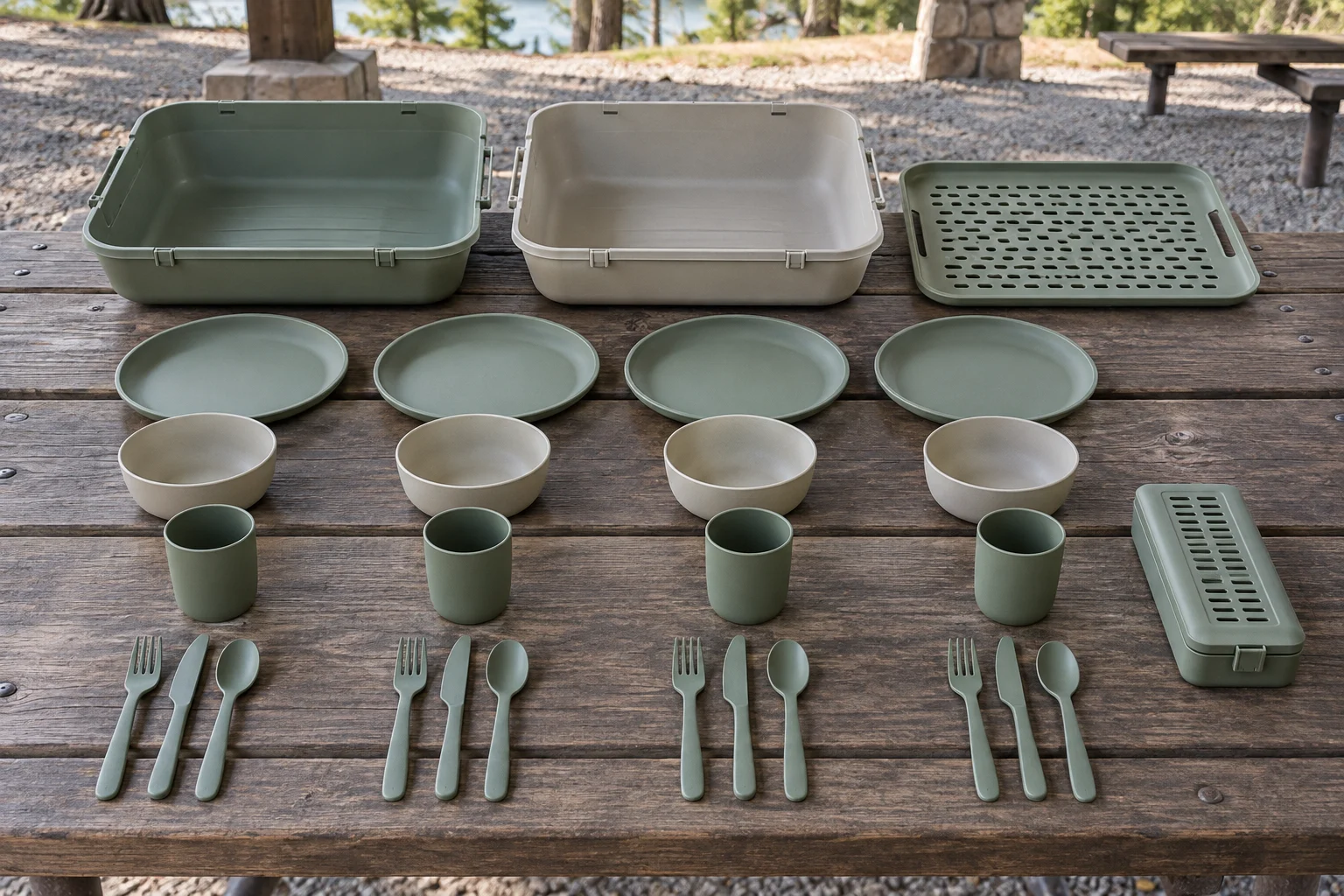
The configuration separates the two shell halves, lift-out tray, four place settings and vented utensil cassette. Use it to prepare a controlled component matrix; counts, drainage behavior, dimensions and compatibility remain project decisions.
| Configuration decision | Reference direction | Approval check |
|---|---|---|
| Carry shell | Two shallow halves with integrated handles | Closure, loaded balance, edge control and clean/used separation |
| Lift-out tray | Rigid perforated tray that bridges or stands between halves | Support points, load, deflection, drainage and removal clearance |
| Dinnerware profile | Rounded plate, low bowl and straight handleless cup | Food-use conditions, nesting, removal and shell fit |
| Utensil storage | Removable vented cassette for four cutlery groups | Edge protection, opening clearance and drying access |
| Wash-dry workflow | Separate halves and tray support a staged review | Water containment, drainage and hygiene claims are not assumed |
Define the camping dinnerware set shell before choosing components
The shallow halves may support a wash-and-dry workflow, but the camping dinnerware set images do not establish watertightness, drainage or food-contact suitability. Define the internal envelope, hinge or separation method, wall height, base stability, handle loads, closure sequence and whether clean and used parts remain separate. Compatibility to be confirmed by project sample and drawing.
Inspect the perforated tray and utensil cassette
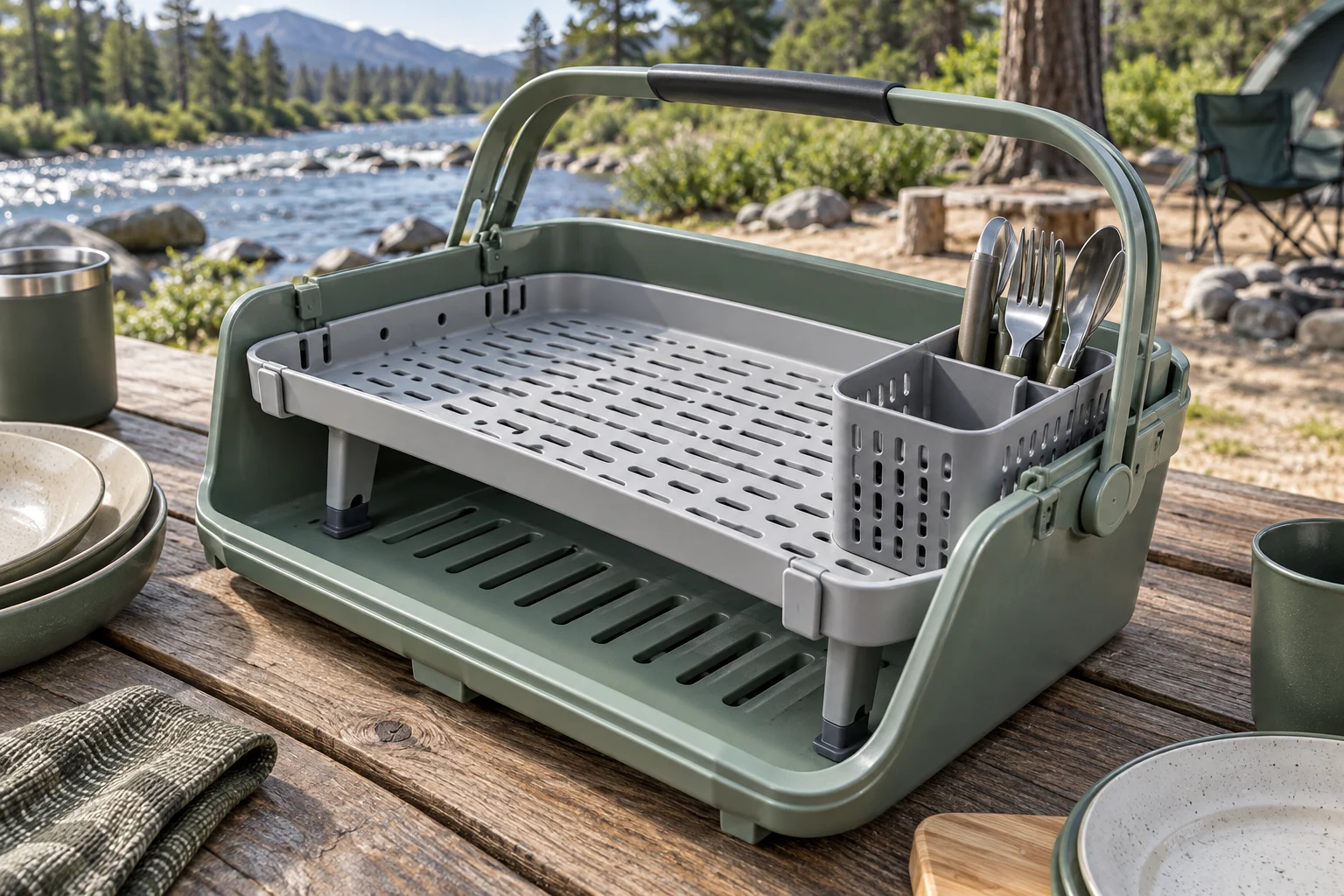
The tray and cassette create interfaces not present in a simple nested stack. Review perforation size, cutlery-edge control, tray stiffness, support ledges, finger clearance, drainage paths, trapped-water points, cassette retention and removal order. Test the complete loaded configuration; an empty visual concept cannot establish capacity, structural performance or drying effectiveness.
Customization and project boundaries
Customization can include shell geometry, handle and closure route, tray pattern, support ledges, cassette layout, component mix, plate and bowl profiles, cup form, color allocation, decoration and packaging. New geometry, molds, hardware or structural interfaces require written feasibility review. This page does not promise tooling, capacity, MOQ, price or timing.
Review the camping dinnerware set in use
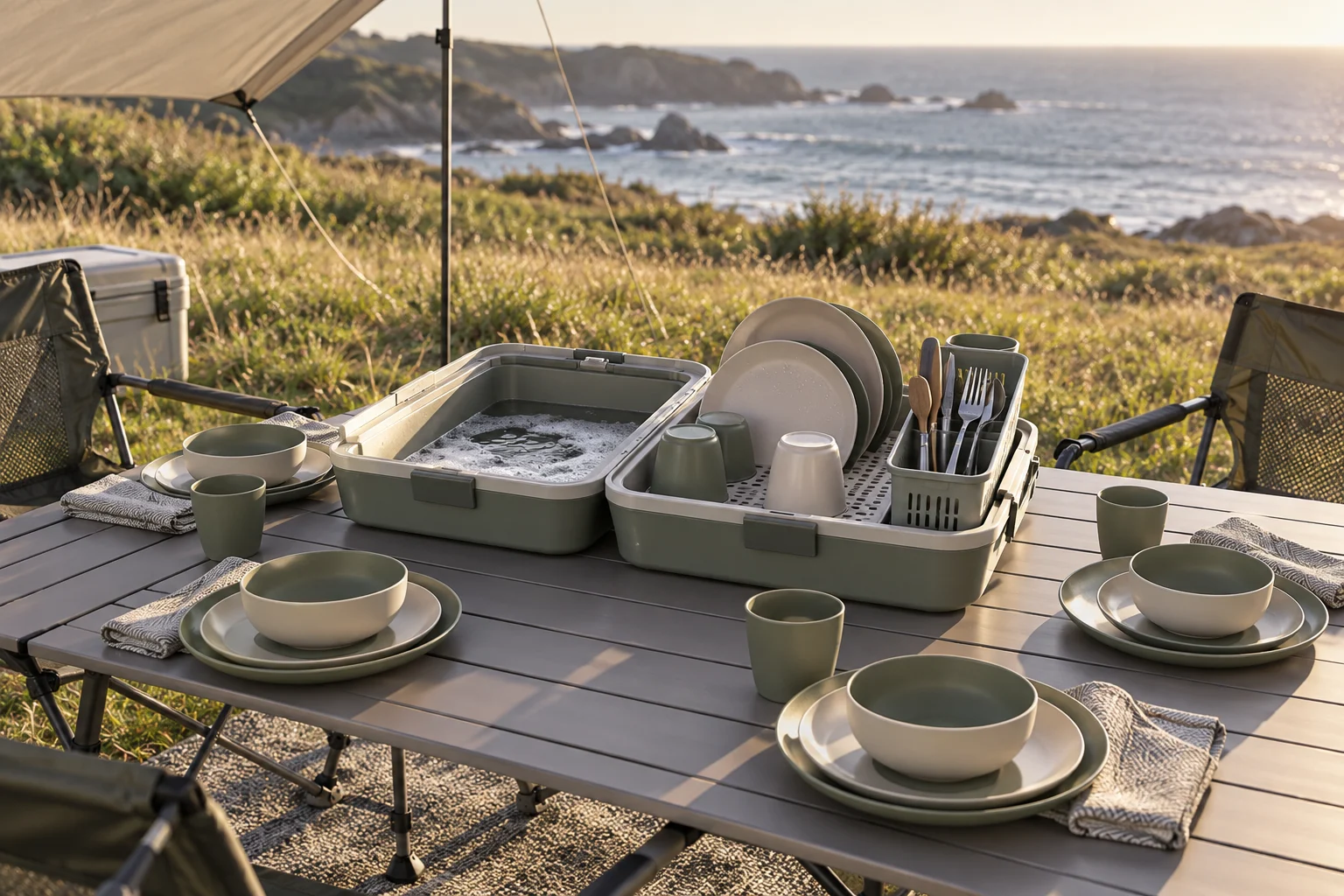
For campsite, picnic and outdoor-retail programs, observe how the two halves and tray occupy the table. Check where used items return, whether the tray stays stable, whether water or residue can be managed, how the cassette is removed, and whether every part is fully dry before closing. The scene is a use concept, not proof of field performance or a customer order.
Prepare a useful camping dinnerware set brief
Send the sales channel, user group, required components, open and closed envelope, carry method, intended wash-and-dry workflow, food-use conditions, destination markets, cleaning expectations, logo route, packaging objective and target schedule. Separate required functions from styling preferences.
B2B development controls
- Approve one component matrix for the two shell halves, tray, cassette and dinnerware.
- Control tray support points, perforation, closure and handle interfaces by drawing revision.
- Measure the carry envelope only with the released component configuration.
- Review loading, removal order, clean/used separation, drainage access and complete drying.
- Link color, decoration, packaging statements and evidence to finished components.
- Record open issues and reapproval triggers before requesting a written quotation.
Material and compliance boundary
The visuals establish only a Wash-Dry Tray organization concept. They do not verify material identity, food-contact status, migration, watertightness, drainage performance, tray strength, handle durability, dishwasher suitability or destination-market compliance. Set the evidence request separately for every released part, intended food, contact period, fill and holding temperature, care route, decoration and destination rule. Unknown values remain “To be confirmed for the project.”
For context, review the FDA food ingredients and packaging overview, the European Commission’s food-contact materials legislation index and food-contact materials overview. Connect the brief to the component architecture guide, component use-condition register and finished-component evidence index.
Procurement FAQs
Is this camping dinnerware set a current SKU?
No. It is a development concept for discussing a two-half shell, perforated lift-out tray and vented cassette. Final availability and specifications require written confirmation.
Are the shell halves watertight wash basins?
No watertight or basin-performance claim is made. Define the intended water use and acceptance method, then review drawings and representative samples.
Does the perforated tray guarantee effective drying?
No. Perforation is a design direction. Drainage, airflow, stability and drying time require project-specific evaluation.
Can different plate or bowl profiles be used?
They can be evaluated, but tray loading, shell clearance, cassette space and carrying balance may change. Compatibility to be confirmed by project sample and drawing.
Are materials or certifications confirmed?
No. Define finished-component materials, intended use, markets and evidence requirements in the project brief.
What should the buyer send first?
Send the component matrix, shell and tray envelope, wash-dry workflow, food-use conditions, destination market, logo, packaging and evidence brief.
Build a practical Wash-Dry Tray camping dinnerware set
Send the component and structure brief or request a drawing-and-sample review. We will identify unresolved dimensions, tray and shell interfaces, sample checks, documentation gaps and the inputs still needed for a written quotation.
RELATED SOURCING PATHS
Compare Products and Plan Your Project
Review related product formats, then compare material, set configuration, logo, packaging, testing scope and order quantity with our B2B team.