Description
PRODUCT PARAMETER
Project Specification Framework
| Buyer intent | Configurable four-user family camping set with divided storage | Project status | Concept configuration; final scope to be confirmed |
|---|---|---|---|
| Product architecture | Two detachable semi-circular zip pouches forming one round carry system | SKU | To be confirmed for the project |
| Reference components | Rounded-square divided plates, deep bowls, tall handleless cups, compact lunch boxes, fork/spoon/knife groups | Component count | To be confirmed for the project |
| Material direction | PP-based or other verified project materials; final declaration required | Color | To be confirmed for the project |
| Dimensions and weight | To be confirmed for the project | Surface finish | To be confirmed for the project |
| Carry system | Detachable twin pouches, joining straps and internal retention concept | Packaging | To be confirmed for the project |
| Logo options | Location and process to be reviewed against verified material and artwork records | Applicable markets | Europe, North America, Australia or other market subject to project evidence review |
This page presents a physically plausible development concept, not a confirmed stock SKU. Compatibility to be confirmed by project sample and drawing.
REFERENCE CONFIGURATIONS
One Set, Two Detachable Storage Zones
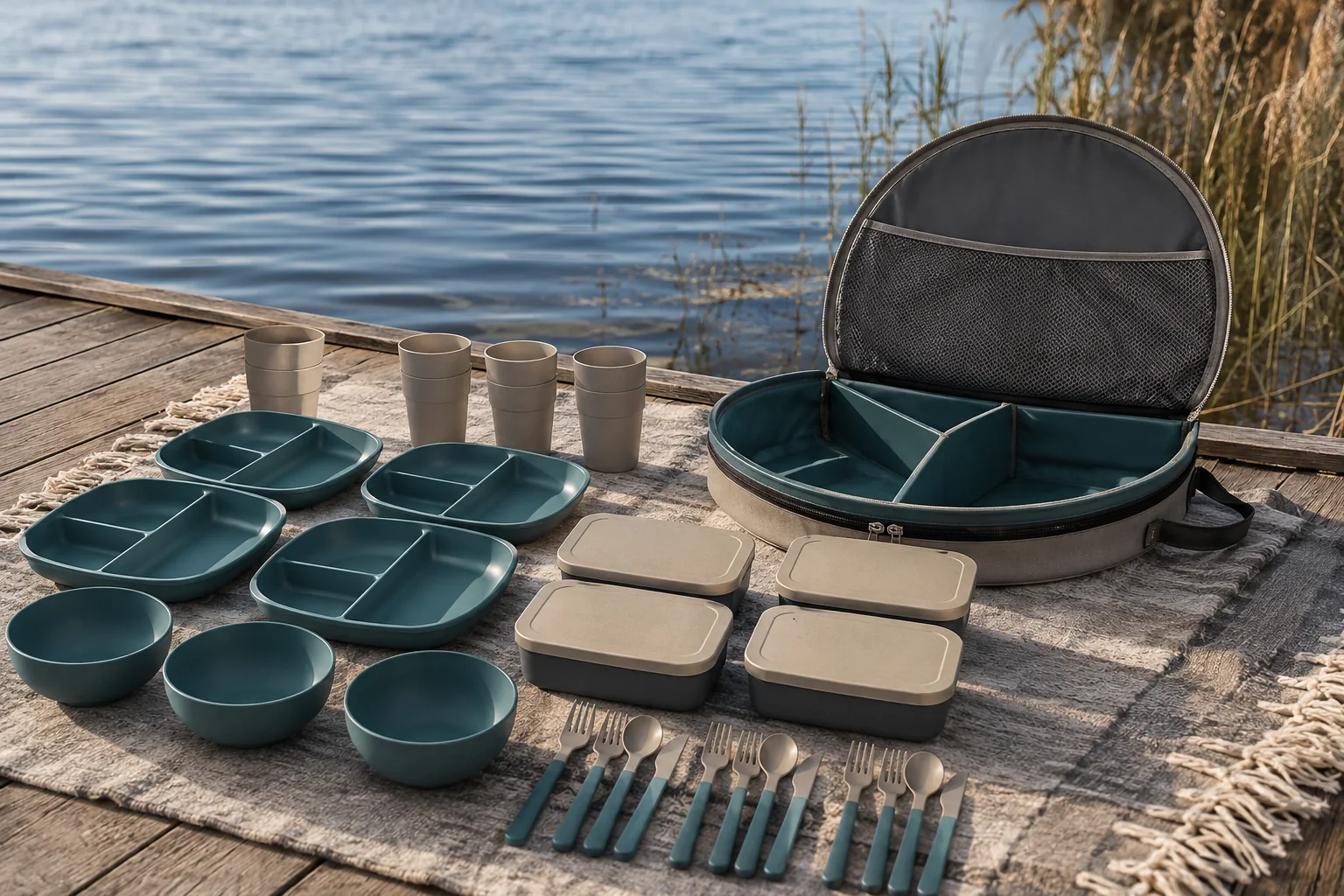
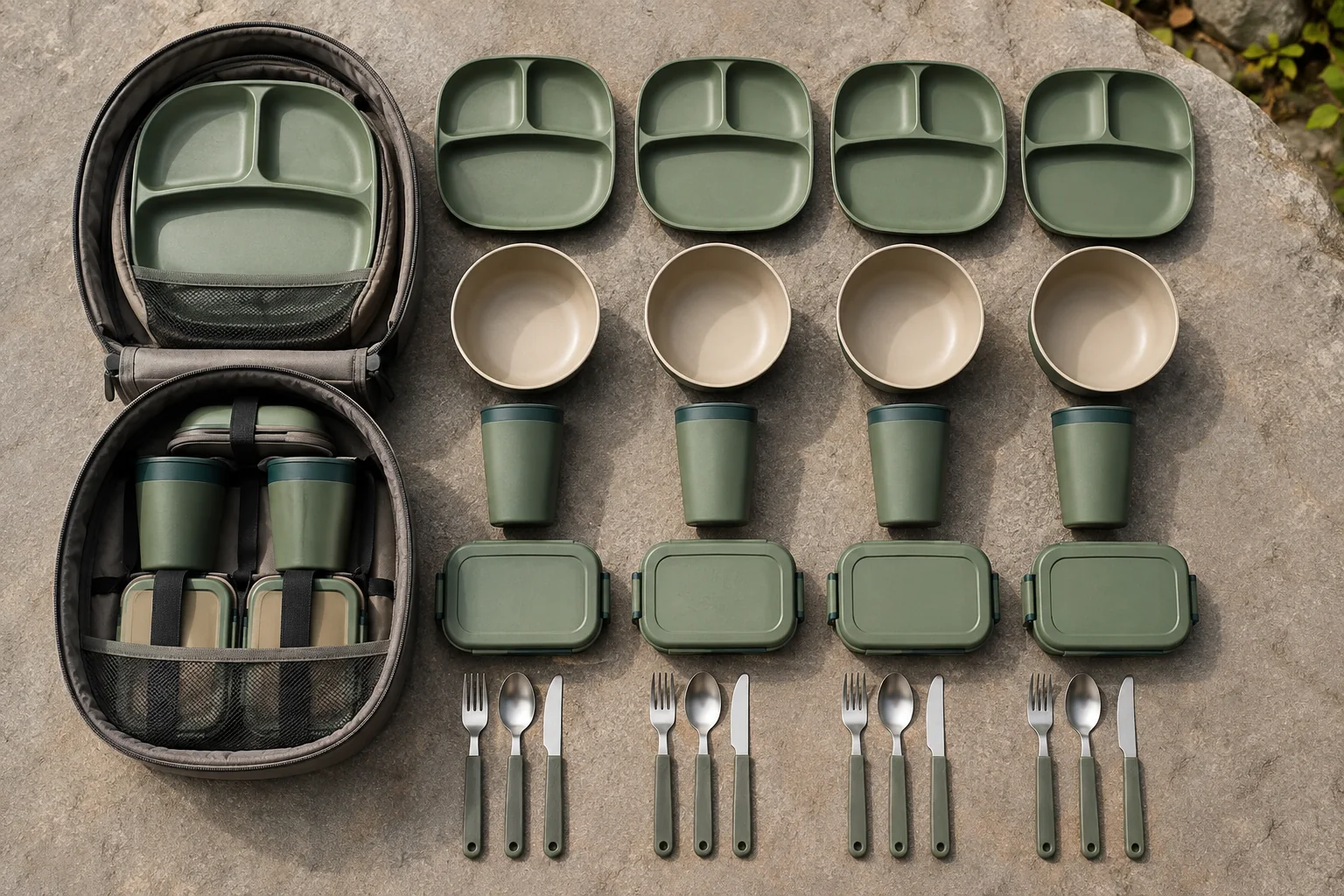
The family camping set is organized around two semi-circular pouches that can join into a single round carry unit. One zone can hold plates and cutlery while the other controls bowls, cups and compact lunch boxes, helping a buyer separate meal-service components from food-storage components.
The illustrated four-user arrangement is a reference for project discussion. Buyers may remove lunch boxes, change the ratio of plates to bowls, specify shared serving pieces or change user count after component drawings and physical packing trials are reviewed.
Compatibility to be confirmed by project sample and drawing. The image does not establish final component dimensions, materials, nesting clearances, closure performance or commercial availability.
CONTINUOUS PRODUCT DESCRIPTION
Design the Assembly Around Buyer Use
Component allocation
Each user can receive one divided plate, one deep bowl, one tall handleless cup, one compact lunch box and one cutlery group. A buyer may instead use shared food containers or omit components that do not support the intended meal plan.
Two-zone packing
Dividing the carry system can simplify access and counting. One pouch may travel independently for a shorter meal, while both can join for a full family program, subject to confirmed joining strength, dimensions and packed weight.
Shape language
Rounded-square divided plates distinguish the concept from recent oval, hexagonal and conventional round set designs. Deep hemispherical bowls and tall handleless cups create a separate nesting family rather than relying on color changes to imply a new product.
Program flexibility
The architecture supports discussion of two-, four- or mixed-user variants, but no universal configuration is claimed. Every change affects cavity geometry, case balance, component count, artwork, packing and evidence scope.

Outdoor application concept. It illustrates a possible component combination and does not represent a confirmed customer order, final SKU or product test.
RELATED PROCUREMENT OPTIONS
Configure the Set by Meal and Channel
Family car camping
Prioritize comfortable place settings, clear component counting and a carry system that can move from vehicle to table.
RV assortment
Review cabinet footprint, drying workflow, cup height and whether the two pouches can be stored separately.
Retail bundle
Define the visible component list, user count, pack-out image and the distinction between included and optional pieces.
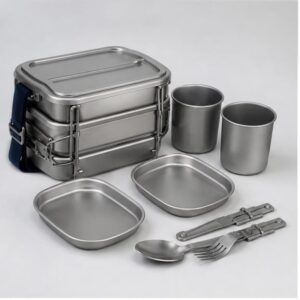
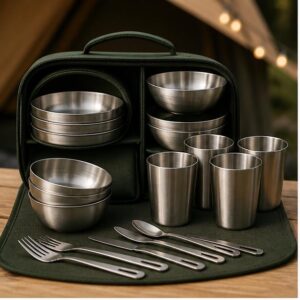
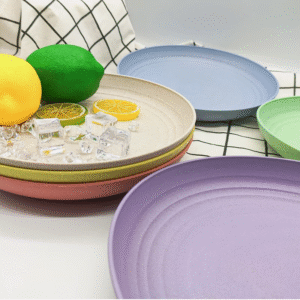
Published product references can help buyers identify possible component directions, including a 25 cm camping plate, a six-person PP camping dinnerware set, and a compact duo camping meal set. These links are sourcing references, not proof that their parts fit this new concept.

PACKING DETAIL
Control Retention, Access and Repacking
The two-pouch concept is useful only if parts remain controlled during carrying and users can return them without forcing closures. Internal straps, mesh pockets and shaped zones should be evaluated for abrasion, pressure on rims, cleaning access and the risk of trapping moisture.
A physical pack-out review should use the final component count. Buyers should check zipper paths, joining straps, loaded balance, handle position, interference between hard parts and the ability to identify a missing utensil or lid.
B2B DEVELOPMENT CONTROL
Move from Configuration Brief to Approved Set
1. Component Matrix
Define users, meals, required pieces, optional pieces and cookware exclusions.
2. Drawing Review
Confirm profiles, nesting clearances, food-contact surfaces, artwork and case zones.
3. Packing Sample
Check fit, access, retention, closure, carrying, cleaning and repacking.
4. Change Control
Freeze approved BOM, materials, colors, evidence, packaging and revision rules.
MATERIAL AND COMPLIANCE BOUNDARY
Evidence Must Match the Final Components
A reference material or a report from another product does not certify this set. Final review must connect each plate, bowl, cup, lunch box, lid, utensil, decoration and food-contact surface to the actual material grade, additives, pigments, construction and intended conditions of use.
For U.S. programs, the FDA explains how buyers should determine the regulatory status of food-contact material components and defines relevant food types and conditions of use. EU projects should review the general framework in Regulation (EC) No 1935/2004 and any material-specific rules applicable to the final configuration.
No certificate, test result, material specification, performance value, MOQ, price, production capacity, lead time, tooling capability or universal compatibility is claimed on this concept page. Each field must be confirmed for the project.
B2B BUYER CHECKLIST
Questions Before Requesting a Documented Quotation
| Check | Question | Why It Matters |
|---|---|---|
| User model | Is every component individual, shared or optional? | Prevents hidden piece-count assumptions |
| Meal plan | Which foods must the divided plates, bowls and boxes serve? | Connects shapes to real use |
| Carry logic | Must each pouch function independently? | Changes joining hardware and packing layout |
| Compatibility | Have nesting, lids, clearances and closure been sample checked? | Images cannot prove fit |
| Materials | Are final grades, pigments and surfaces documented? | Defines evidence scope |
| Artwork | Which components and pouch zones receive branding? | Controls process and inspection points |
| Packaging | How will the exact user count and contents be shown? | Reduces retail misunderstanding |
| Approval | Which drawing, sample and BOM revision becomes the golden reference? | Prevents uncontrolled changes |
ASSEMBLY DECISIONS
Translate the Meal Plan into a Controlled Component Matrix
Separate required pieces from optional pieces
A useful family camping set brief does not begin with an arbitrary piece count. It begins with the number of diners, the meals they expect to serve and whether any items are shared. Four plates, four bowls and four cups may be appropriate for one program, while another may replace bowls with deeper divided plates or add only two shared food containers.
Record every component as required, optional or excluded. That simple distinction prevents a quotation from appearing comparable when one proposal silently omits lids, utensils, storage pieces or the carry system. It also helps the buyer decide which components deserve new tooling review and which may be evaluated from verified existing references.
Define the lunch-box role
A lunch box can serve prepared food transport, dry ingredient organization or leftover storage, and those roles create different questions. Buyers should specify the intended food types, whether compartments are fixed or removable, whether a lid must be shared across variants and how the box is expected to sit inside the pouch.
The illustrated compact divided boxes are conceptual. Final compartment geometry, lid retention, seal expectations and cleaning access must be resolved in drawings and samples. If leak resistance is required, state the test method, orientation, fill condition and acceptance rule instead of using a general word such as “leakproof.”
Control utensil grouping
Four fork, spoon and knife groups can create twelve loose pieces unless a retention method is specified. A buyer may request individual sleeves, elastic loops, a removable utensil panel or grouped pouches, but the preferred method must be checked against cleaning, drying, counting and repacking behavior.
Utensil length also affects the usable diameter of the round case. The product brief should identify whether full-length or compact utensils are expected, whether sharp edges require separation and whether adult or child handling is part of the intended market. No utensil fit is confirmed until the final drawings and packing sample are approved.
PACK-OUT REVIEW
Evaluate the Two-Pouch System as a Complete Load
Zone A: meal service
Place plates, cutlery groups and any shared serving piece in one zone, then check rim contact, utensil movement and access order. The first item needed at the table should not require unloading the entire pouch.
Zone B: bowls and storage
Place bowls, cups, lunch boxes and lids in the second zone. Check whether nested parts lock together, rub during transport or trap moisture after washing.
Joined carry mode
Join both loaded zones and review handle position, balance, zipper clearance and the risk that joining hardware presses against food-contact parts. Use the real component mass, not an empty display sample.
The review should document the packing sequence with photographs or an approved diagram, but the record must show the actual sample revision. A staged concept image can communicate the intended logic; it cannot establish that the final components fit or that the case carries safely. Compatibility to be confirmed by project sample and drawing.
Buyers should also decide whether the two pouches must be separable during retail display, transport or end use. That choice affects joining straps, labeling, packaging restraint and the risk of one half being lost. If the halves are sold only as one system, the packaging and bill of materials should identify both clearly and use one controlled revision.
SAMPLE APPROVAL
Use Measurable Checks Without Inventing Performance Claims
Geometry and nesting review
Measure the final sample against the approved drawing at the locations defined by the project. Review plate stack height, bowl nesting depth, cup clearance, lunch-box lid interference and the closed pouch envelope. The acceptance points and tolerances must come from agreed engineering records; this page does not prescribe values.
Repeat the packing sequence after components have been washed and dried using the intended routine. A configuration that closes only when every part is placed at one precise angle may be difficult for consumers to repack. Record any pinch point, forced closure or contact that could mark a decorated surface.
Loaded handling review
Evaluate each pouch separately and in joined mode with the complete intended load. Observe handle orientation, strap twisting, closure access and whether hard parts shift into the zipper path. If the project defines a drop, carry or vibration evaluation, agree the method and acceptance criteria before testing and retain the test record for the approved revision.
Do not transfer conclusions from a different case size or component combination. Adding a lunch box, changing plate geometry or replacing a cup can alter balance and internal contact points. A new configuration should trigger a documented pack-out review even when the exterior pouch appears unchanged.
Cleaning and drying review
Confirm that food-contact pieces can be removed without touching dirty pouch surfaces and that each part can be cleaned under the intended care instructions. The textile carry system should be assessed separately for removable inserts, drying access, odor retention and the possibility that damp items are packed too early.
Care claims must match the verified materials and construction. Dishwasher, microwave, freezer or hot-food statements are not universal properties of a component category. Request product-specific evidence and approved instructions for the final plate, bowl, cup, lunch box, lid, utensil and decoration combination.
QUOTATION NORMALIZATION
Compare Supplier Responses on the Same Project Basis
Ask each quotation to repeat the proposed component matrix rather than referring only to a total piece count. The response should distinguish included components, optional components, development items, reference items and unresolved fields. It should also identify the drawing or sample revision used for the packing assumption and list which evidence is available for the proposed material and intended conditions of use.
Commercial fields such as MOQ, price and lead time remain to be confirmed for the project. They should be evaluated only after the proposed configuration is clear enough to compare. A lower headline price may reflect fewer components, simpler packaging, omitted artwork steps or an unconfirmed carry solution, so buyers should reconcile scope before comparing totals.
For tooling or structural development, request a written statement of the work being evaluated, the approval stages and the records required before production. This page does not claim that any new mold, textile case or joining system is already available. Feasibility must be confirmed against verified company capability, drawings, samples and the final commercial agreement.
APPROVAL RECORD
Freeze the Set Only After Every Interface Is Reviewed
The final approval record should identify the drawing revision, component bill of materials, approved physical sample, packing sequence, artwork files, color references, packaging layout and evidence package. Each record should use the same project name and revision so a later change to a cup, lid, pouch or utensil cannot enter the set without review.
Assign responsibility for approving food-contact materials, decorative surfaces, textile parts, pack-out and market labeling. A buyer should also define which changes require a new sample or updated evidence. This matters because a small geometry or material change can affect nesting, closure, cleaning access, artwork position and the conditions covered by earlier documentation.
Before release, compare the final packed sample with the retail component list and inquiry specification. Count every loose piece, confirm that optional items are not pictured as included, and record unresolved commercial fields separately. This creates a usable handoff from product development to quotation and purchasing without treating a concept rendering as proof of the final product.
PROCUREMENT FAQ
Buyer Questions About the Split-Pouch Set
Is this an available stock SKU?
No. It is a product-development concept based on a distinct component and carry architecture. Availability, components, dimensions, materials, tooling route and commercial terms are to be confirmed for the project.
Can the component count be changed?
Yes as a project direction, but every change must be reviewed for packing, case balance, cavity layout, evidence scope and packaging communication. Compatibility to be confirmed by project sample and drawing.
Can one pouch be used separately?
That is an intended design question, not a verified performance claim. The final joining method, handle balance and independent closure require drawing and loaded-sample checks.
Can buyers request custom colors and logos?
Color and artwork locations can be included in the brief. The available processes, color control, adhesion, food-contact boundary and evidence requirements must be confirmed against the final materials and verified company capability.
Is the set suitable for direct flame or a stove?
No direct-heat suitability is claimed. This page describes dinnerware and food-container components, not cookware; any direct-heat item must be specified and verified separately.
What information is needed for a quotation?
Provide user count, required and optional components, meal scenarios, material direction, destination markets, carry preference, artwork, packaging channel and evidence requirements. Unknown dimensions and commercial fields may remain marked for project confirmation until drawings and samples are reviewed.
PROJECT INQUIRY
Build a Distinct Family Camping Set Architecture
Send your target users, meal plan, component matrix, preferred two-zone carry logic, destination markets, material direction and artwork requirements. We will separate verified reference options from every item that still needs drawing, sample or evidence confirmation.
Share Your Family Camping Set Brief
Use the inquiry form below to request a specification review or documented quotation. Please include the intended user count and identify which components are required, shared or optional.
Contact Naike Dinner if you prefer to send the project brief directly.
RELATED SOURCING PATHS
Compare Products and Plan Your Project
Review related product formats, then compare material, set configuration, logo, packaging, testing scope and order quantity with our B2B team.