
Global Wheat Straw Tableware Market Trends in 2026
If you’re following the global eco-tableware scene, you’ve probably noticed wheat straw tableware becoming more than just a niche product. In 2026, this material — made from agricultural byproducts — is transforming from a “green option” into a practical, commercially viable alternative to traditional plastic tableware.
In this article, I’ll walk you through the key trends shaping this market, what’s driving growth, and where real opportunities lie in the next few years.
The Market Is Growing Strongly — Not Just a Fad
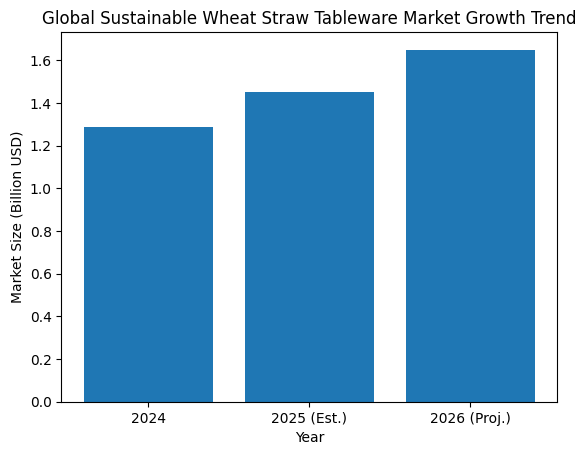
The global market for sustainable wheat straw tableware has been expanding rapidly in recent years. According to industry research, the sustainable wheat straw tableware market size was estimated at about USD 1.29 billion in 2024, and it is expected to continue growing robustly through 2026 and beyond, driven by environmental awareness and regulatory support.
This growth is part of a larger trend in plant-based and biodegradable tableware, where materials like wheat straw, bagasse, and bamboo are replacing single-use plastics across food service, retail and hospitality.
Policy & Regulation: Major Drivers of Adoption
One of the most critical factors accelerating wheat straw tableware adoption isn’t just consumer awareness — it’s policy.
Governments around the world are tightening rules on single-use plastics, forcing the market to shift toward alternatives. For instance, the European Union’s Single-Use Plastics Directive has pushed restaurants and foodservice providers to adopt sustainable tableware, adding significant demand for biodegradable materials like wheat straw.
This policy pressure isn’t limited to Europe — many regions in North America and Asia are also implementing strict regulations that restrict plastic tableware, which directly boosts demand for wheat straw products.
Adoption Across Food Service & Retail
There’s a real shift happening in end-use markets.
In food delivery, restaurants, catering companies, and institutional buyers are integrating wheat straw boarding and dinnerware to cut plastic waste and meet sustainability goals. This is not just about being “eco-friendly” — it’s becoming a business necessity for meeting customer expectations and regulatory compliance.
Additionally, large retail chains and lifestyle brands are increasingly launching private label eco product lines, with wheat straw dinnerware appearing alongside sustainable cutlery, cups and packaging.
Consumer Awareness and Purchasing Behavior
Consumers today are much more environmentally conscious than five years ago. Many are willing to pay a slight premium for products that demonstrate lower environmental impact, recyclability, or biodegradability. This shift is especially noticeable among younger demographics and families who prioritize sustainability in household purchases.
The result? An expanding consumer market alongside institutional demand, creating a broader base of buyers for wheat straw tableware.
Innovation Is Changing the Game
One thing many people overlook is how much product innovation is pushing the market forward. Manufacturers are no longer just blending wheat straw fibers with basic binders. New processes are improving:
Heat resistance
Durability
Leak-proof performance
Surface finish quality
These enhancements make wheat straw tableware more competitive with conventional plastics and even some biodegradable alternatives. Plus, innovations in material extraction and processing are expected to reduce production costs — making eco tableware more accessible to mainstream buyers.
Investing in Production and Supply Chains
Asia-Pacific remains a key production hub due to its strong agriculture base and molding capacity. China and Southeast Asia, in particular, dominate export supply, while Europe and North America continue to grow in demand and innovation partnerships.
It’s worth noting that the processing and transport of raw wheat straw still face challenges such as collection efficiency and seasonal availability — but improvements in supply chains are expected to make the ecosystem more resilient over time.
What’s Next Beyond 2026?
Looking ahead, the wheat straw tableware market is likely to keep accelerating through 2026 and beyond. Multiple factors contribute to this:
🔹 1. Continued Regulatory Pushes
More countries will introduce plastic bans or stricter waste laws.
🔹 2. Growing Food Service Adoption
Restaurants, hotels, and large event organizers want compliant and branded sustainable products.
🔹 3. Consumer Lifestyle Shifts
Eco-friendly dining and home use are trending globally.
🔹 4. Tech & Innovation
Manufacturing technology (such as automation and better fiber processing) will continue to improve product performance and cost structures, helping brands adopt wheat straw alternatives faster.
Final Thoughts
Wheat straw tableware is no longer just an eco novelty — in 2026 it is a market trend driven by policy, consumer demand, and sustainable business strategies.
For suppliers and buyers alike, understanding these shifts means better planning, smarter sourcing, and stronger positioning in a market that increasingly values environmental responsibility without compromising quality or performance.
CONTACT US

Bulk Wheat Straw Dinnerware Order: 30 Supplier Questions
Ask these 30 bulk wheat straw dinnerware order questions before you sign. Avoid costly mistakes with our supplier checklist. Send your inquiry with confidence now.

Complete Wheat Straw Dinnerware Product Line: Build Guide
Build a complete wheat straw dinnerware product line with plates, bowls, cups and cutlery. Learn assortment strategy, SKU planning and margin optimization. Get your line quote.

Wheat Straw vs PLA vs Bamboo Tableware: Material Guide
Compare wheat straw vs PLA vs bamboo tableware for B2B sourcing. Learn heat resistance, cost, and safety differences. Get material recommendations now.

Kids Wheat Straw Tableware: Safety, Design & Packaging Guide
Kids Wheat Straw Tableware: Safety, Design & Packaging Guide If you are a brand owner or distributor entering the children’s market with kids wheat straw tableware,

OEM vs ODM Wheat Straw Tableware: Which Model Wins?
OEM vs ODM Wheat Straw Tableware: Which Model Wins? The first question every new brand owner asks me is not about colors or materials. It

Diagnosing Wheat Straw Tableware Quality Issues: Odor, Color & Brittleness
Diagnose and fix wheat straw tableware quality issues — odor, color difference, and brittleness. Root cause analysis with factory troubleshooting protocols. Download our QC standard.