
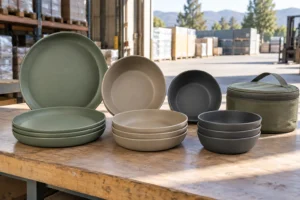
How to Choose Camping Plate and Bowl Sizes as One System
A procurement worksheet for defining coordinated camping plate and bowl sizes by meal task, usable area, depth, nesting order and pack-out limits.
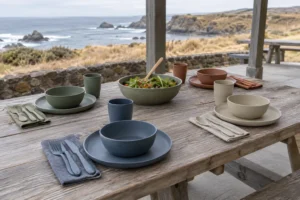
How Many Shared and Individual Pieces Should a Family Camping Set Use?
A procurement method for allocating individual and shared pieces in a family camping dinnerware program without inflating count or missing meal tasks.
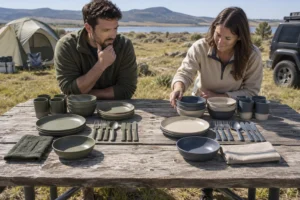
20-Piece vs 24-Piece Camping Dinnerware Set
A procurement comparison of 20-piece and 24-piece camping dinnerware sets, including counting rules, component matrices, use scenarios, risks and approval evidence.
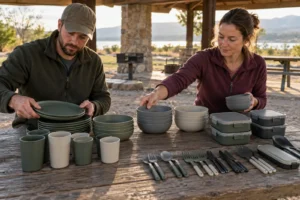
How to Define the Component List for a Camping Dinnerware Set
A procurement method for defining camping dinnerware set components with a user-and-meal matrix, shared-piece rules, packing roles, evidence boundaries and approval controls.
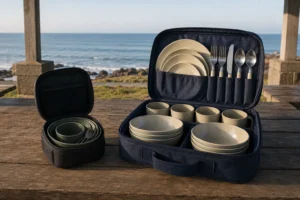
Camping Mess Kit vs Camping Dinnerware Set: Which Format Fits Your Program?
A practical decision framework for choosing between a compact personal mess kit and a coordinated camping dinnerware set for a B2B product program.
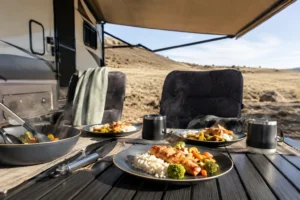
Are Camping Plates Safe for Hot Food?
A buyer-focused guide to evaluating whether camping plates are suitable for hot food, with evidence boundaries, material comparisons, use scenarios and procurement checks.
Move from General Reading to a Better Procurement Decision
The Resources center serves buyers evaluating outdoor dinnerware, camping sets, material options and private-label supply. Content is organized around decisions a procurement team must make: what the set should include, which material fits the use case, which evidence is relevant, and how the product will be customized, packed and delivered.

Choose by use case
Start with camping, picnic, RV, retail or promotional requirements, then compare set composition and packed format.
Choose by material
Compare PP, wheat-straw composite, stainless steel and titanium using real differences in weight, cost, forming, surface and evidence.
Prepare the project
Use OEM, packaging, testing and MOQ guides to turn a product idea into a quotation-ready brief.
Four content tracks keep the library focused
Material Comparisons explain trade-offs without pretending one material is best for every buyer. Outdoor Use Guides address set composition, nesting, portability and care. Testing & Certifications articles explain what a report can and cannot demonstrate. Wholesale Buyer Guides cover supplier qualification, artwork, packaging, samples, inspection and lead time.
The library remains intentionally close to products and B2B procurement. It will not expand into a general camping news site. Every new article should link to an applicable product or material page, a deeper evidence page and an inquiry route, while older wheat-straw articles remain available through the dedicated archive.