Designing Safe Toddler Dinnerware: Why Wheat Straw is the Perfect Material for Baby Brands
The global baby products market continues to evolve as modern parents place greater emphasis on safety, sustainability, and functionality.
For baby brands, choosing the right material for toddler dinnerware is no longer just a manufacturing decision—it has become a critical part of product positioning and consumer trust.
Today’s parents want products that are:
- Safe for daily use
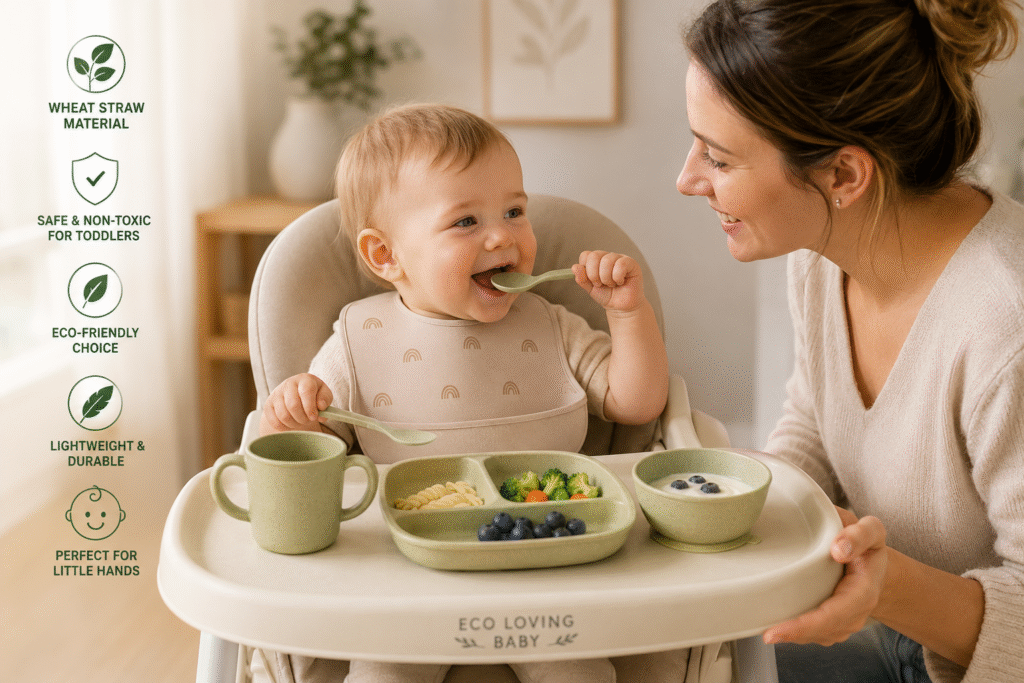
- Lightweight and durable
- Easy for toddlers to handle
- Visually appealing
- Environmentally responsible
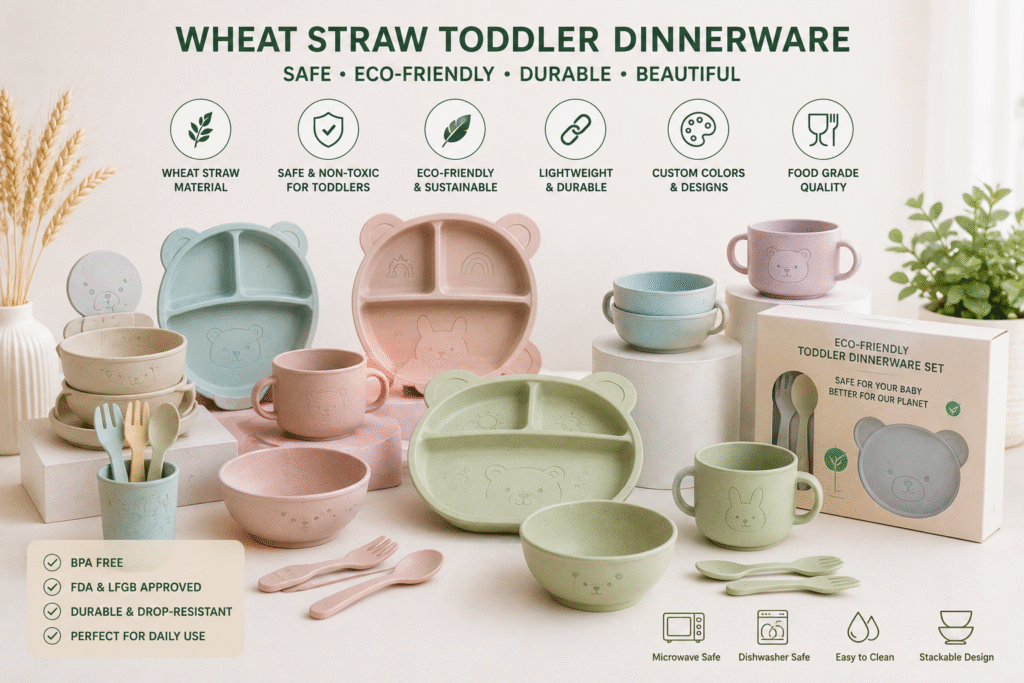
As a result, more baby brands are turning to wheat straw materials when developing feeding sets, plates, bowls, cups, and toddler tableware collections.
But what makes wheat straw such a strong option for children’s products?
In this article, we’ll explore why wheat straw has become one of the most popular materials for modern baby brands and how it can help businesses create safer, more competitive toddler dinnerware collections.
Why Material Selection Matters in Toddler Dinnerware
Unlike standard household tableware, toddler dinnerware must meet a much higher standard.
Young children:
- Drop products frequently
- Chew on utensils
- Use products multiple times per day
- Require lightweight items that are easy to grip
Parents are naturally cautious about the materials that come into contact with their children.
This means baby brands must carefully evaluate:
- Safety
- Durability
- Weight
- Design flexibility
- Regulatory compliance
The material chosen directly impacts customer confidence and repeat purchasing behavior.
The Growing Demand for Safer Feeding Products
According to the American Academy of Pediatrics, parents are increasingly paying attention to materials used in children’s products and food-contact items.
At the same time, many retailers are expanding their eco-friendly baby product categories.
This creates an opportunity for brands to offer products that combine:
✔ Safety
✔ Practicality
✔ Sustainability
✔ Attractive design
✔ Competitive pricing
Wheat straw dinnerware fits these requirements remarkably well.
What Is Wheat Straw Material?
Wheat straw is an agricultural by-product collected after wheat harvesting.
Instead of being discarded, processed straw fibers can be combined with food-grade materials to create durable consumer products.
This allows manufacturers to reduce material waste while creating attractive and practical tableware solutions.
For many brands, wheat straw products communicate an environmentally conscious message that resonates with modern parents.
Why Wheat Straw Is Ideal for Toddler Dinnerware
1. Lightweight for Small Hands
Toddlers are still developing hand coordination.
Heavy ceramic products can be difficult to hold and may cause injuries when dropped.
Wheat straw tableware offers a lightweight alternative that is easier for children to use independently.
2. More Durable Than Traditional Alternatives
Parents appreciate products that can withstand everyday use.
Wheat straw dinnerware is generally:
- Impact resistant
- Less prone to breaking
- Suitable for daily feeding routines
This durability helps reduce replacement frequency and improves customer satisfaction.
3. Comfortable Texture and Appearance
Many parents prefer products that feel warm and natural rather than overly industrial.
Wheat straw materials provide:
- Soft natural textures
- Modern matte finishes
- Family-friendly aesthetics
These characteristics are particularly attractive in premium baby product collections.
Why Baby Brands Love Customization Opportunities
One major advantage of wheat straw products is customization flexibility.
Modern baby brands rarely compete solely on function.
Instead, they focus on:
- Brand identity
- Color consistency
- Packaging presentation
- Product differentiation
With wheat straw dinnerware, brands can customize:
Colors
Pantone color matching for brand consistency.
Logos
- Laser engraving
- Pad printing
- Embossed logos
Packaging
- Retail gift boxes
- Eco-friendly packaging
- Subscription box packaging
Product Sets
This flexibility makes wheat straw an excellent choice for private-label and OEM projects.
Safety Certifications Matter
When sourcing toddler dinnerware, professional buyers often request testing documentation.
Common requirements may include:
- FDA compliance
- LFGB testing
- Food-contact safety testing
- BPA-free verification
Independent testing organizations such as SGS Testing Services help manufacturers verify product safety and compliance.
Working with a supplier familiar with international testing standards can significantly simplify the sourcing process.
Why Sustainability Appeals to Modern Parents
Millennial and Gen Z parents increasingly consider environmental factors when purchasing children’s products.
Organizations such as the United Nations Sustainable Development Goals continue promoting responsible consumption and sustainable production practices.
As a result, products with an eco-friendly story often enjoy stronger market acceptance.
For baby brands, wheat straw materials support messaging such as:
- Reduced material waste
- Reusable product design
- Environmentally conscious manufacturing
- Sustainable lifestyle choices
These messages can strengthen marketing campaigns and increase customer engagement.

Key Features Buyers Look for in Toddler Feeding Sets
Successful toddler dinnerware products often share several characteristics.
Ergonomic Design
Easy for toddlers to grip and handle.
Rounded Edges
Designed with child safety in mind.
Attractive Color Options
Soft pastel tones remain popular globally.
Stackable Construction
Improves packaging efficiency and shipping costs.
Coordinated Product Families
Allows brands to expand collections and increase average order value.
How OEM Baby Brands Can Stand Out
Competition in the baby products market continues to increase.
To differentiate themselves, many brands focus on:
Exclusive Product Designs
Unique shapes and features.
Signature Color Systems
Consistent visual identity.
Sustainable Packaging
Supporting premium brand positioning.
Complete Feeding Collections
Encouraging repeat purchases across product categories.
Choosing the right manufacturing partner can help brands implement these strategies more effectively.
Why More Baby Brands Are Choosing Wheat Straw Manufacturers
For B2B buyers, sourcing decisions go beyond product specifications.
Reliable manufacturing partners provide:
- Product development support
- Color matching services
- Packaging design assistance
- Certification guidance
- Stable production capacity
These capabilities help brands reduce development time and launch products more efficiently.
How We Help Baby Brands Develop Safe Toddler Dinnerware
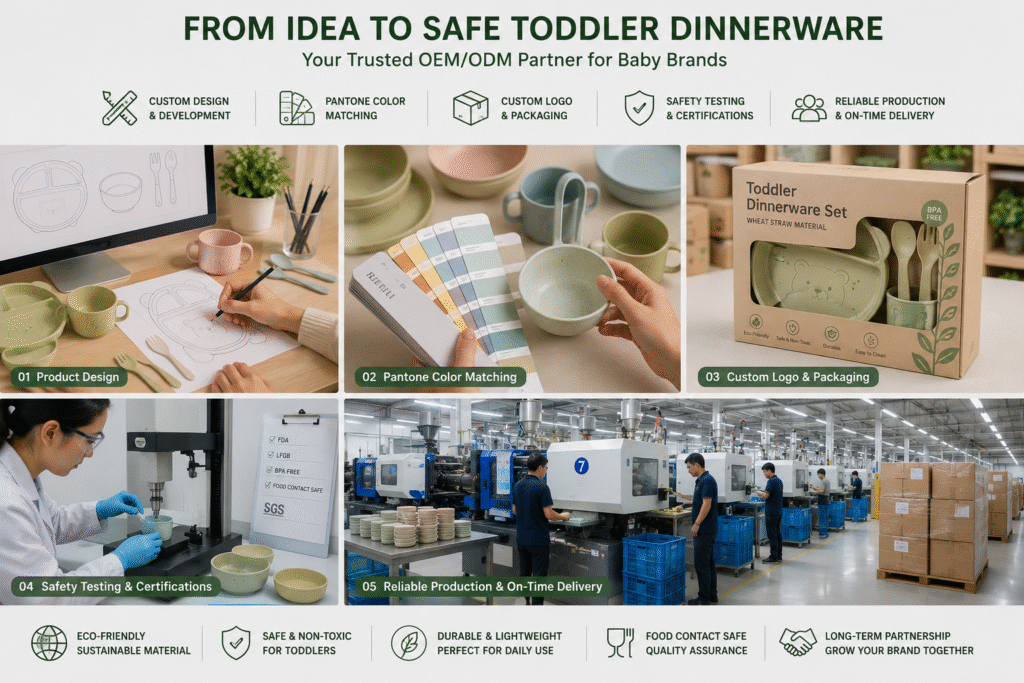
As an experienced OEM and ODM manufacturer, we work closely with baby brands, distributors, wholesalers, and retailers to develop customized feeding solutions.
Our services include:
Product Development
Custom toddler plates, bowls, cups, and feeding sets.
Pantone Color Matching
Consistent brand identity across product lines.
Logo Customization
Private-label branding support.
Eco-Friendly Packaging
Retail-ready packaging solutions.
Quality Control
Inspection procedures throughout production.
Whether you’re launching a new baby brand or expanding an existing product range, our team can help create dinnerware collections that combine safety, functionality, and market appeal.
Looking for a Reliable Toddler Dinnerware Manufacturer?
If you’re sourcing:
- Toddler Dinnerware Sets
- Baby Feeding Sets
- Wheat Straw Plates
- Baby Bowls & Cups
- Private Label Children’s Tableware
we can help you develop products that align with your brand’s quality, design, and sustainability goals.
Contact us today to receive:
✅ Free Product Consultation
✅ OEM & ODM Development Support
✅ Custom Color Recommendations
✅ Packaging Solutions
✅ Competitive Factory Quotations
Let’s build a toddler dinnerware collection that parents trust and children love.
CONTACT US

Does Wheat Straw Tableware Release Microplastics?
An evidence-led B2B guide to microplastic-release questions for wheat straw composite tableware, including material scope, use simulation, contamination controls and claim limits.

How Should Buyers Set AQL Inspection for Wheat Straw Tableware?
A practical procurement guide to setting product-specific AQL inspection rules for wheat straw tableware, from lot definition and defect classes to random sampling and shipment release.

Does Wheat Straw Tableware Contain PFAS?
A practical B2B evidence guide to PFAS questions in wheat straw composite tableware, covering formulation review, supplier declarations, testing scope and claim limits.

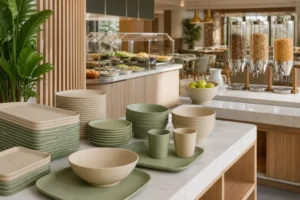
How Should Hotels Choose Wheat Straw Tableware for Breakfast Buffets?
A factory-side guide for hotels, distributors and hospitality groups evaluating reusable wheat straw tableware for breakfast buffets, from service flow and warewashing to evidence, replenishment and pilot testing.

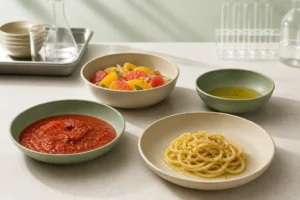
Can Wheat Straw Tableware Handle Acidic and Oily Foods?
A factory-insider guide to specifying wheat straw composite tableware for tomato, citrus, oily sauces and other demanding food-contact conditions.

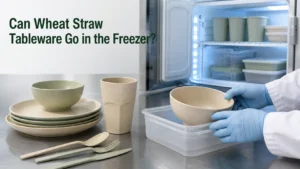
Can Wheat Straw Tableware Go in the Freezer?
Can wheat straw tableware go in the freezer? This evidence-led B2B guide explains frozen-storage conditions, material variables, freeze-thaw testing, compliance documents and the questions buyers should ask before approving a freezer-safe claim.