Description
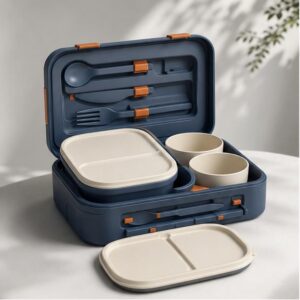
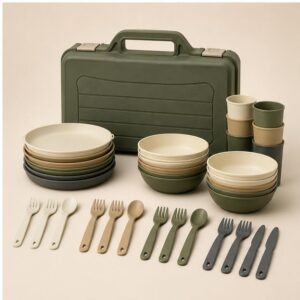
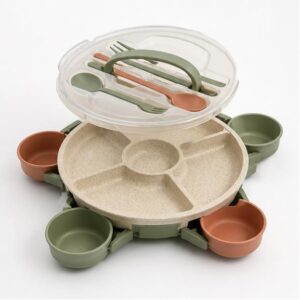
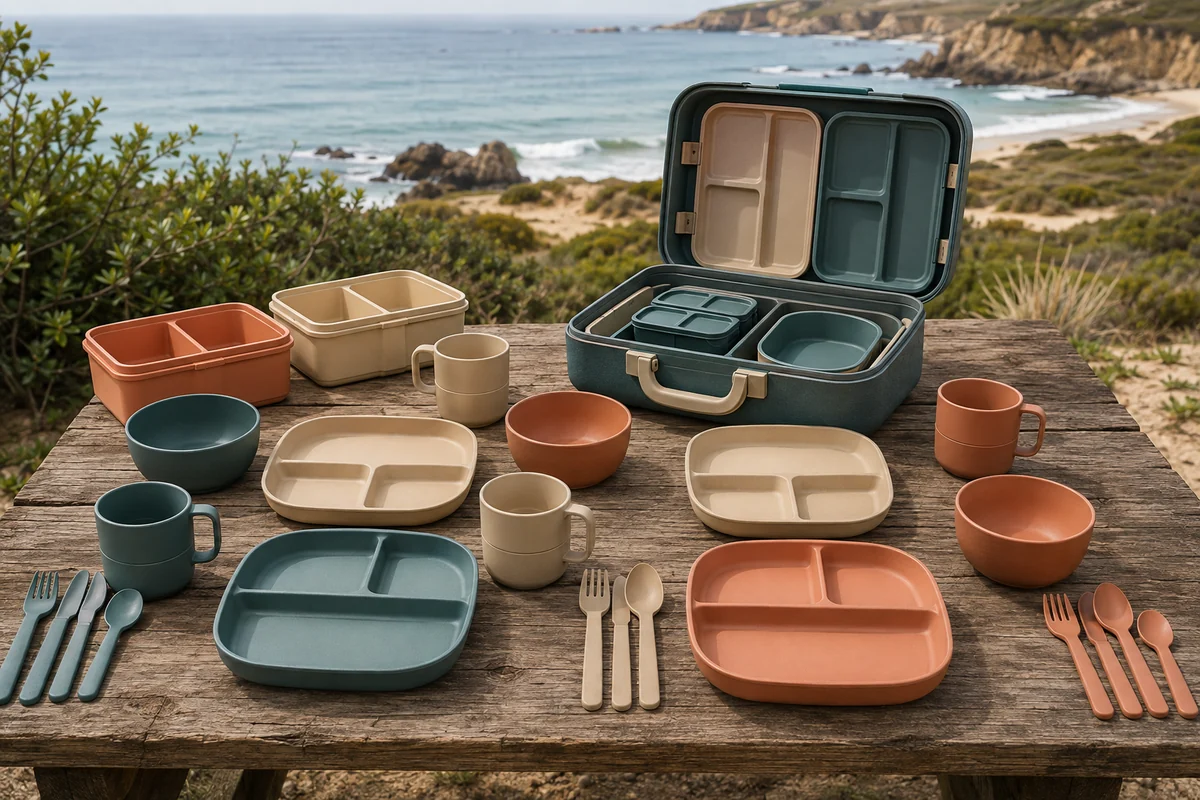
The Custom Modular Family Picnic Dining Set is a four-person B2B configuration concept built around rounded-square divided plates, deep bowls, handled stacking cups, compact knife-fork-spoon groups, two divided lunch boxes and a rigid clamshell carry case with removable organization trays. Published PP outdoor-tableware records provide a sourcing starting point; final dimensions, resin, colors, nesting and compatibility remain project-confirmed.
PRODUCT PARAMETER
| Product type | Four-person modular outdoor dining-set development concept |
|---|---|
| Verified source records | Published PP family dinnerware, picnic meal-kit, camping-set and plate product records |
| SKU | To be confirmed for the project |
| Material direction | Food-contact PP direction; exact resin, additives, pigments and accessory materials to be confirmed |
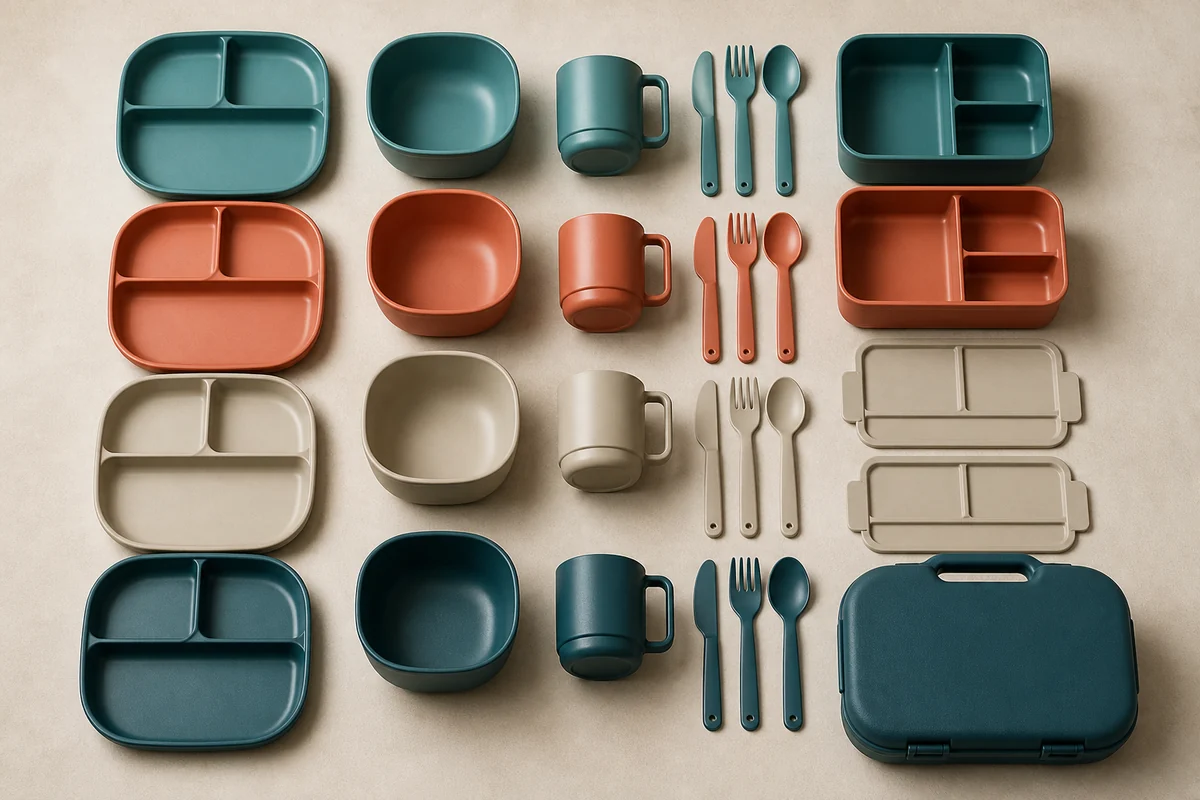
| Reference configuration | 4 divided plates, 4 bowls, 4 handled cups, 4 knife-fork-spoon groups, 2 divided lunch boxes, removable trays and 1 rigid carry case |
| Design language | Rounded-square dining geometry with teal, terracotta and sand color zoning |
| Size / capacity / weight | To be confirmed for the project |
| Carry structure | Rigid clamshell case with molded retention and removable organization trays; feasibility to be confirmed |
| Logo | Method, location and durability to be confirmed after artwork and surface review |
| Packaging | Carry case plus retail and transit packaging to be confirmed for the project |
| Applicable markets | Europe, North America, Australia and comparable outdoor channels, subject to evidence review |
| MOQ / price / lead time | To be confirmed for the project |
REFERENCE CONFIGURATIONS
The illustrated arrangement is a configuration proposal, not a confirmed stock SKU. Compatibility to be confirmed by project sample and drawing. Buyers can revise user count, lunch-box quantity, color allocation, utensil mix and case organization after the meal pattern, storage envelope and channel are documented.
Family Picnic
Four individual dining settings, two shared lunch boxes and one organized rigid case for park or campsite meals.
Retail Color Set
Color-zoned components that support shelf presentation and user allocation, subject to pigment and evidence approval.
Day-Trip System
Reduce the plate count, add removable snack boxes or revise the case trays around a lighter outing brief.
MODULAR FAMILY PICNIC DINING SET DESIGN DIFFERENCES
This concept is materially different from the previous titanium trail set and from round nesting mess kits. It uses rounded-square divided plates, broad-base bowls, straight handled cups, rectangular lunch boxes and a rigid teal clamshell case. Removable molded trays organize components by function instead of relying on a roll-top textile bag.
The teal, terracotta and sand color system supports role separation, but color alone does not define the product. The component profiles, compartment architecture, case closure and retention channels create the main design distinction. Final geometry, wall thickness, latch construction and nesting interfaces require drawing and physical sample approval.
COMPONENT MATCHING AND NEW DEVELOPMENT
Published Naike Dinner PP records provide reference paths for family dinnerware sets, modular picnic kits, plates and larger camping assortments. These records do not prove that every illustrated component is available or mutually compatible. Compatibility to be confirmed by project sample and drawing.
Verified components may be reviewed as a coordinated system when their dimensions, materials and use conditions fit the brief. New divided geometry, case tooling or tray interfaces require a separate feasibility review. Tooling ownership, cost, schedule and production route are to be confirmed for the project; the concept image does not promise molding capability.
RIGID CASE, TRAY AND RETENTION DETAIL
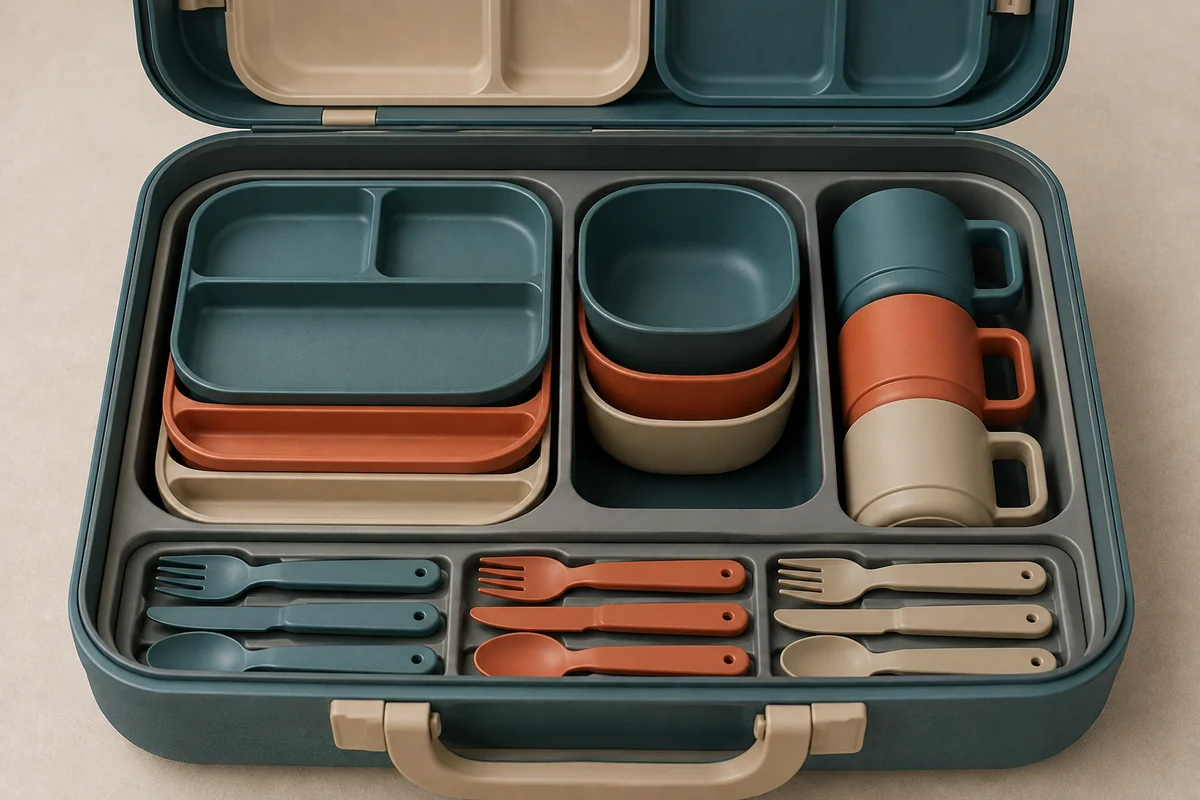
The carry concept uses a clamshell case with a hinged lid, mechanical latches, removable trays, plate channels, nested bowl zones and separate cutlery slots. This can make component counting and repacking easier than an unstructured bag, but it also adds bulk, hinges and cleanability questions that must be tested.
Case geometry should be reviewed around actual parts, not rendered proportions. Confirm closure under load, handle balance, latch access, ventilation, drainage and resistance to normal transport. The case is storage and packaging, not a food-contact certificate or performance result.
COLOR, LOGO AND SURFACE CONTROL
The images use teal, terracotta and sand to show a coherent family assortment. Exact pigment systems, surface texture, gloss and color tolerances are to be confirmed. A buyer should approve physical chips and finished samples under relevant lighting, then connect each supplied color to the appropriate evidence file.
Logo feasibility depends on artwork, location, surface, food-contact position and expected cleaning. Send vector artwork and preferred zones for review. No nonexistent logo, certification mark or performance claim should be added to concept imagery or final packaging.
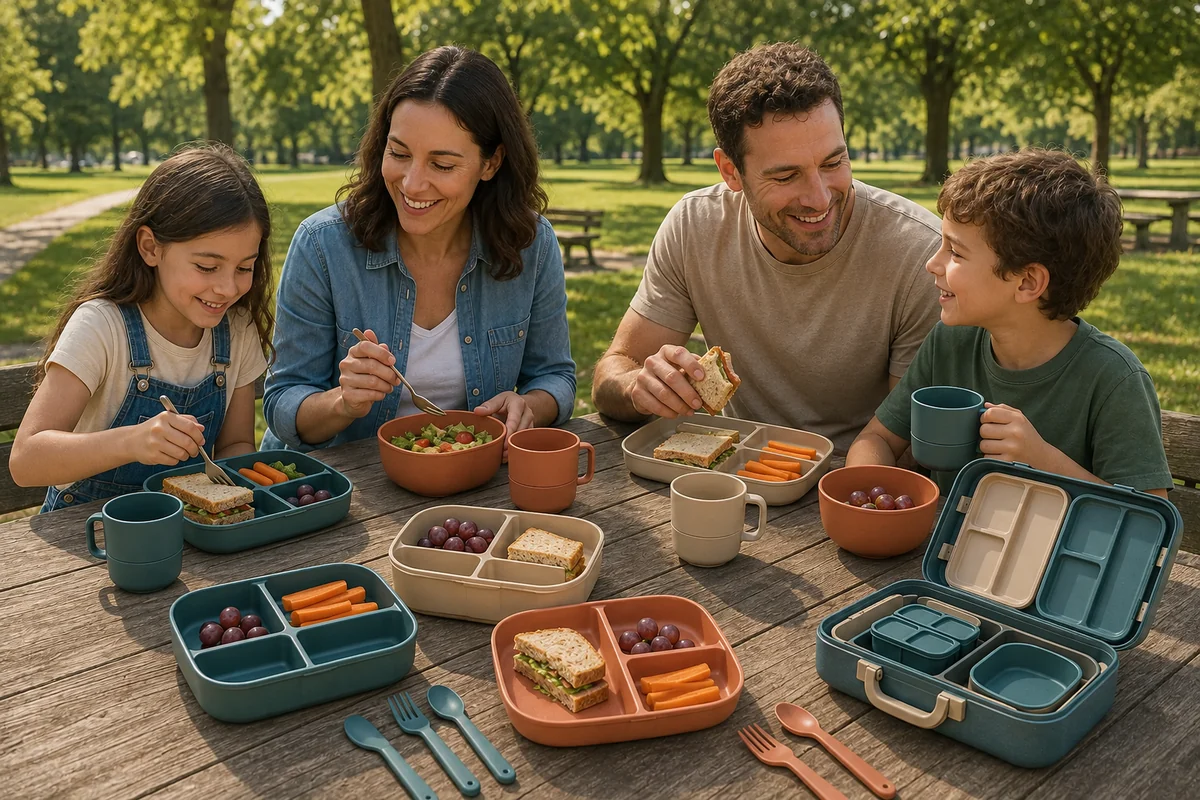
Outdoor application concept: the scene demonstrates a plausible four-person meal architecture. It is not a customer case, confirmed SKU, test photograph or proof of product availability.
B2B DEVELOPMENT CONTROLS
1. Use Brief
Define users, meal types, carry distance, storage limits, target markets and cleaning expectations.
2. Component Matrix
List each plate, bowl, cup, utensil, box and tray with quantity, source and open specifications.
3. Interface Review
Confirm nesting, lid fit, tray retention, latch clearance, cutlery slots and pack order.
4. Complete Sample
Approve handling, cleaning, drying, closure, component counting and realistic outdoor use.
5. Evidence Map
Match resin, pigments, prints and finished articles to intended use and destination requirements.
6. Golden Set
Retain approved components, artwork, packaging and pack-out instructions for inspection.
MATERIAL AND COMPLIANCE BOUNDARY
The material direction is PP, but no universal resin grade, capacity, temperature, dishwasher, microwave, freezer, impact or food-contact result is claimed. Each finished article, pigment and intended condition requires relevant evidence. Dinnerware and lunch-storage pieces are not cookware and should not contact burners, campfires or direct flame.
For U.S. projects, review the FDA’s Food Contact Substances guidance. For EU projects, review Regulation (EC) No 1935/2004 and the European Commission’s food-contact materials overview. These sources frame buyer questions and do not certify this concept.
RELATED PROCUREMENT PATHS
Review the published Custom-Molded PP Family Camping Dinnerware Set, PP Two-Person Modular Picnic Meal Kit, 6-Person PP Camping Dinnerware Set and 25cm Wheat-Straw + PP Camping Plate. Use these published records only to frame sourcing questions; the proposed family configuration still requires its own drawing, physical sample and written approval.
MODULAR SET APPROVAL POINTS
A modular family picnic dining set should be approved as one packed system rather than as unrelated pieces. The buyer should record the exact component count, case position and removal order before artwork is finalized.
The modular family picnic dining set brief should identify which parts come from verified live records and which remain development questions. This keeps concept imagery separate from confirmed company capability and prevents an illustrated shape from being mistaken for an available SKU.
Use a complete physical sample to review the modular family picnic dining set for tray fit, latch closure, cleaning access, drainage and realistic carrying. Compatibility to be confirmed by project sample and drawing.
Before quotation, the modular family picnic dining set request should state target markets, packed footprint, color allocation, logo zones, replacement strategy and evidence expectations. A modular family picnic dining set also needs a controlled component-replacement plan. MOQ, price and lead time remain to be confirmed for the project.
PROCUREMENT FAQ
Is the illustrated set a confirmed stock SKU?
No. It is a B2B configuration concept. Component availability, dimensions, colors and compatibility are to be confirmed for the project.
Can buyers change the component count?
Yes as a project question. The user count, meal pattern, packed volume and case layout should be reviewed before the matrix is approved.
Can the divided plates and lunch boxes use custom geometry?
A development review can be requested. Tooling feasibility, ownership, cost, schedule and production route remain to be confirmed.
Can the rigid case use different removable trays?
Potentially. Tray interfaces, retention, cleanability, latch closure and pack-out require drawing and sample review.
Can colors and logos be customized?
Color and logo directions can be reviewed after resin, pigment, artwork, surface and evidence requirements are defined.
What are the MOQ, price and lead time?
To be confirmed for the project after component availability, customization, tooling, packaging and evidence scope are documented.
BUILD YOUR MODULAR FAMILY PICNIC SET
Send the user count, component matrix, divided-plate and lunch-box requirements, color direction, artwork, case organization, target markets and evidence expectations. We will separate verified source products from open compatibility and development questions before a sample plan or quotation.
REQUEST A SET CONFIGURATION REVIEWRELATED SOURCING PATHS
Compare Products and Plan Your Project
Review related product formats, then compare material, set configuration, logo, packaging, testing scope and order quantity with our B2B team.