

Shared Serving Pieces vs Individual Place Settings for Group Camping
A procurement framework for deciding which camping dinnerware components should be issued per person and which should remain shared across a group.
How to Prevent Rattle in a Nested Camping Dinnerware Set
A practical diagnostic for finding and controlling movement, impact and rubbing inside nested camping dinnerware sets without hiding problems behind unsupported claims.
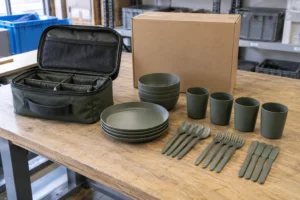
How to Calculate Pack Volume for Camping Tableware
A practical procurement worksheet for measuring the complete camping tableware sales unit, calculating its external cube and separating real pack efficiency from unsupported freight claims.
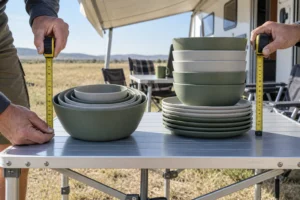
Nesting vs Stacking: How the Two Designs Change Pack-Out
A buyer-focused geometry and pack-out comparison for choosing nested, stacked or hybrid camping dinnerware systems without confusing compact appearance with approved performance.

What Makes Camping Dinnerware Truly Stackable?
A procurement acceptance framework for reviewing stack rise, contact interfaces, separation, stability, mixed-component order, drainage and retained pack-out.

Deep Bowls vs Shallow Bowls for Outdoor Meal Sets
A procurement decision table for selecting deep and shallow camping bowl profiles by meal function, user access, stability, cleaning and packed-set architecture.
Turn a Quality Symptom into a Controlled Corrective Action
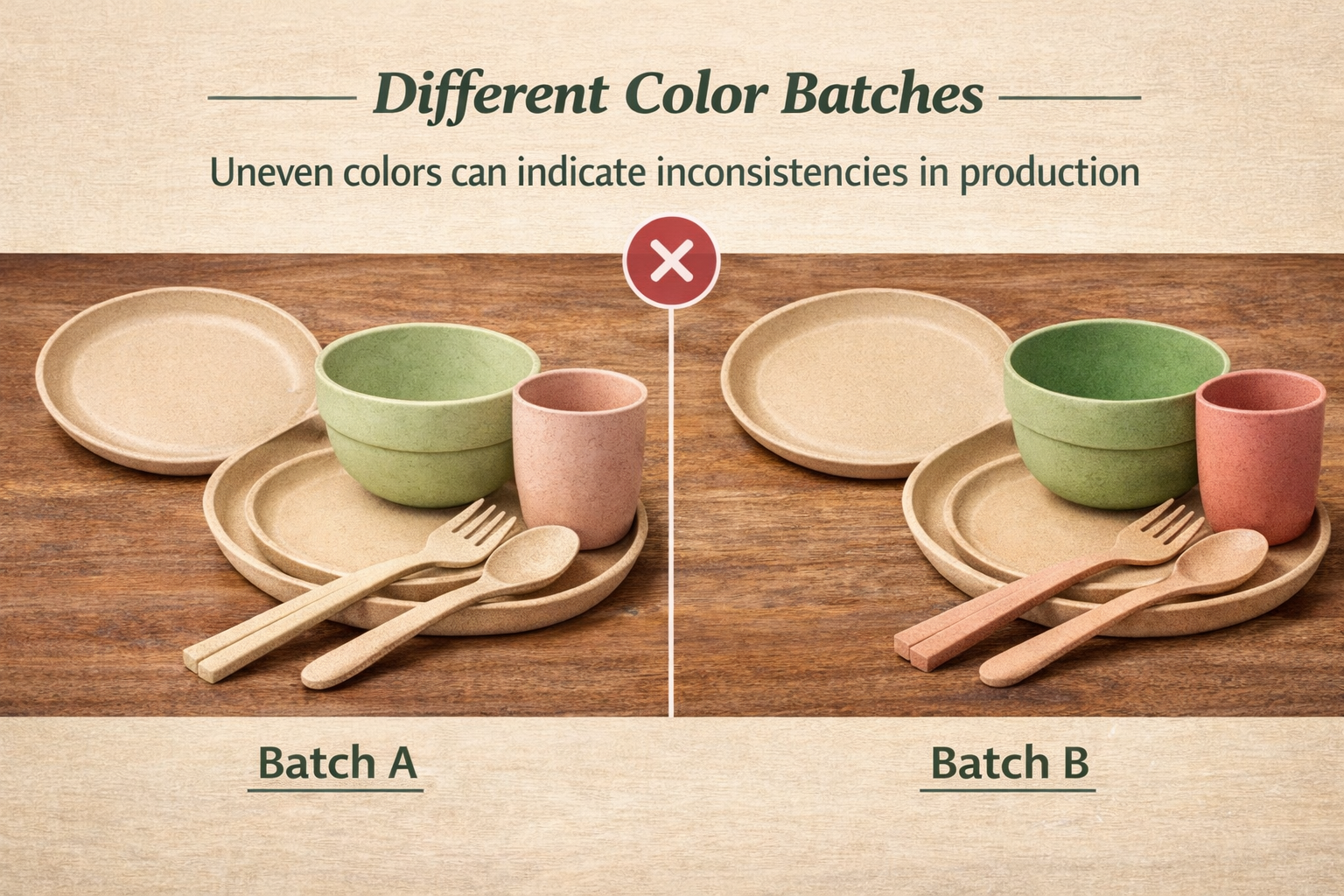
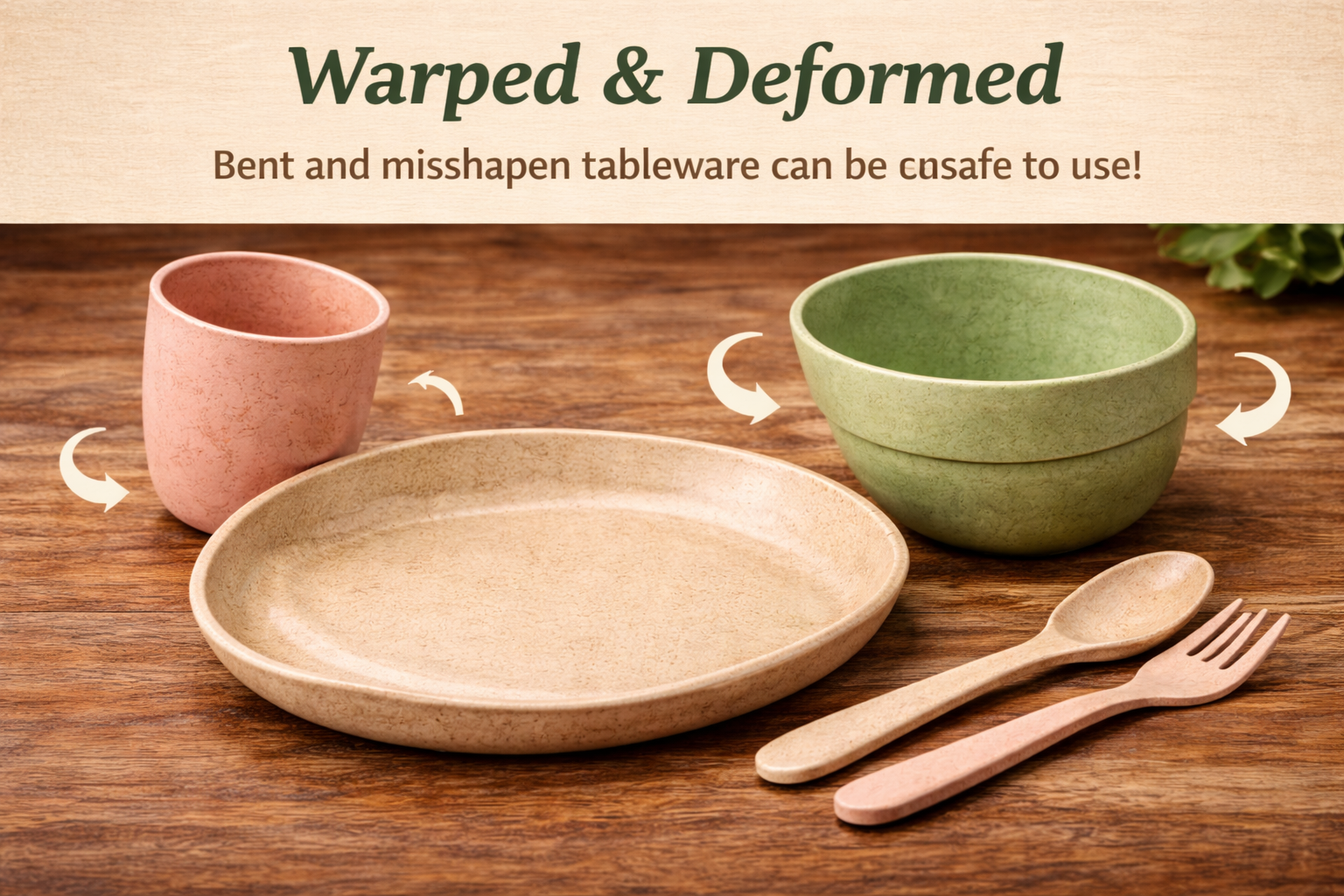
When a buyer finds odor, warpage, color variation, brittleness, poor nesting or packaging damage, the next step is to isolate the affected lot and compare it with the approved sample and purchase specification. Avoid applying one conclusion to every wheat-straw composite SKU.
- Identify: record SKU, lot, quantity, photos and use conditions.
- Contain: separate affected stock and stop mixed-lot shipment.
- Verify: compare material records, dimensions, weight and agreed tests.
- Correct: define process, tooling, packing or inspection changes.
- Confirm: approve a new sample or controlled pilot lot before release.
Technical consolidation
A Practical Defect-Diagnosis Worksheet for Buyers
This section consolidates the useful technical intent previously split across two quality-issue articles. Record the approved sample, formulation, color reference, molding conditions, finished weight and test method before assigning a cause.
| Observed issue | Check first | Evidence to retain |
|---|---|---|
| Odor | Resin identity, drying, storage and processing temperature | Material declaration, batch record and retained sample |
| Color variation | Fiber batch, masterbatch dosage and agreed tolerance | Signed color limit sample and production-lot photos |
| Brittleness or cracking | Formulation, wall thickness, molding parameters and impact method | Drawing, unit-weight record and test result tied to the SKU |
Do not treat a generic certificate as proof for every color and shape. Define the finished product, intended use and target market through our testing and certification workflow. Buyers comparing other outdoor materials can continue to the outdoor tableware sourcing hub.