Description
CONFIGURABLE OUTDOOR DINNERWARE CONCEPT
Vertical-Slot Rack Four-Person Camping Dinnerware Set
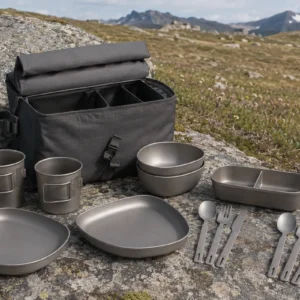
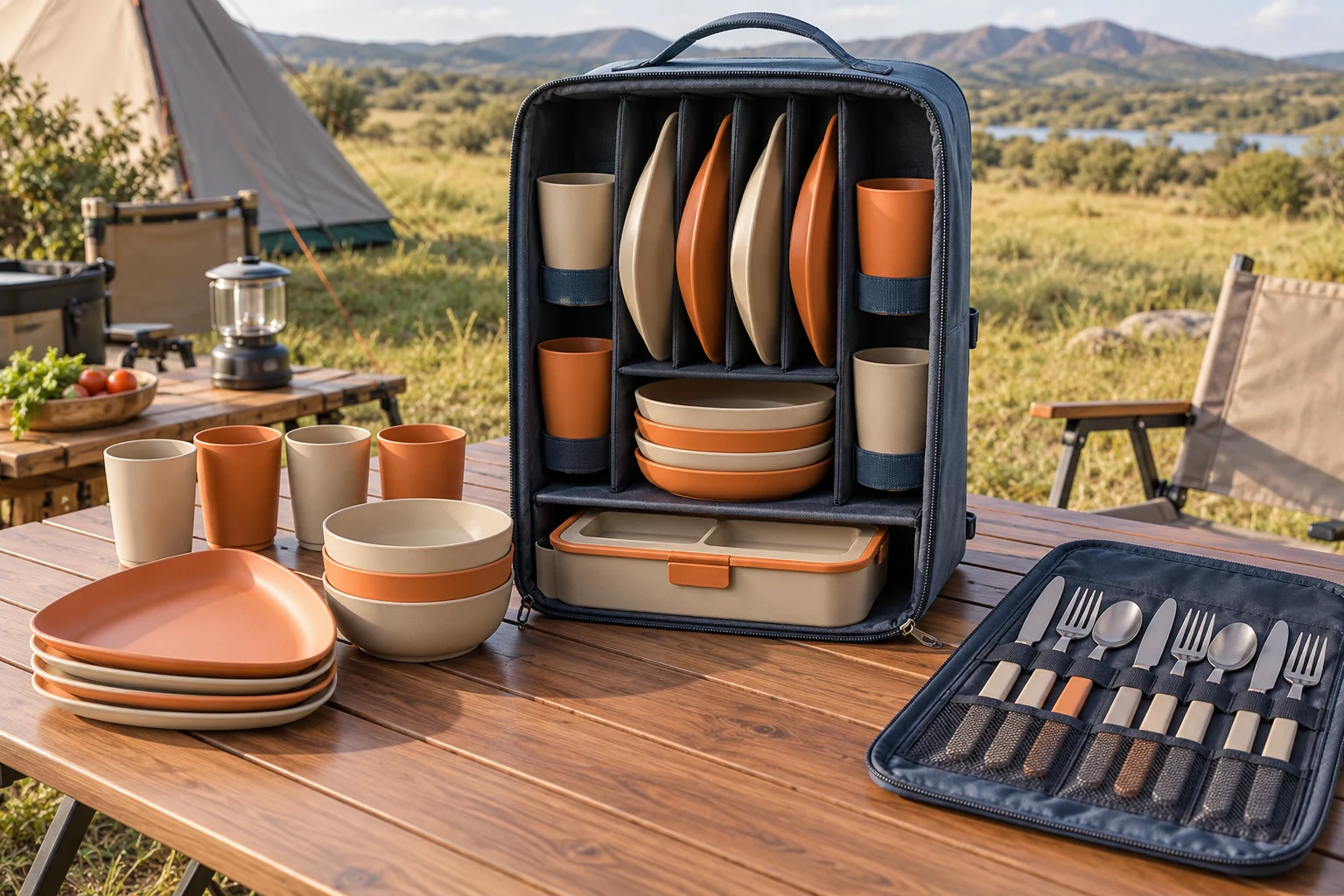
This four-person camping dinnerware set is a development concept built around a tall structured case. Four rounded triangular plates stand in padded slots; four low bowls sit on a removable shelf; four tapered cups use side cradles; a divided lunch box occupies the base drawer; and four cutlery groups fit a removable lid roll. It is not a verified production SKU.
- Vertical plate storage separates food-contact surfaces
- Removable shelf and base drawer divide bowls from the lunch box
- Side cradles and lid roll keep cups and cutlery accessible
- Materials, dimensions, interfaces and performance remain project decisions
This concept organizes a four-person camping dinnerware set vertically so buyers can review access, surface protection and packed stability without assuming final specifications.
PRODUCT PARAMETER
| Product concept | Vertical-Slot Rack four-person camping dinnerware set |
|---|---|
| Reference components | Structured rectangular zip case, padded vertical plate slots, four rounded triangular plates, removable lower shelf, four low wide bowls, four tapered cups in side cradles, divided lunch box in base drawer, removable lid cutlery roll and four knife-fork-spoon groups |
| Material | To be confirmed for the project |
| Dimensions and weight | To be confirmed for the project |
| Color and finish | To be confirmed against approved samples |
| Logo and packaging | To be confirmed for the project |
| MOQ, price and lead time | To be confirmed for the project |
| Compatibility | Compatibility to be confirmed by project sample and drawing. |
REFERENCE CONFIGURATIONS

| Configuration | Buyer choice | Evidence before approval |
|---|---|---|
| Two-setting compact | Two plate slots, selected bowl/cup cradles and shorter roll | Unused-slot restraint and loaded balance |
| Four-setting reference | Four coordinated place settings plus divided lunch box | Slot protection, shelf retention, drawer clearance and closure |
| Service replacement | Separately coded plate, bowl, cup or cutlery group | Fit, finish, color and master-set comparison |
| Retail program | Counts, colors, branding, insert and outer pack | Approved matrix, samples, artwork and pack-out |
Images communicate proposed organization, not a released SKU or specification. Approve only against drawings, controlled component references and representative loaded samples.
Control vertical plate contact and removal
Vertical storage changes the contact path. Define slot width, padding, plate orientation, separator height and the removal angle available when cups and bowls remain packed. Observe edge pressure, surface rubbing, accidental lift of neighboring plates and whether a user can return each plate without forcing it.
The rounded triangular plates are concept geometry. Their dimensions, material, finish and compatibility remain to be confirmed. Compatibility to be confirmed by project sample and drawing.
Use a simple access observation sheet for each position: identify the component removed, components that must move first, contact points, force or awkward rotation observed, and whether the piece returns to the correct slot without disturbing the loaded case. Repeat with the case upright and horizontal. This does not create a performance claim; it gives the buyer evidence for deciding whether the proposed architecture is usable.
Review the shelf, cradles and base drawer as one system
The removable bowl shelf sits above the base lunch-box drawer while cup cradles occupy the case sidewalls. Check shelf retention with the case upright and horizontal, cup release without collision, drawer travel, latch sweep, bowl stack movement and case closure. No load rating, rail life, impact resistance or leakproof claim is made.
Inspect every carry state with the complete set loaded. A stable upright display does not prove transport performance. Buyers should record movement, contact, closure pressure, removal sequence and any loose component before approval.
Agree the review order before sampling: confirm the component matrix, compare component envelopes with the proposed case drawing, inspect an unloaded case, load the complete reference configuration, repeat access steps, close and carry the case, then document open issues. This sequence helps separate a component-fit issue from a divider, shelf, cradle or drawer issue and gives each correction a clear owner.
Inspect Vertical-Slot storage details
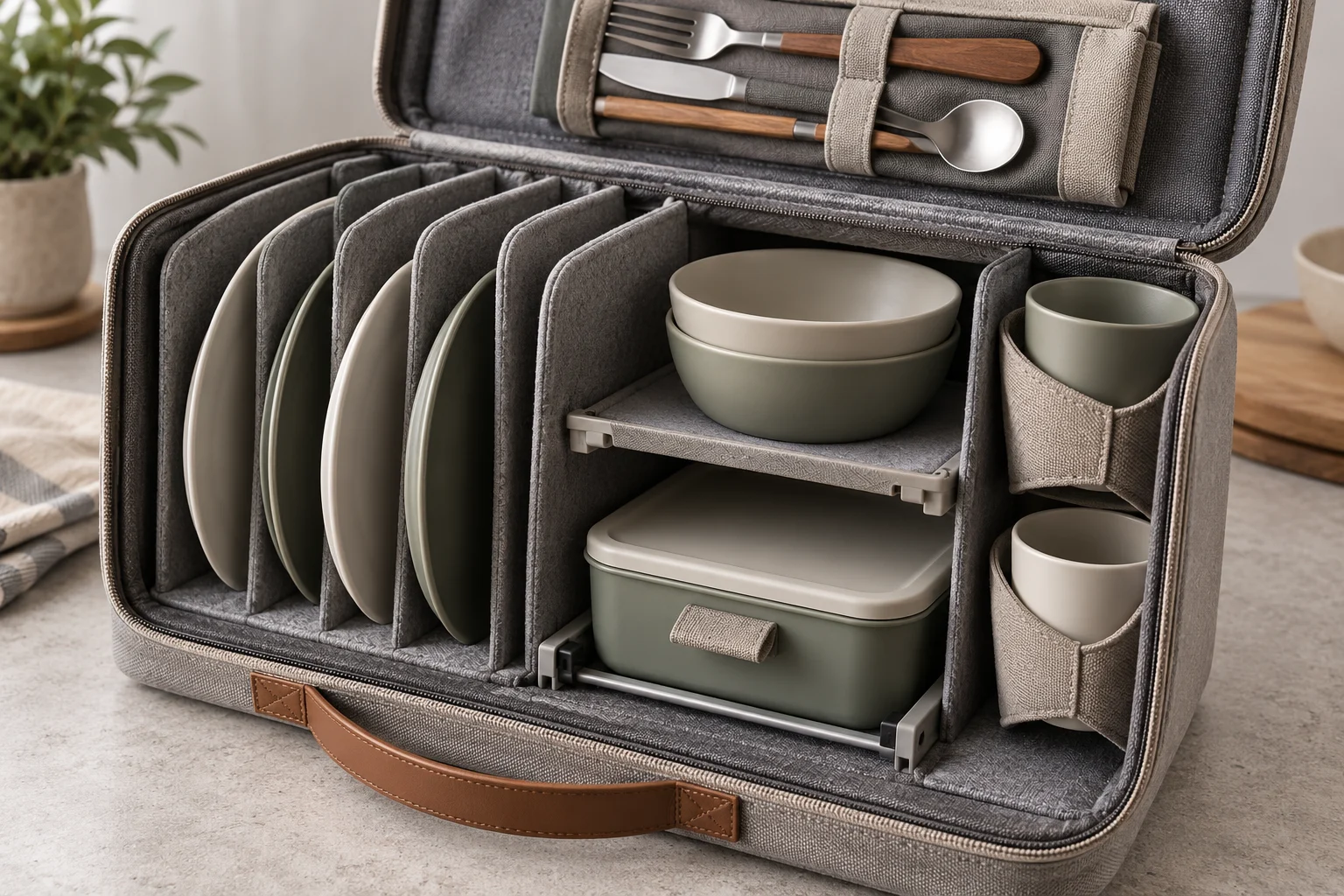
Control padding, slot dividers, shelf clips, side cradles, drawer guides and the cutlery roll through component drawings and complete loaded samples. Keep utensil edges away from food-contact faces.
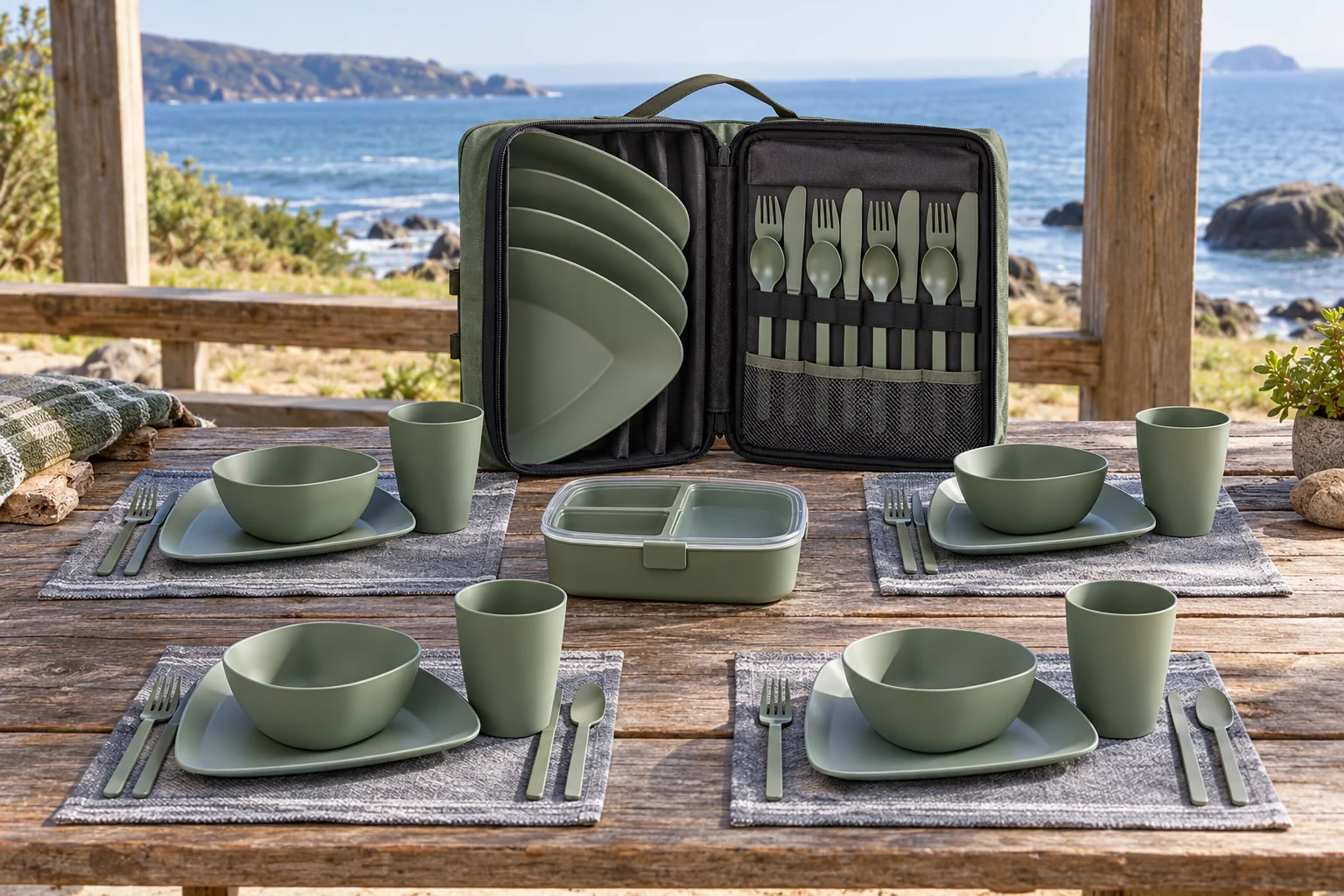
Concept/application image for configuration discussion; it does not represent a released SKU, customer order, factory test or certified product.
Customization and connected procurement choices
| Control | Options to review | Dependency |
|---|---|---|
| Set composition | Two/four settings, shared container and replacement pieces | Slot count, shelf area, cradles and packed balance |
| Storage architecture | Slot spacing, shelf position, drawer travel and roll layout | Component geometry and removal route |
| Service pieces | Triangular plate, wide bowl, tapered cup and cutlery | Surface protection, stack height and user access |
| Branding | Case color, component finish, logo and packaging | Approved material, process and artwork |
| New geometry | Revised shell, divider, shelf, cradle or component profile | Drawings, tolerances, samples and feasibility |
B2B development controls
- Freeze the component matrix before fixing slot and shelf envelopes.
- Review the complete loaded case upright, horizontal, carried and reopened.
- Protect plate edges and food-contact faces from dividers and utensils.
- Check cup and bowl access without removing unrelated components.
- Define drawer stop, lunch-box latch clearance and return sequence.
- Approve logo and packaging after material and process review.
- Keep dinnerware claims separate from cookware and direct heat.
Record drawing revisions, sample IDs, observed fit, contact points, owners and decisions. Do not infer capacity, tolerance, MOQ, price, lead time or tooling feasibility from concept imagery.
Material and compliance boundary
The renderings establish only the Vertical-Slot organization idea. They do not verify material identity, regulatory status, migration, container sealing, divider durability or destination-market suitability. Define evidence from food types, contact duration, use temperature, washing method, decoration and destination rules. Record unknown specifications as “To be confirmed for the project” until drawings, samples and supplier evidence close them.
For the next review, compare the component-selection framework with the pack-envelope verification steps and the pilot-build approval process. Primary context: FDA, EU Framework Regulation and NIST traceability.
Procurement FAQs
Can the case stand upright while open?
The concept shows that position, but stability and safe use require the actual case, load and surface to be reviewed.
Do the vertical slots prevent scratching?
No performance claim is made. Define surfaces, separator material, transport conditions and acceptance criteria.
Is the base lunch box leakproof?
No. State closure, carrying orientation, food type and test method before requesting a sealing claim.
Can existing plates fit the slots?
Potential reuse can be reviewed. Compatibility to be confirmed by project sample and drawing.
Can the bowl shelf be removed for cleaning?
That is a project option requiring geometry, retention, cleaning access and sample review.
What starts a quotation?
Send setting count, component matrix, closed case envelope, slot and shelf priorities, markets, food-use conditions, branding, packaging and evidence expectations.
Build a practical Vertical-Slot camping dinnerware set
Share setting count, component references, case envelope, vertical-storage priorities, target markets, food-use conditions, logo and packaging requirements. Naike Dinner will identify drawings, samples and written confirmations required before approval.
RELATED SOURCING PATHS
Compare Products and Plan Your Project
Review related product formats, then compare material, set configuration, logo, packaging, testing scope and order quantity with our B2B team.