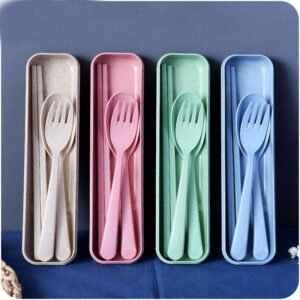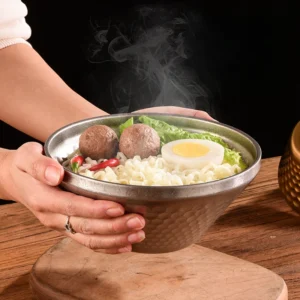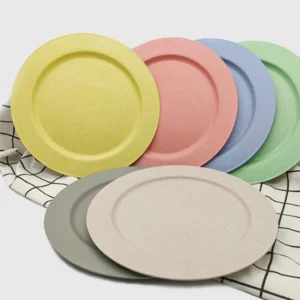
Description
PORTABLE FOUR-PERSON DINNERWARE CONCEPT
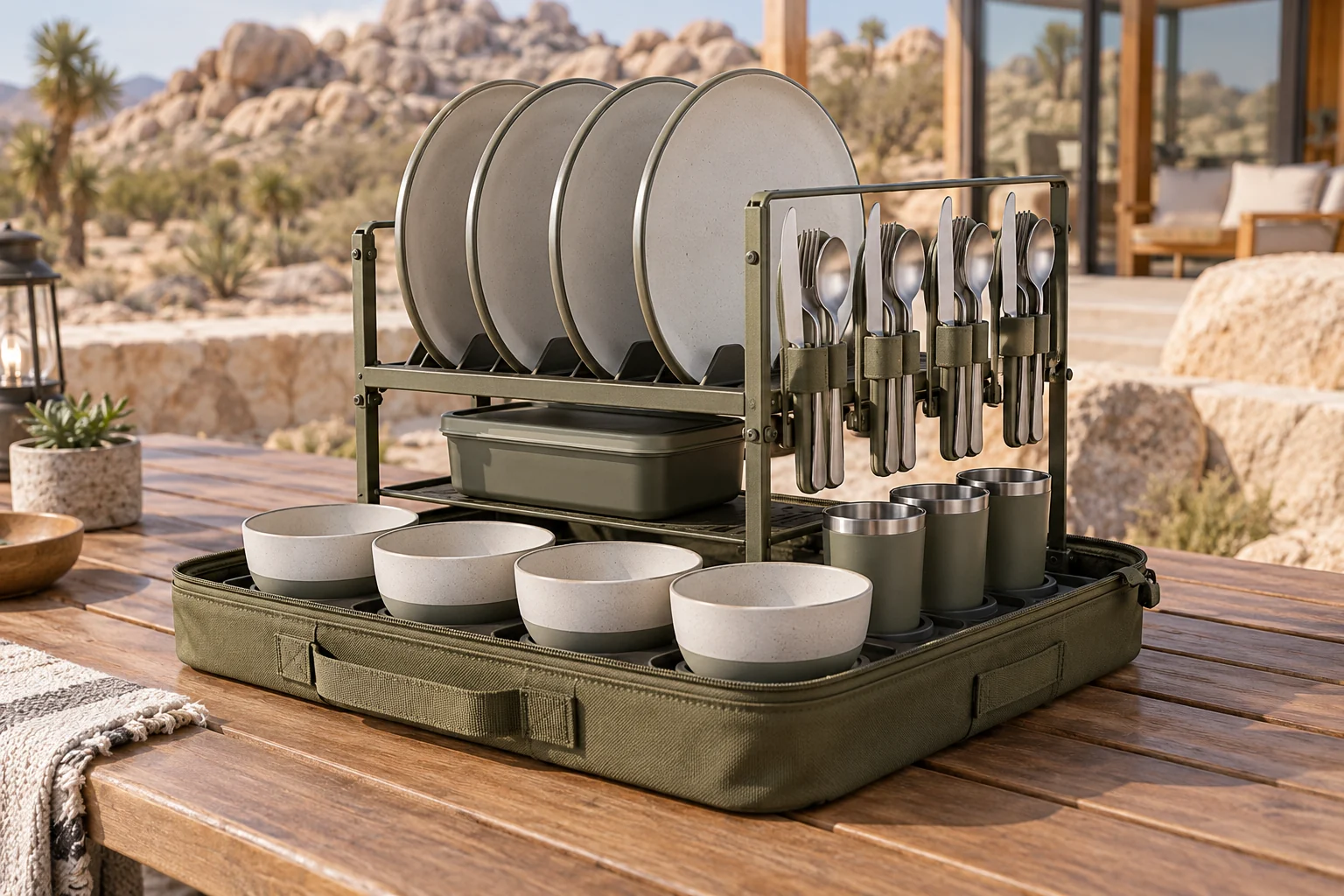
Lift-Cage Four-Person Camping Dinnerware Set
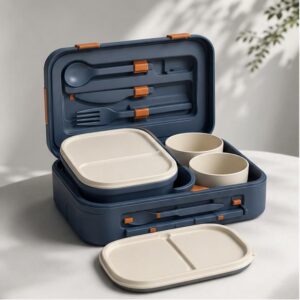
This camping dinnerware set explores a removable rectangular organizer that lifts the plate rack, utensil sleeves and bridge shelf as one access module. Four bowls and four cups remain in lower docks inside a low-profile case, while a lidded lunch container can occupy the protected space beneath the bridge. The architecture is a project concept, not a finished production SKU.
Project boundary: all materials, dimensions, capacities, colors, food-contact evidence, MOQ, price, tooling, production capacity and lead time are To be confirmed for the project.
PRODUCT PARAMETER
| Product form | Four-person camping dinnerware concept with removable rectangular lift cage, lower component docks and low-profile carry case |
|---|---|
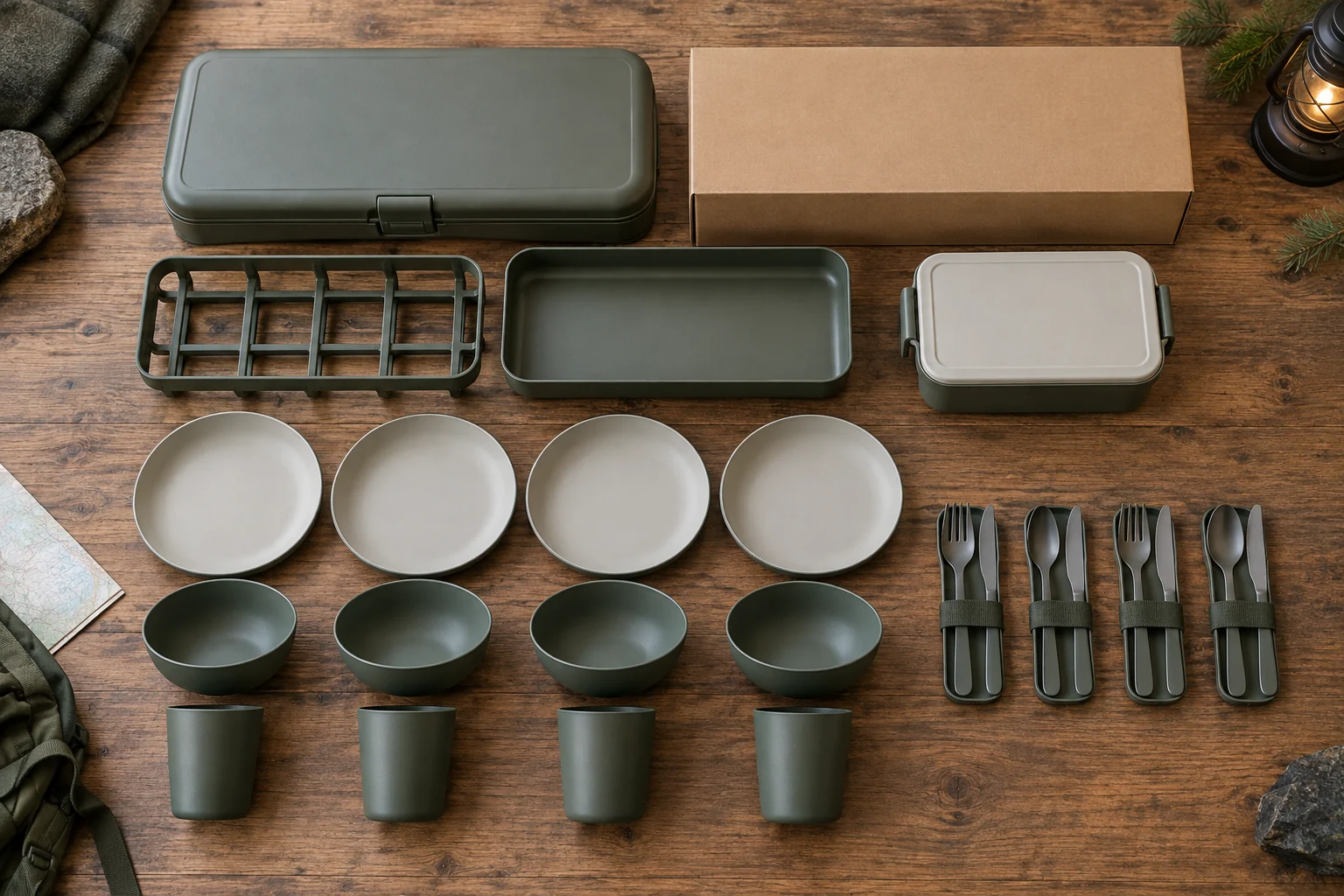
| Reference components | Four plates, four bowls, four cups, four place-setting utensil groups, one lidded lunch container, lift cage, dock tray and carry case |
| Material | To be confirmed for the project |
| Dimensions / weight / capacity | To be confirmed for the project |
| Color / logo / packaging | To be confirmed for the project |
| MOQ / price / lead time | To be confirmed for the project |
| Compatibility | Compatibility to be confirmed by project sample and drawing. |
REFERENCE CONFIGURATIONS
The illustrated camping dinnerware set provides one discussion configuration. A buyer may retain the four-person place settings and remove the lunch container, replace the bridge space with an approved accessory, or specify a different case envelope. Every option changes the cage loads, slot geometry, dock clearances and pack-out. Freeze the target BOM before asking for a quotation.
Lift-Cage access architecture
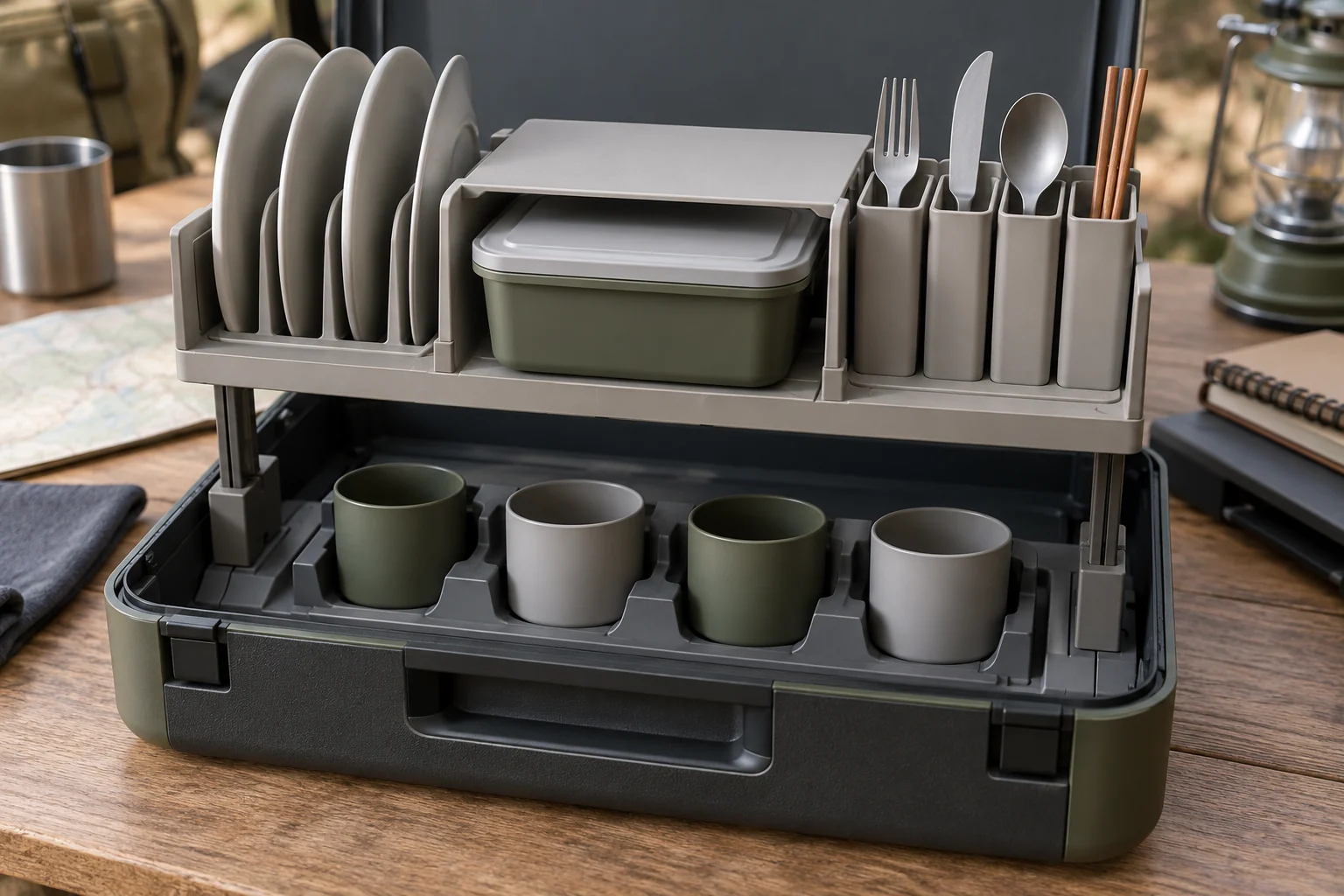
The distinguishing action is vertical removal of one rectangular organizer. Plates remain in individual slots; utensils sit in separated sleeves; the bridge shelf protects a lower container zone. The buyer can then access bowls and cups in the case base without unfolding multiple wings or rotating a carousel. Development review must address lift balance, finger clearance, slot contact, utensil retention, bridge deflection, cage seating and case closure. None is a verified performance claim.
Define the lift module before quotation
Send the required place-setting count, component envelopes, preferred access sequence, intended foods and temperatures, cleaning conditions, target markets, logo positions, packaging route and evidence requirements. Existing components can be screened against the concept, but the final organizer and pack-out need controlled drawings and project samples.
A camping dinnerware set quotation should identify every component, organizer interface and packaging assumption rather than pricing only the visual concept.
DEVELOPMENT CONTROL
| Gate | Buyer decision | Required record |
|---|---|---|
| Component map | Which plates, bowls, cups, utensils and container belong in one set? | Approved BOM and place-setting count |
| Lift cage | Which parts lift together, and where can the user grip safely? | Assembly drawing, handle zone and load review |
| Plate slots | Required plate envelope, spacing, edge contact and removal clearance | Interface drawing and sample observations |
| Bridge shelf | What occupies the protected lower space and how is it retained? | Clearance map and component contact record |
| Lower docks | How are cups and bowls separated during carry and access? | Dock layout, packed-contact map and migration review |
| Case closure | How does the cage seat without loading food-contact rims? | Closed-pack section and closure observation |
| Release | Which drawing, sample, artwork and packaging revisions control supply? | Linked approval and revision register |
MATERIAL AND COMPLIANCE BOUNDARY
Concept images do not establish polymer identity, fiber content, recycled content, biodegradability, BPA status, dishwasher use, microwave use or food-contact compliance. Each finished component, colorant, decoration, adhesive, textile, intended food, time, temperature, cleaning method and target market must be evaluated within the project scope. Dinnerware must not inherit cookware claims. The FDA inventory of effective food-contact substance notifications, the European Commission food-contact materials overview and Regulation (EC) No 1935/2004 are primary starting points; they do not validate this concept or any unspecified material.
The camping dinnerware set evidence file must follow the approved finished components and use conditions.
CUSTOMIZATION, PACKAGING AND PROJECT OPTIONS
Component colors, cage finish, case textile, logo location, lunch-container option, utensil mix, retail insert, printed sleeve, e-commerce mailer and outer carton may be reviewed as separate project variables. Availability and compatibility are not assumed. For adjacent buyer decisions, review the portable flatware reference product, the carry-case fit checklist and the retail insert design guide. A channel pack should be released only after the final BOM and organizer geometry are controlled.
COMPONENT DESIGN DIFFERENCE
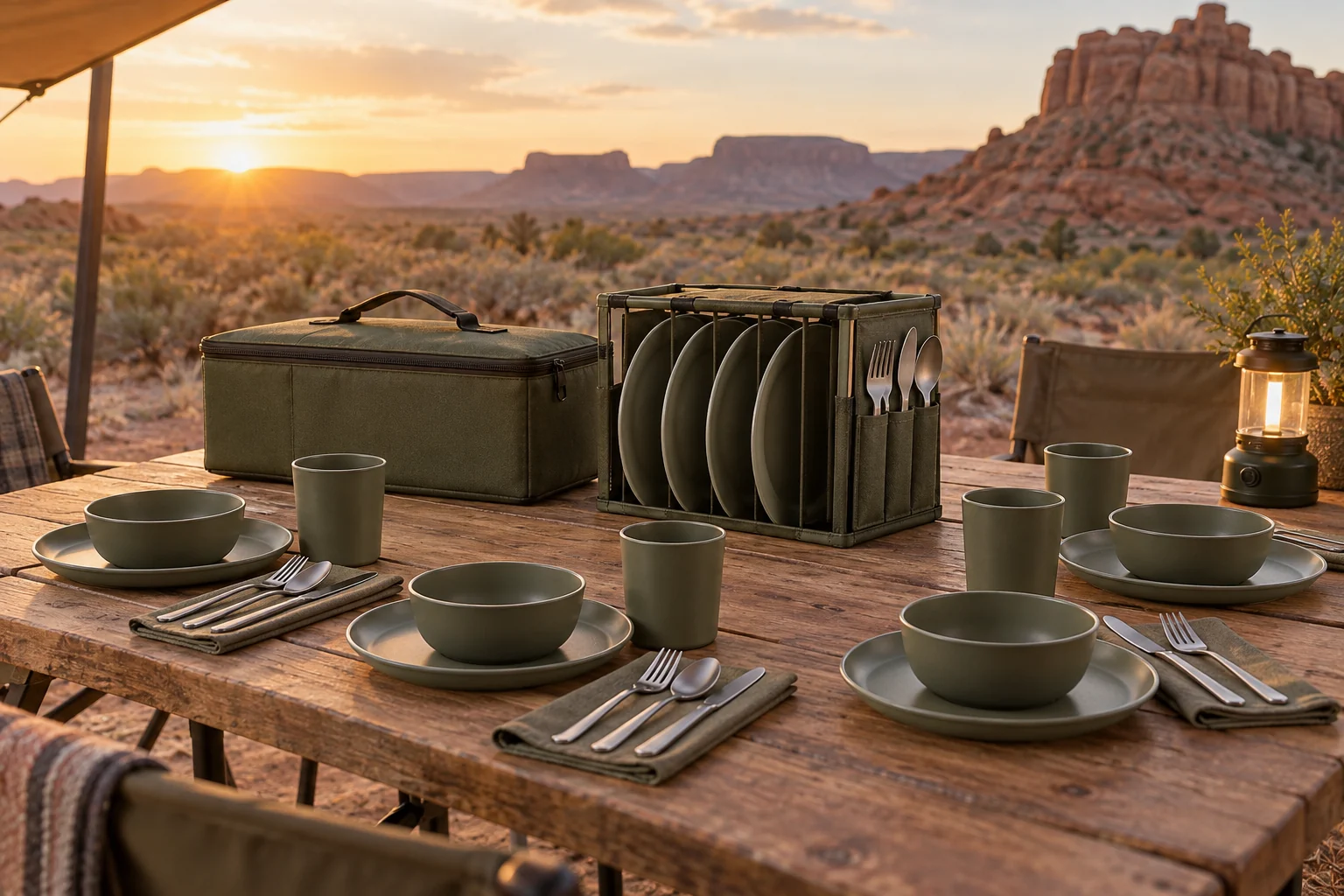
This Lift-Cage concept is not a recolor, crop, mirror or background variation of another set. Its defining component system is one removable rectangular cage that carries vertical plate slots, utensil sleeves and a bridge shelf above stationary lower docks. The lift-first access sequence, load path and two-level component relationship differ materially from hinge-chain bays, tension frames, drawers, rolls, cassettes, radial pods and fold-out panels.
This camping dinnerware set therefore requires a distinct interface drawing, sample review and pack-out approval.
PROCUREMENT FAQ
Is the Lift-Cage camping dinnerware set an existing SKU?
No. It is a project concept. Component availability, development route and any required tooling are To be confirmed for the project.
Can existing tableware fit the cage?
Possibly, but the slot, bridge and dock interfaces cannot be assumed. Compatibility to be confirmed by project sample and drawing.
Any change to a camping dinnerware set component can alter slot clearance, balance and case closure.
Can the cage be used as a drying rack?
No drying or drainage claim is made. Materials, geometry, stability, cleaning and intended use require project-specific review.
Can the lunch container be replaced with another module?
The bridge clearance, retention and contact map must be checked against the proposed component. Compatibility to be confirmed by project sample and drawing.
Can Naike Dinner quote from the images alone?
No. A quotation needs the target BOM, dimensions or samples, materials, use conditions, customization, packaging, quantity, market and evidence requirements.
The camping dinnerware set brief should also identify which fields remain To be confirmed for the project.
Request a Lift-Cage project review
Send your user count, component matrix, target case envelope, preferred lift sequence, material and market brief, use conditions, logo and packaging requirements. Unknown fields will remain To be confirmed for the project.
Contact Naike Dinner · Send the component brief · Discuss the case and packaging
RELATED SOURCING PATHS
Compare Products and Plan Your Project
Review related product formats, then compare material, set configuration, logo, packaging, testing scope and order quantity with our B2B team.