Description
LOW-CADDY SET CONCEPT
Low-Caddy Four-Person Camping Dinnerware Set
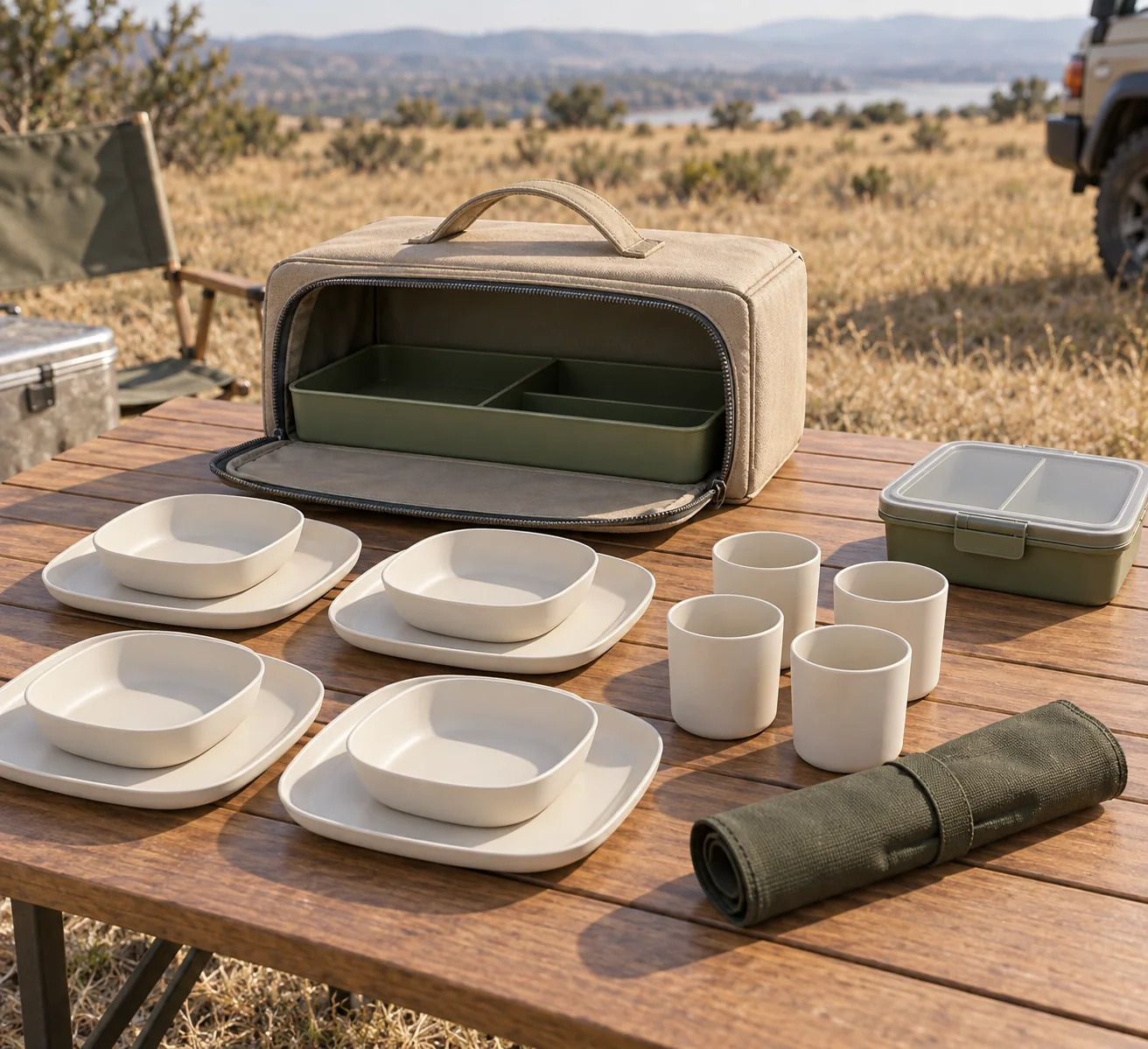
The low caddy camping dinnerware set is a buyer-development concept for four softly squared dining positions in a shallow front-opening carry format. The bag and removable organizer are pictured separately from the dining pieces, a closed cutlery roll and one optional divided food container. It is a different silhouette and access route from a tall vertical shoulder sleeve, a flat folio or a two-level case.
The images are concept/application illustrations, not a stock SKU, a tested pack-out or evidence of Naike Dinner manufacturing a bag or food container. Materials, real dimensions, capacity, component fit, supply scope and commercial terms are To be confirmed for the project.
Send a component briefLast updated:
PRODUCT PARAMETER
| Concept architecture | One low-profile sand-tone fabric handled caddy with front zipper and a separate lift-out organizer concept; softly squared eating pieces arranged for four places. |
|---|---|
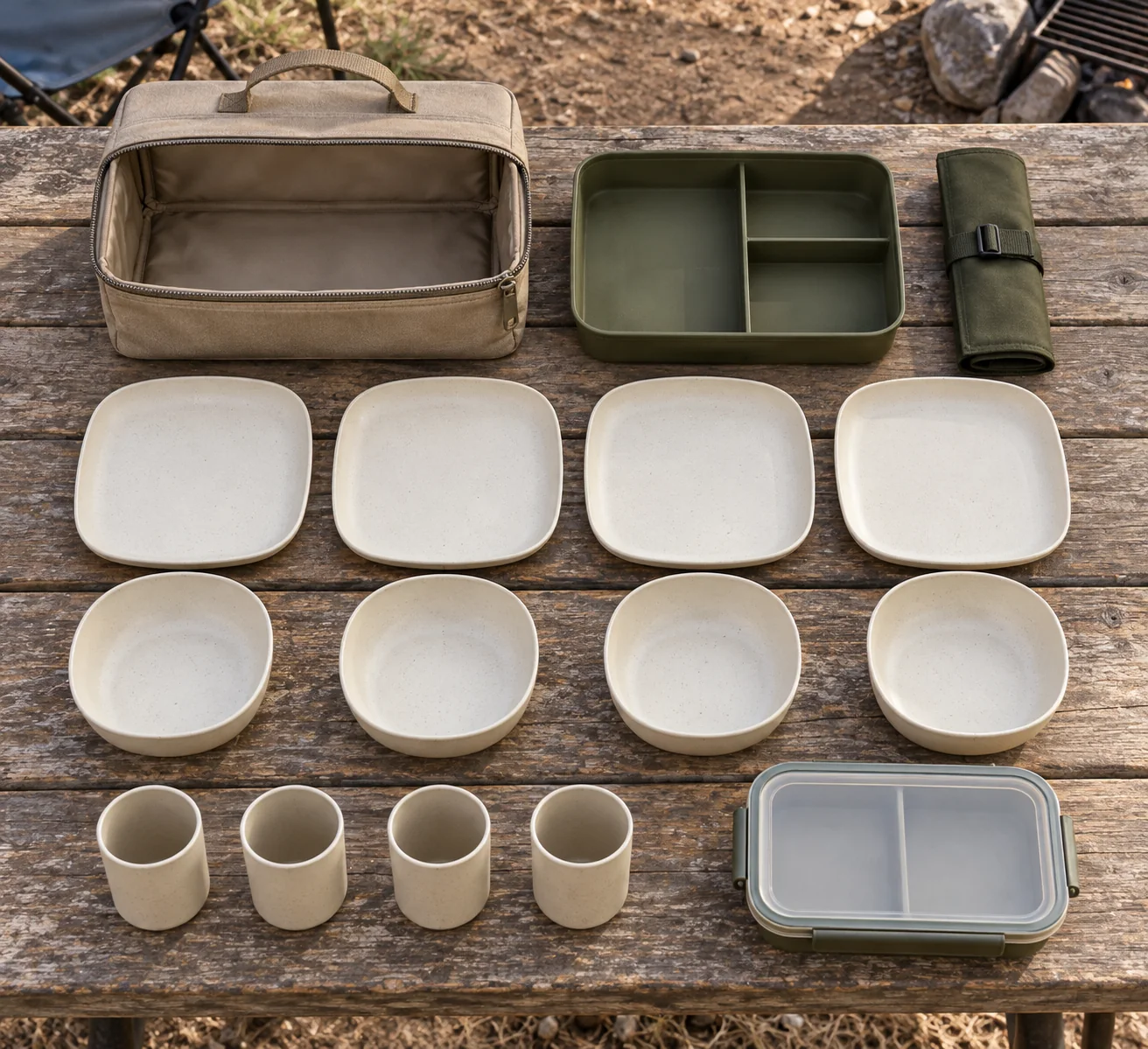
| Reference components | Four plates, four shallow bowls and four short cups; one closed utensil roll proposed for four settings; one divided lidded food-container candidate shown separately. Final counts and inclusion require a controlled component matrix. |
| SKU | To be confirmed for the project after the low-caddy component matrix is approved. |
| Materials and food-contact surfaces | To be confirmed for the project. An image's cream or olive appearance does not establish polymer, metal grade, finish or test status. |
| Dimensions, weight and capacity | To be confirmed for the project |
| Color and finish | Reference concept uses cream eating pieces, a sand-tone carry caddy and an olive organizer; final colors and surfaces to be confirmed for the project. |
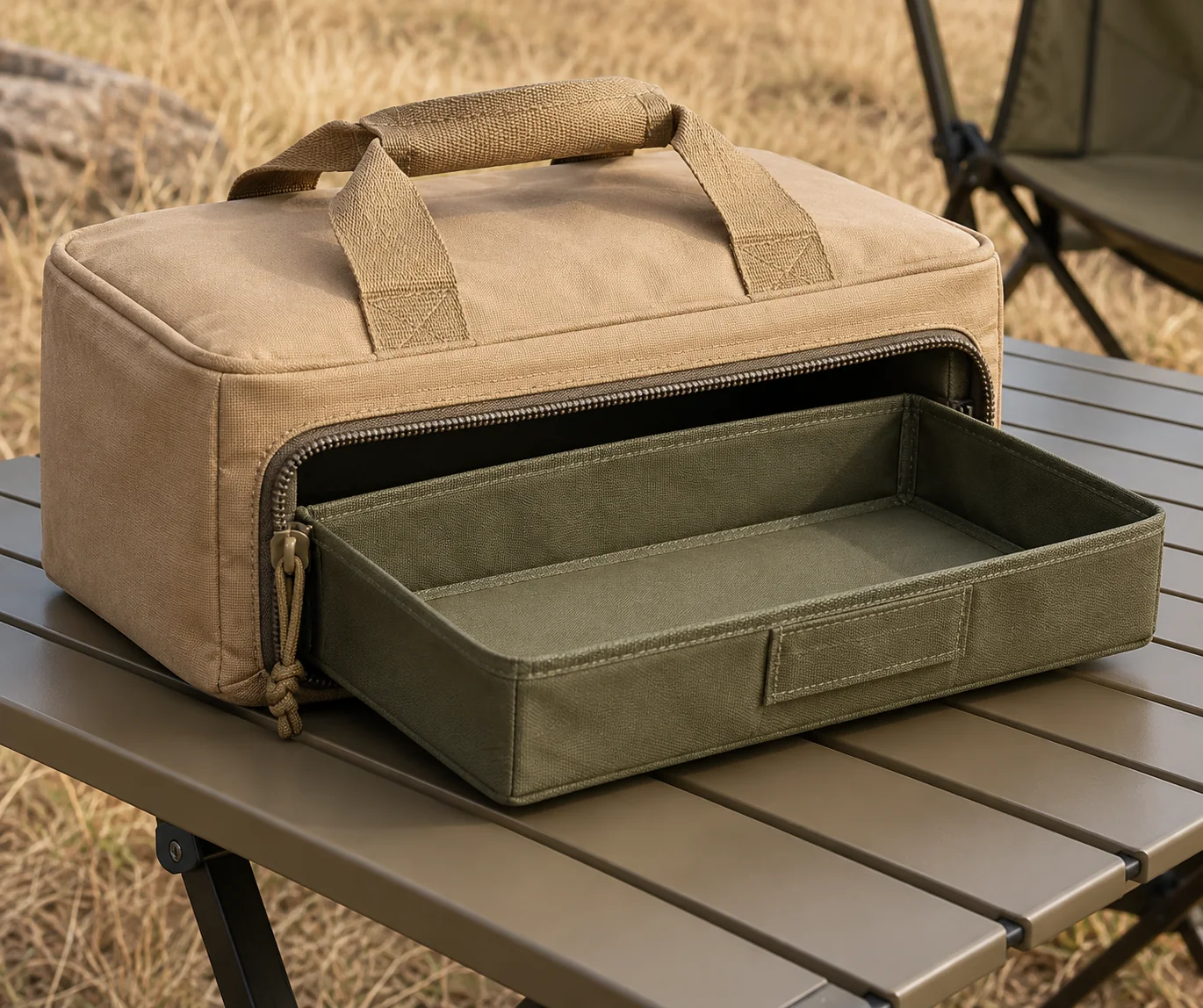
| Case and retention | Front zip opening, short handle and lift-out organizer are proposed design features; usable opening, loaded balance, restraint, washability and closing route require project samples. |
| Logo and packaging | Artwork location, process, included-parts statement and retail/transport package: To be confirmed for the project. |
| MOQ, price and lead time | To be confirmed for the project |
| Target markets | Europe, North America and Australia are buyer targets, subject to finished-part evidence and project-specific use conditions. |
REFERENCE CONFIGURATIONS
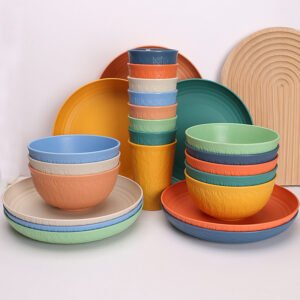
The overhead image helps specify a component family; it is not a confirmed supplied bundle. Approve the dining base, optional food module and case interface separately before selecting a pack-out and asking for a comparable quotation.
Soft-square table setting
Start with four softly squared plates, shallow bowls and handleless cups as a discussion set. Decide whether each meal needs both plate and bowl, how cutlery is counted and whether the same geometry fits the intended carry profile.
Organizer and caddy
Review an empty low caddy and a removable tray or liner concept. Ask for the loaded opening, divider contact map, tray extraction route, handle load path and clean/used return arrangement from actual samples.
Divided lunch box as a separate option
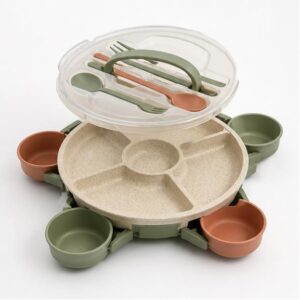
Leave the lidded divided box as a separate candidate until food-use, lid, divider, pack route and washability are reviewed. It may be quoted as an add-on rather than silently included in every market variant.
Compatibility to be confirmed by project sample and drawing. No capacity, case fit, leak resistance, thermal control or drop performance is established by these illustrations.
Why a low front opening changes the buyer review
A low handled caddy presents a different table footprint and lift-out motion from the published upright-sleeve concept. It is also unlike the two-person folio concept: the reference components are softly squared, count four eating positions, and introduce a separate shallow organizer rather than flat pockets. These are design choices for evaluation, not a claim of better performance.
A buyer should observe the real loaded geometry. Can the organizer be removed without disturbing the plates or bending a rim? Does a container lid obstruct the caddy opening? How are cups restrained if the case is carried by its short handle? If the candidate fails those questions, revise the architecture instead of making a photograph look more spacious.
Inspect the organizer, zipper and carry path
The close-up shows a proposed fabric caddy, front zipper and olive lift-out liner. It does not demonstrate a production seam, load rating, cleaning result or long-term zipper performance. Ask for actual construction drawings, a loaded sample and an inspection sequence for the handle attachment and liner removal.
Use the case-fit drawing checklist to capture component revisions, opening envelope and contact zones. The pack-out sequence worksheet can then turn an approved architecture into a repeatable assembly instruction. Neither makes this concept a stocked or tested product.
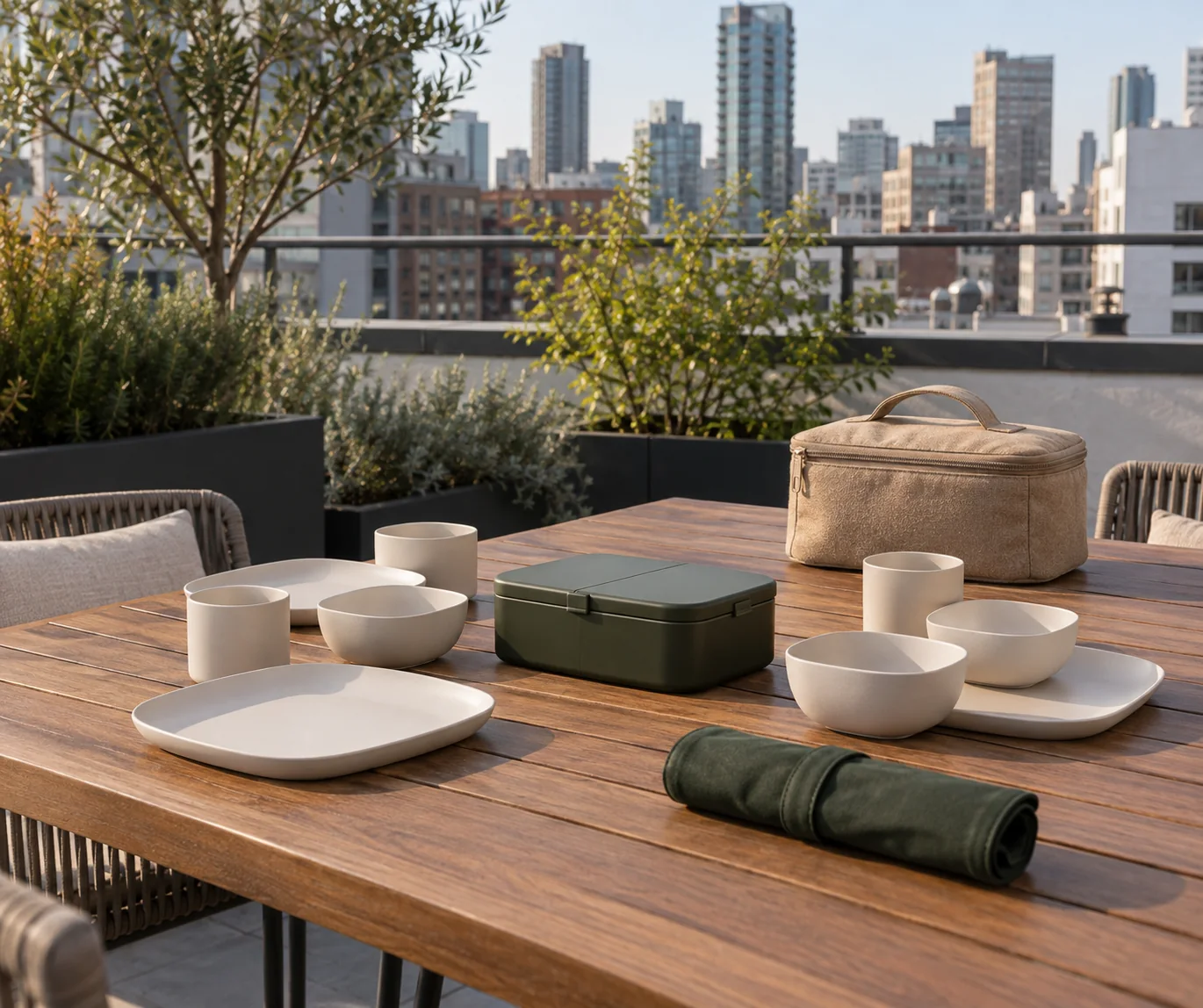
Partial outdoor-use illustration only. The displayed table subset is not a released four-place bill of materials or food-handling instruction.
Development controls for a configurable set
Component and variant matrix
List exact counts, drawings, material proposals, finishes and optional status. Ask the supplier to identify proven existing parts versus new-development candidates in writing.
Carry and return workflow
Specify opening width, loaded balance, case contact, tray removal, cleaning and how used or damp pieces return. The concept cannot approve fit or protection.
Customization and tooling
Send desired rim and bowl profile, cup form, liner and bag structure, logo location, color reference and artwork. Whether a shape needs a new mold or process is a written feasibility question, not a promised capability.
Revision release
A change in plate rim, case liner, food container, decoration or set count reopens fit, evidence, packing and artwork. Tie each approved sample to the corresponding configuration.
Material and compliance boundary
For Europe, assess each finished food-contact part against the European Commission's food-contact legislation framework. The FDA's conditions-of-use guidance and FSANZ food-packaging guidance frame separate market questions. These sources do not certify the illustrated parts or Naike Dinner's production capacity.
Request evidence for the real plates, bowls, cups, utensils and food-container body, lid and decoration as applicable. Record intended foods, temperature, contact duration and cleaning by component. The soft bag has its own cleaning and handling scope. Dinnerware is not cookware: no burner, direct-flame, oven, microwave, dishwasher, leakproof or impact claim is made without product-specific support.
Buyer release checklist
| Control | Question | Record needed |
|---|---|---|
| Four-place matrix | Do exact counts match the intended meal and channel? | Controlled component and option list |
| Tray interface | Can loaded pieces and liner be removed without forcing the zip or rim? | Drawing and blind pack-out observation |
| Food use | Are finished materials and conditions evidenced by component? | Part-level evidence index |
| Tooling scope | Which shapes are existing, modified or proposed new? | Written feasibility and sample plan |
| Artwork and pack | Does the included-parts statement match the approved variant? | Released artwork and packaging specification |
Procurement FAQ
Is this low-caddy set an available product?
No. This is a buyer-development concept; stock, materials, real dimensions, production route and commercial terms are To be confirmed for the project.
Do the four place settings fit inside the pictured case?
That has not been demonstrated. Compatibility to be confirmed by project sample and drawing.
Can the food container share the carry case?
Only after a sample and intended-use review. Compare its lid, cleanliness and removal route with a separate-module option; the published case-fit checklist records the physical interface without assuming shared storage is approved.
Can a buyer request a different logo or component shape?
Yes, as a project brief. The decoration method, existing-part availability and any new-tooling feasibility need a written assessment; none is pre-approved here.
Does the lift-out organizer protect the parts in shipment?
Not by appearance alone. Specify the inner and outer pack, distribution route, inspection and applicable testing; this photograph is not a transit result.
What enables a useful quotation?
Share the controlled component list, case/organizer drawings, target markets, food use, logo files, packaging and evidence requests. Ask for verified scope and unresolved development work to be identified separately.
Review a low-caddy configuration
Send the intended four-person meal, exact part counts, shallow caddy envelope, removable organizer requirements, target markets and material/use conditions. Request a written response on existing parts, sample fit, tooling feasibility and evidence gaps without assuming a ready-made SKU.
Request a component and sample review
To compare with a vertical case, send the same buyer brief for both carry formats. No MOQ, price, lead time or tested compatibility is implied.
RELATED SOURCING PATHS
Compare Products and Plan Your Project
Review related product formats, then compare material, set configuration, logo, packaging, testing scope and order quantity with our B2B team.