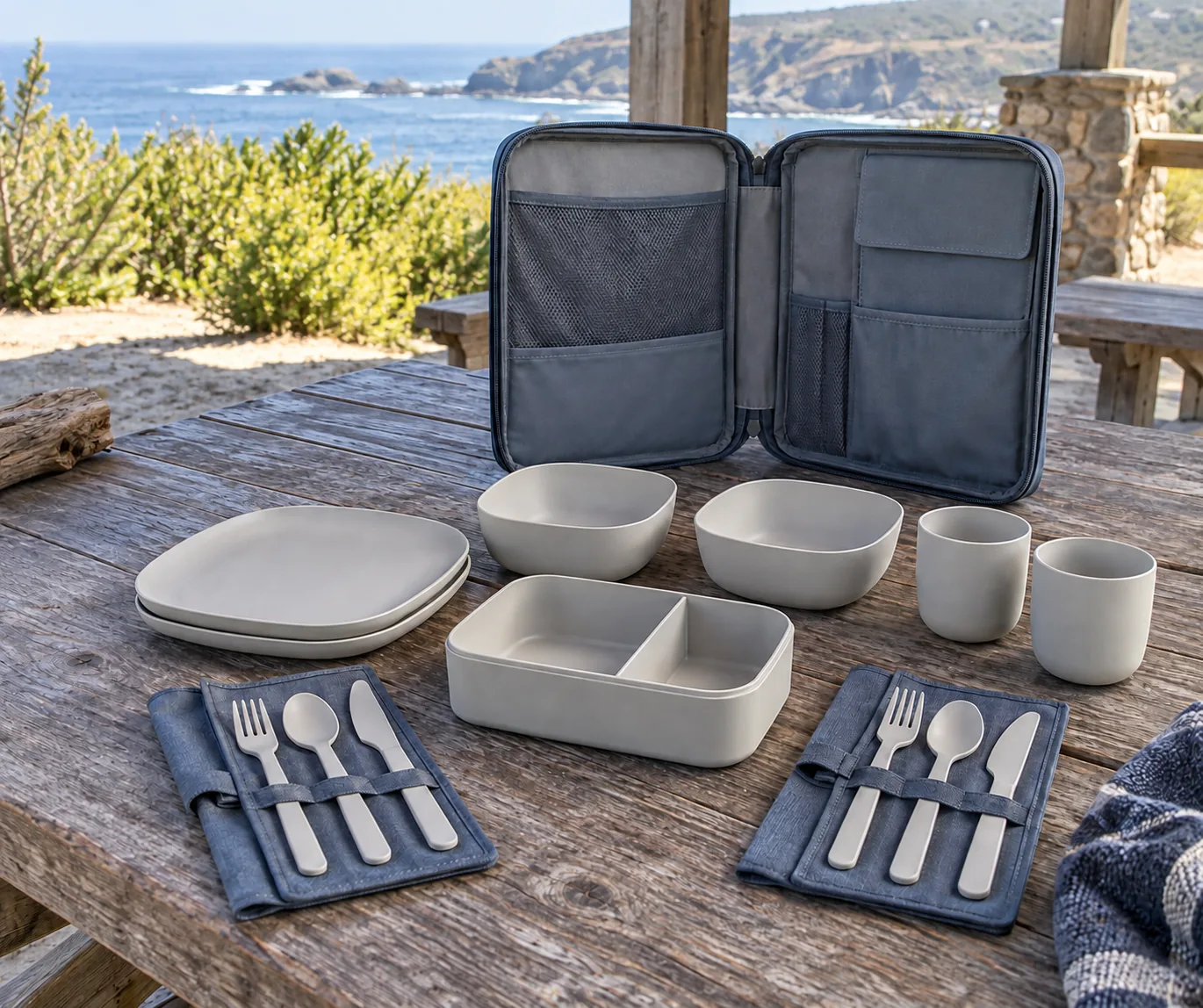
Description
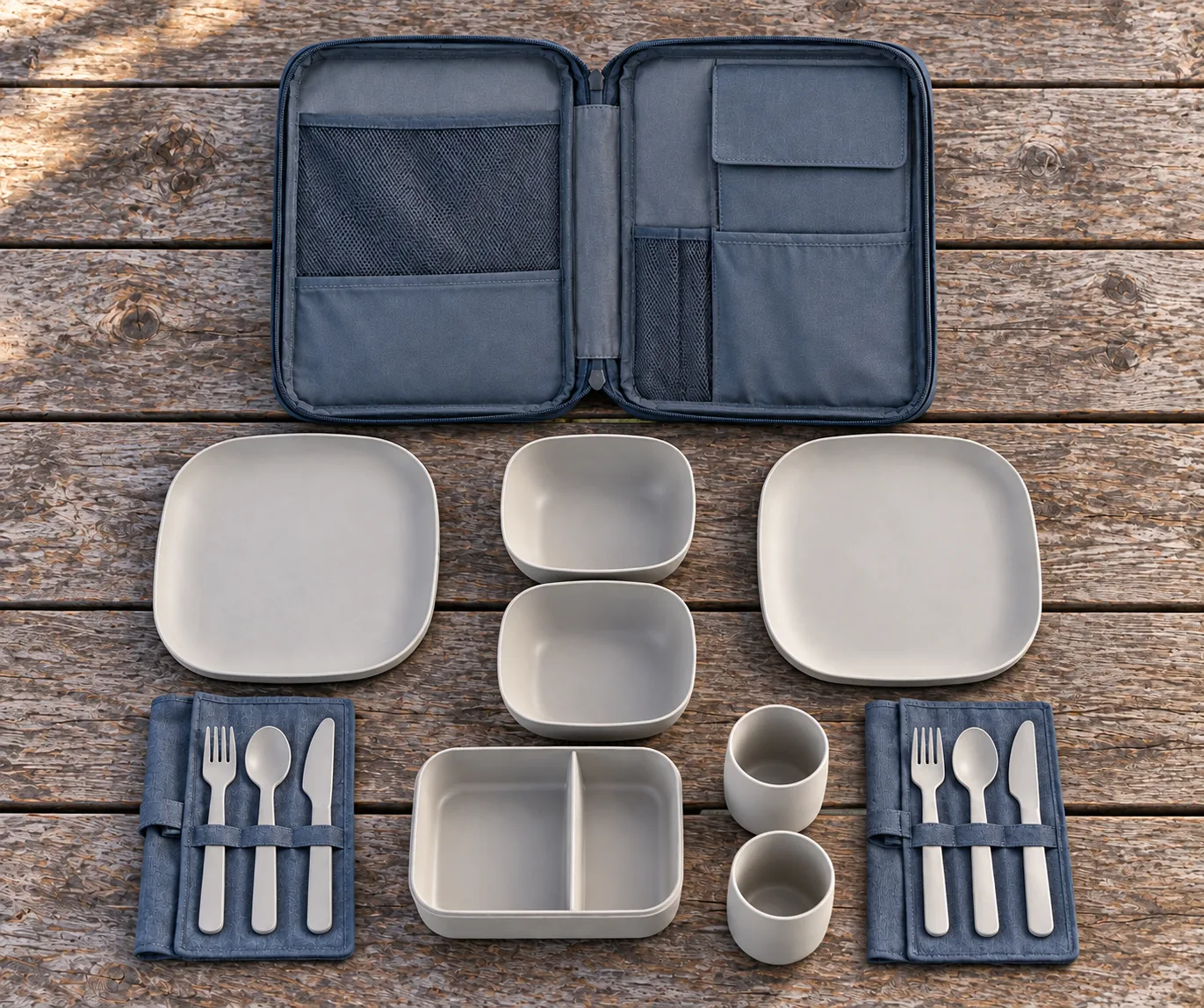
TWO-PERSON FOLIO-CASE CONCEPT
Folio-Case Two-Person Camping Dinnerware Set
The folio case camping dinnerware set is a buyer-development concept with one book-opening carry case and a coordinated two-person table-service arrangement. Its rounded-square plate and bowl outline, two short handleless cups, individually retained cutlery sleeves and a divided lunch-container candidate make it a different component and access architecture from the site's closed double-deck bag and open field tote concepts.
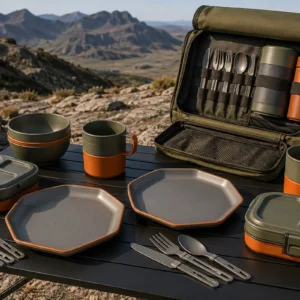
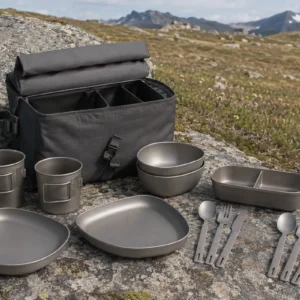
The images are concept/application illustrations, not real SKU, verified inventory or evidence that all parts fit inside the pictured case. Material, dimensions, assembly, tooling feasibility, availability and market evidence are To be confirmed for the project.
Send a configuration briefLast updated:
PRODUCT PARAMETER
| Concept architecture | One slate-blue book-opening soft folio with zipper and separate retention pockets; rounded-square dining components for two users |
|---|---|
| Reference components | Two rounded-square shallow plates, two bowls, two short handleless cups, two knife-fork-spoon sleeves, and one optional divided lunch-container candidate; final contents require an approved component matrix |
| SKU | To be confirmed for the project |
| Material and food-contact surfaces | To be confirmed for the project |
| Dimensions, weight and capacity | To be confirmed for the project |
| Color and finish | Reference concept uses light-stone eating pieces and a slate-blue case; final selection to be confirmed for the project |
| Packaging and logo | Artwork placement, process and retail/transport package to be confirmed for the project |
| MOQ, price and lead time | To be confirmed for the project |
| Target markets | Europe, North America and Australia are buyer targets; finished-component evidence and use conditions need market-specific review |
REFERENCE CONFIGURATIONS
Do not treat the picture as a fixed-stock bundle. The buyer should approve a base matrix, optional food-storage module and the case interface independently, then compare the exact physical samples and drawings.
Two-person dining base
Review the actual meal before fixing two plates, bowls, cups and complete utensil settings. If the channel does not need both plate and bowl, move one function to a clearly named option rather than padding a piece count.
Food-container option
The divided lunch container can be proposed separately or as a controlled bundle variant. Its lid, divider, cleaning and food-use scope require their own drawings and evidence.
Folio access module
Define which pieces enter each pocket, the opening path and the order of retrieval. The open-case illustration shows an idea, not a loaded fit or retention trial.
Compatibility to be confirmed by project sample and drawing. The image cannot establish case capacity, leak resistance, durability or approved component supply.
A folio architecture instead of a stacked carrier
The book-opening case changes how a buyer can lay out utensils and inspect contents at the table. The published double-deck concept separates upper and lower storage levels; the field-tote concept uses an upright open compartment. This proposal instead presents two side-by-side fabric panels, soft pockets, paired utensil sleeves and shallow rounded-square eating shapes. Its distinction is in access, component geometry and potential packing sequence, not merely color.
That distinction creates its own risk. A wide plate may clear the case cavity but fail to pass the zipper opening, or two stacked bowls may press on a pocket seam. Request a dimensioned case drawing, actual component revisions and a blind pack-out. Do not claim a working folio set until those steps and a written capability review have been completed.
Examine the pocket, divider and utensil details
The left mesh and right fabric pockets in the concept are not approved retention structures. Decide which surfaces may touch the dining pieces, which sleeve holds the utensils, and how the fabric can be cleaned and dried. Review the lunch-box divider and its lid separately; the pictured open container does not prove closure or liquid retention.
Use the already published modular interface guide to define revision and compatibility questions. Require a new case drawing and sample fit review before treating the folio layout as a released product configuration.
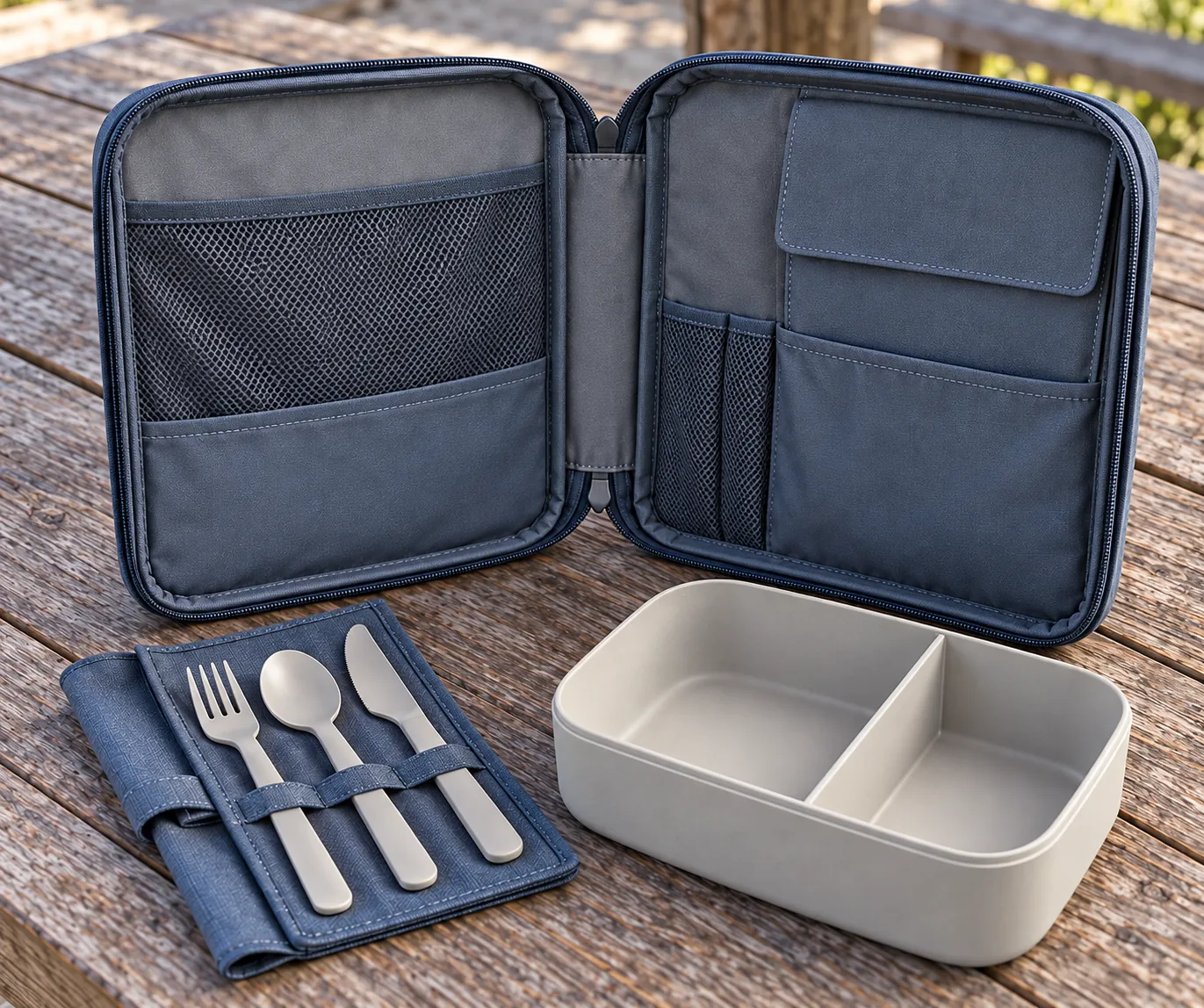
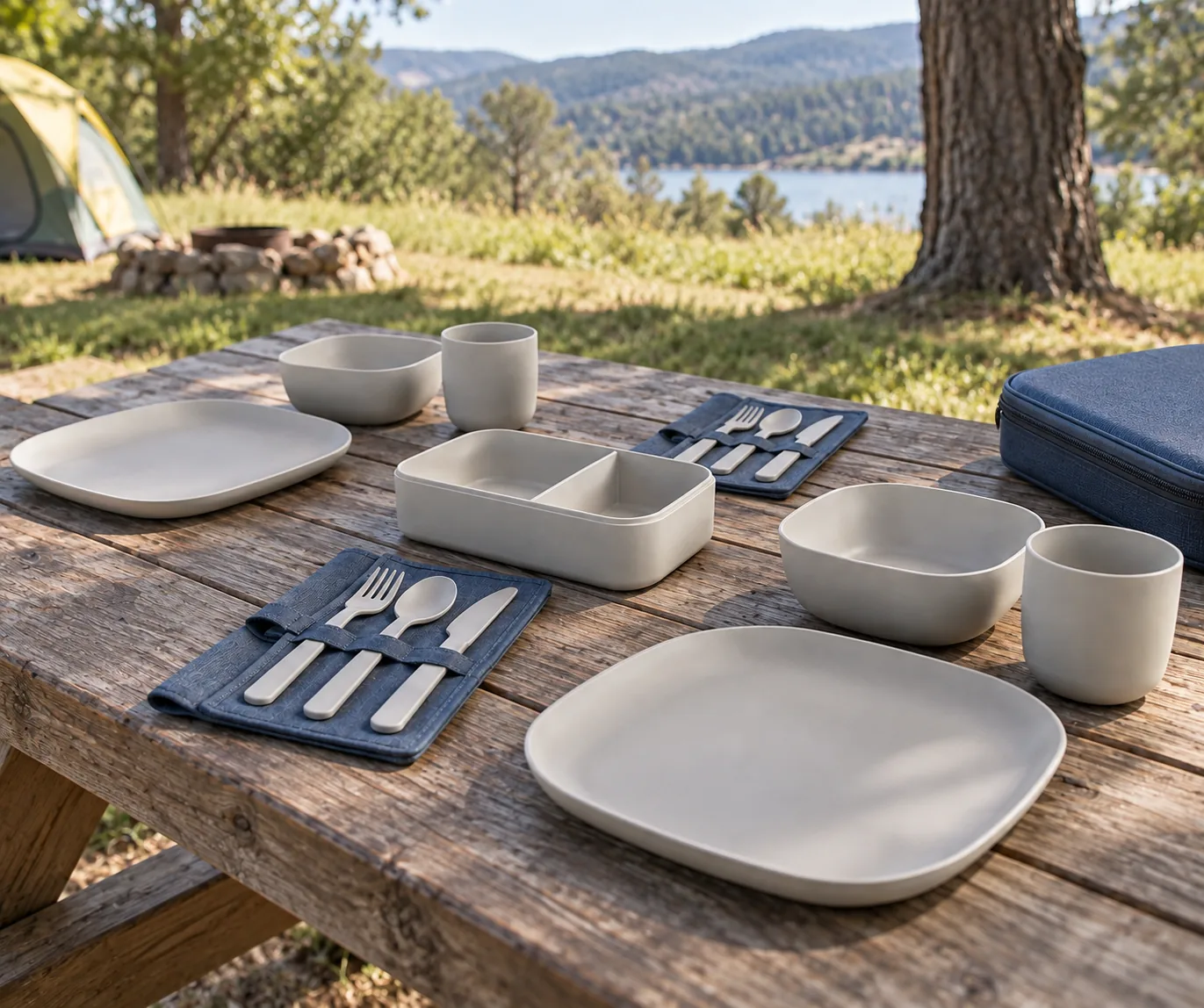
Outdoor application concept, not a real product photo or proof of fit, material, stock, tests or buyer order.
Development controls for a configurable set
Component matrix
Record the count, function, drawing revision and optional status of every piece. Ask for a written supplier response distinguishing verified existing candidates from proposed new designs.
Folio and pack-out
Approve the opening, pockets, contact protection, loaded envelope and sequence using samples, not the unfilled concept case.
Customization
Provide logo artwork, intended placement, packaging format, color reference and any new plate, bowl or lunch-box geometry as a development brief. Feasibility and tooling route are not pre-approved.
Revision and release
If a rim, utensil sleeve, divider or case panel changes, reopen fit, food-use evidence, pack instructions and artwork before listing a final configuration.
Material and compliance boundary
The exact eating-piece materials are not established by these illustrations. For Europe, review finished food-contact components against the European Commission's food-contact framework. For the United States, the FDA's food types and conditions-of-use guidance helps frame intended use. For Australia and New Zealand, consult FSANZ food-packaging guidance. None of those references certifies this concept.
Request evidence for the exact finished plate, bowl, cup, utensil and food container, including surface decoration and intended food, temperature, contact duration and cleaning conditions. Case fabric, pockets and artwork need their own handling review. Dinnerware is not cookware: no burner, campfire, direct flame, oven, microwave, dishwasher or leakproof claim is made without product-specific proof.
Buyer release checklist
| Control | Question | Record needed |
|---|---|---|
| Components | Does the proposed two-person bill of materials match the selected meal? | Controlled component matrix and revisions |
| Case fit | Can a new reviewer pack and remove every part without force? | Drawing and physical pack-out observation |
| Food use | Are finished-item claims limited to evidenced conditions and markets? | Part-level evidence index |
| Tooling | Which shape is existing, modified or entirely new? | Written feasibility and sample plan |
| Artwork and pack | Do logo, carton and included-parts statement match the approved configuration? | Final artwork and pack specification |
Procurement FAQ
Is the pictured folio-case set an available SKU?
No. It is a concept for a buyer's configuration review. Inventory, component materials, exact dimensions and commercial terms are To be confirmed for the project.
Do the plates, bowls and cups fit inside this exact case?
That has not been established. Compatibility to be confirmed by project sample and drawing.
Can the divided lunch box be an add-on?
Yes as a proposed assortment decision, subject to its own controlled component list, food-use evidence, pack-out drawing and quotation. This is not a promise of available stock.
Can a logo or new rounded-square mold be requested?
Submit a design brief, artwork and market requirements. Placement, production method, tooling feasibility, cost and timing require written project review.
Is the fabric case food-contact certified?
No certification is claimed. The final food-contact evidence should follow the actual eating pieces and intended use; the case's cleaning and handling need separate review.
What should a buyer send for a quotation?
Send the component matrix, drawings, user count, foods and cleaning, case envelope, market, artwork, packaging and evidence requirements. Ask the reply to separate verified capability from open development items.
Review your folio-case configuration
Share the intended meal, exact component counts, existing or new geometry, case opening and pocket concept, target markets, food-use conditions, logo and packaging. Request a written response on verified supply scope, required samples and unresolved development decisions.
Request a folio-case set review
For a comparison against a different carry architecture, send both briefs with the same component matrix. No MOQ, price, lead time, tooling capability or packed compatibility is implied.
RELATED SOURCING PATHS
Compare Products and Plan Your Project
Review related product formats, then compare material, set configuration, logo, packaging, testing scope and order quantity with our B2B team.