Description
THREE-PERSON FIELD-TOTE CONCEPT
Field-Tote Three-Person Camping Dinnerware Set
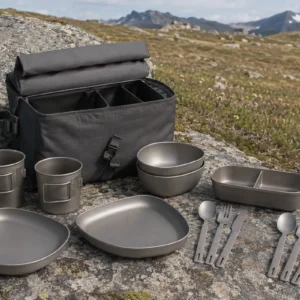
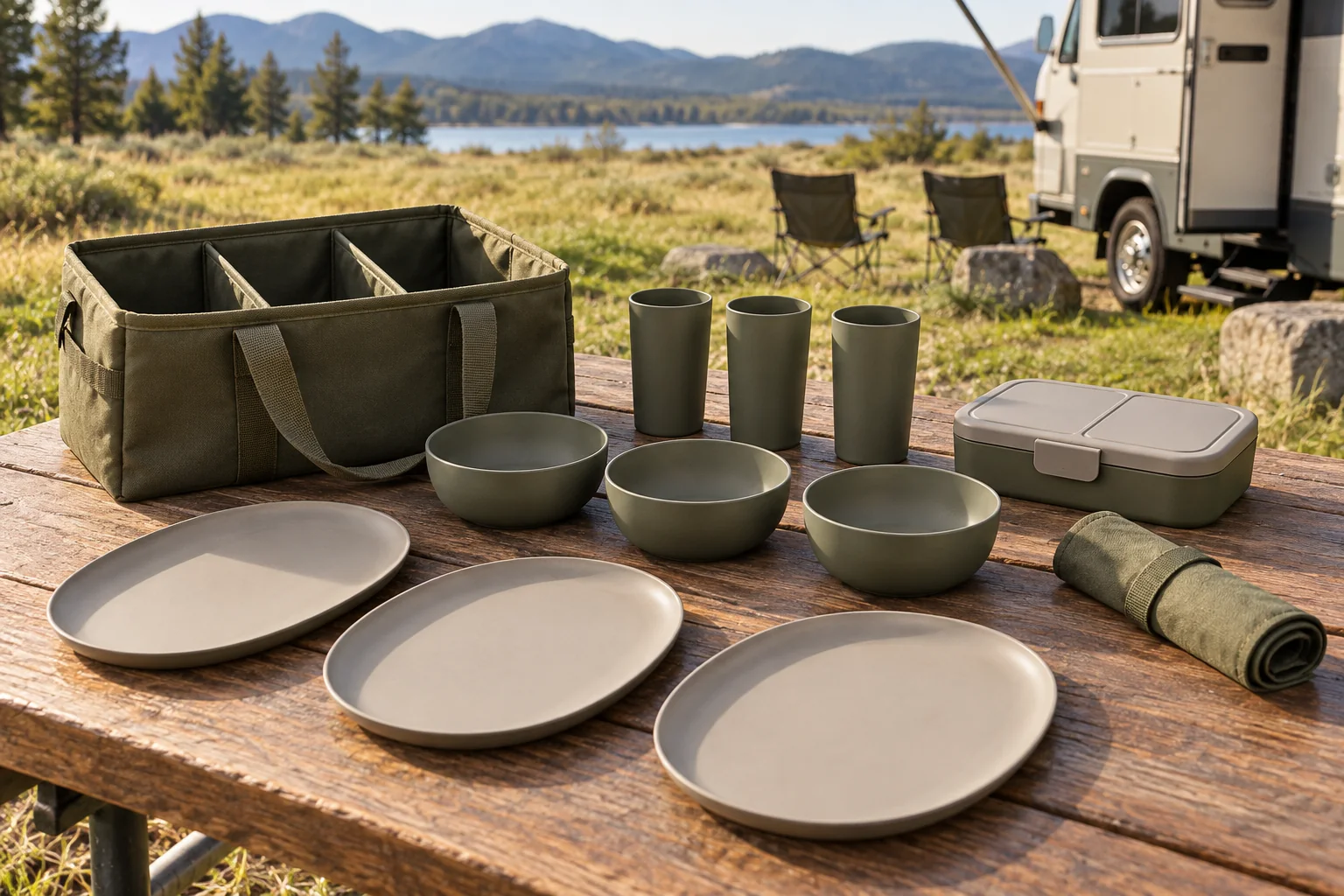
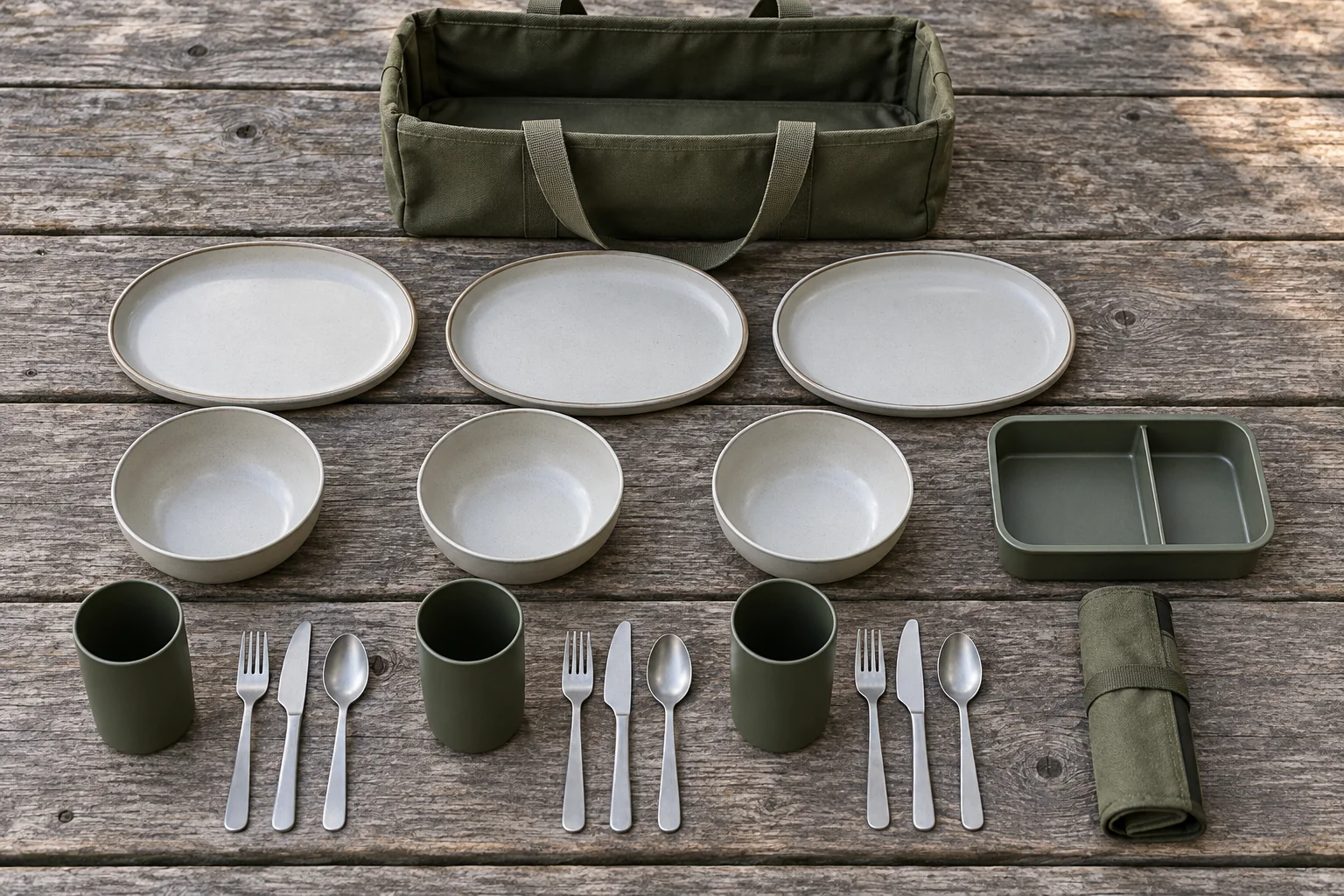
The field tote camping dinnerware set is a development concept for buyers who want an open, table-side carrier rather than a zip case or stacked deck. Its reference composition shows three oval eating plates, low bowls, straight cups, eating utensils, a narrow roll and a separate divided lunch container. The low, open-top tote uses upright plate divider positions so a reviewer can see and count the service pieces before repacking.
These are concept and application images, not proof of a stocked or tested SKU. Materials, exact counts, dimensions, packed fit, tooling route, artwork, packaging and evidence are To be confirmed for the project.
Send a configuration briefLast updated:
PRODUCT PARAMETER
| Concept architecture | Low rectangular open-top textile tote with paired handles, upright plate-divider positions and a separate narrow utensil roll |
|---|---|
| Reference components | Three oval plates, three low bowls, three straight cups, three knife-fork-spoon settings, one narrow roll and a divided lunch-container candidate; final composition follows the approved component matrix |
| SKU | To be confirmed for the project |
| Material and contact surfaces | To be confirmed for the project |
| Dimensions, mass and capacity | To be confirmed for the project |
| Color and finish | To be confirmed for the project |
| Logo | Location and method to be confirmed after contact-surface and substrate review |
| Packaging | To be confirmed for the project |
| MOQ, price and lead time | To be confirmed for the project |
| Applicable markets | Europe, North America and Australia are buyer targets subject to finished-part evidence |
REFERENCE CONFIGURATIONS
Build the component schedule around the intended meal and channel, not around a piece-count headline. The pictured three-person arrangement is a reference for discussing configuration and access; it does not confirm that every part is supplied together or fits inside the proposed tote.
Three-person table service
Review whether each diner needs a plate, bowl, cup and complete knife-fork-spoon group. Remove or add pieces only after the intended meal and user count are written down.
Food-storage extension
Decide whether the two-compartment lunch container is in the base set or a separate option. Its closure, food-contact surfaces and cleaning method require their own review.
Carry and count sequence
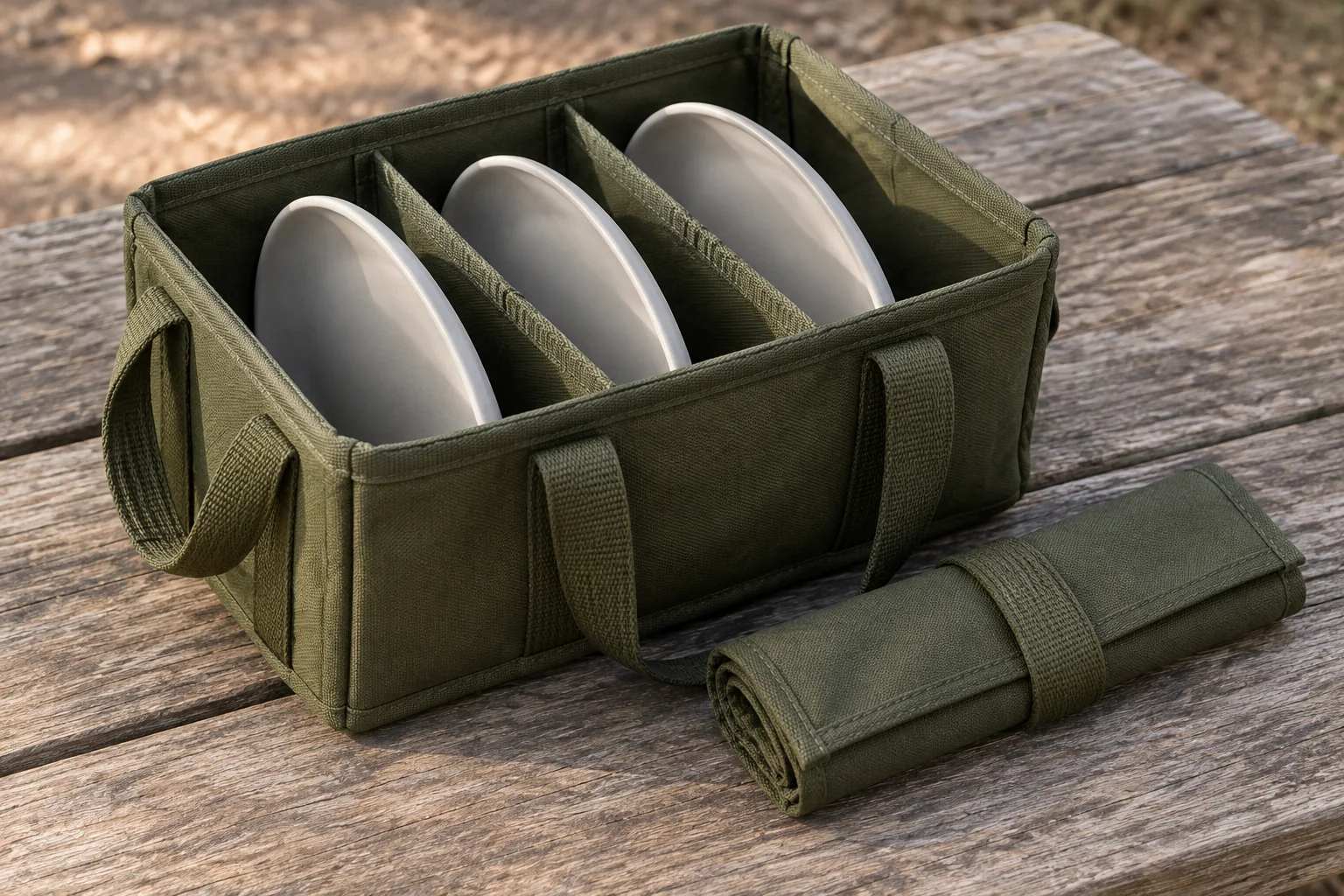
Evaluate upright plate dividers, bowl and cup locations and a detachable utensil roll against a loaded-case drawing. An open tote makes contents visible, but exposure and retention must be checked.
Compatibility to be confirmed by project sample and drawing. The concept is not an approved pack-out, available inventory, tested transport system or customer order.
Why the field-tote silhouette is a different proposal
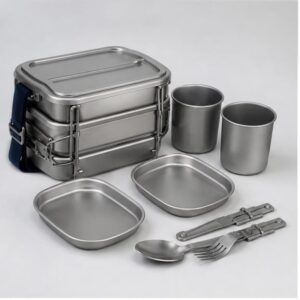
This field tote camping dinnerware set makes the carrier an open tabletop organizer instead of a closed transport box. The low rectangular body and vertical plate-divider rhythm give buyers a different access sequence from the published double-deck concept, where the components are distributed across upper and lower layers. Its oval plates, shallow bowls and separate narrow roll also change the visible set architecture, not merely the color or camera angle.
Open access has trade-offs. A reviewer should confirm whether the pieces remain retained when the bag is lifted, whether the tote can stand on the intended outdoor surface and whether the open mouth exposes clean dining surfaces during travel. A closure, protective outer package or inner sleeve may become necessary, but none is claimed as present or effective here. Record the actual solution in a revision-controlled design brief.
Check the plate-divider and utensil-roll interfaces
The plate dividers should be specified by drawing with the actual plate rim and wall thickness. A wide oval plate can bind in a narrow sleeve, while a loose pocket can let it strike another eating surface. Inspect the loaded tote through lifting, setting down and repacking; record contact marks and any need for separators.
The utensil roll is a separate handling decision. The buyer should define whether the knife, fork and spoon are retained individually, whether sharp edges can touch fabric or food-contact surfaces, and how the roll is dried after washing. The camping dinnerware component guide helps classify which utensil functions belong in a base setting. No pictured fold, seam or retention point constitutes a durability test.
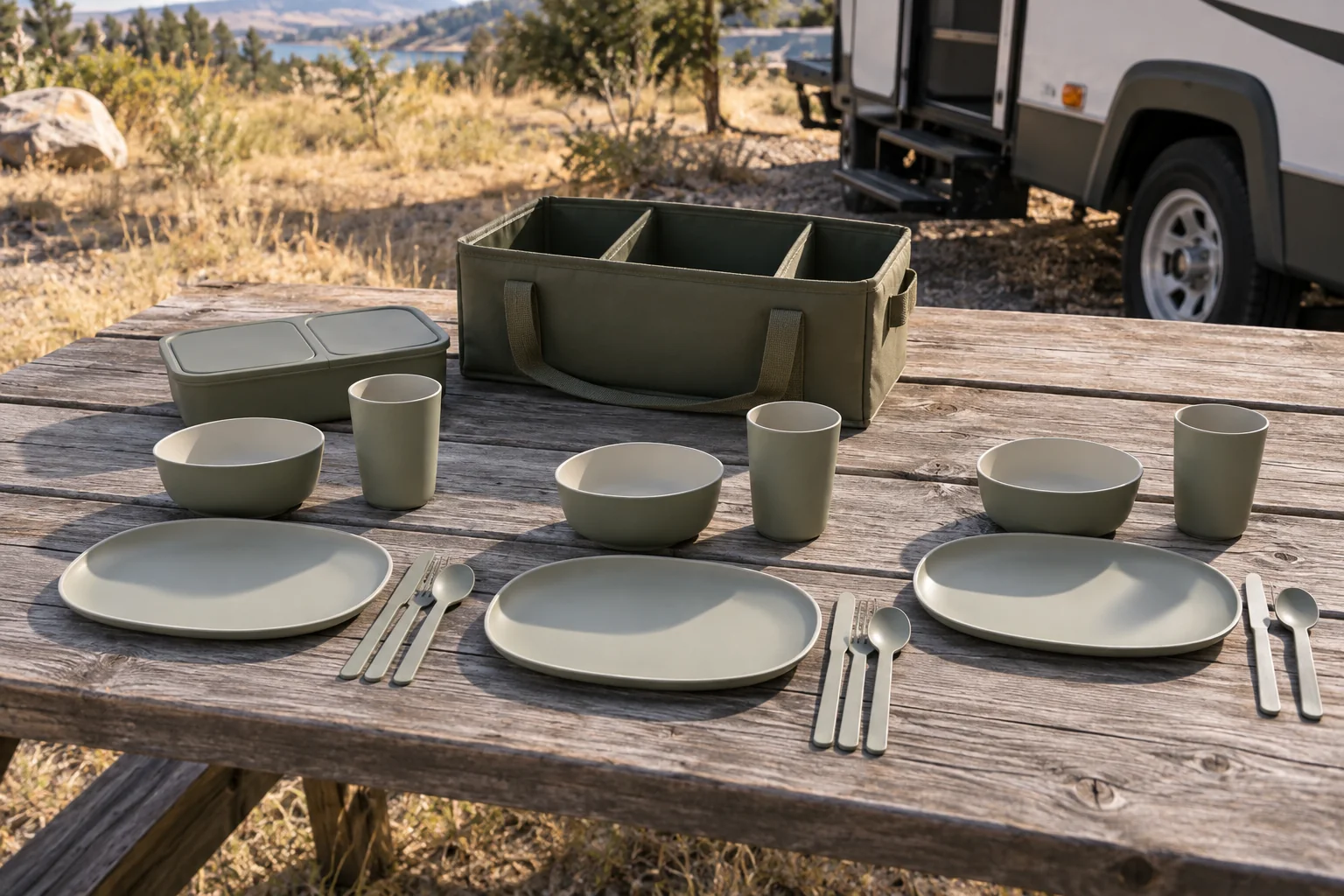
RV-campsite application concept. The scene shows how a three-place setting might be presented; it does not verify material, fit, transport stability or a ready-to-order product.
Field-tote camping dinnerware set development controls
Component decision
State the exact base contents, optional lunch-container status and replacement-piece path before artwork or quotation.
Loaded envelope
Measure the actual packed tote, not the empty bag. Use the pack-volume worksheet for buyer-entered dimensions.
Handling sequence
Observe plate removal, utensil-roll access, bowl and cup placement, bag lifting and return of used pieces with the same sample.
Revision control
Reopen fit, cleaning, evidence and packaging checks whenever the plate rim, divider, cup profile, tote panel or logo position changes.
Material and compliance boundary
The eating parts and the textile carrier have different roles. Request evidence for each final food-contact component and its intended food, temperature, contact duration, cleaning method and destination market. The European Commission food-contact overview, FDA food and conditions-of-use guidance and FSANZ food-packaging guidance frame different jurisdictional questions; none approves this concept or the appearance of a generated image.
Do not transfer a declaration from one plate to an unverified cup, lunch-container lid, pigment or surface decoration. The tote material and stitching may matter for transport and cleaning but cannot substitute for food-contact evidence for eating pieces. This is dinnerware, not cookware. No component is claimed suitable for a stove, burner, campfire, direct flame, oven, microwave or dishwasher without project-specific evidence.
Customization, assembly and sourcing questions
A buyer may request another user count, plate outline, bowl profile, cup form, lunch-container partition, roll length, bag height, divider spacing, color, logo placement or retail pack. Such requests define a development question, not confirmed production capability. Any new mold, altered component geometry or sewn construction route needs written feasibility scope and a physical sample before price or schedule can be represented.
Use a component-by-component brief. For each item, state whether it is an existing verified candidate, a proposed modification or an entirely new design. Ask for drawing numbers, material and finish records, packed positions, food-use conditions, target markets and an approval owner. Compare a full sample against the same bill of materials used in the quote and website listing. The modular-interface guide can help identify which fit and commercial boundaries must remain controlled.
Packaging should be reviewed with the exact loaded tote. An open carrier may need an outer protective carton or insert for shipping; the concept image does not show a validated shipper. Keep the SKU, color, dimensions, case pack, MOQ, price and lead time as To be confirmed for the project until the configuration and commercial terms are written down.
Buyer release checklist
| Control | Buyer question | Required record |
|---|---|---|
| Set composition | Are three place settings and the container roles explicitly approved? | Revision-controlled component matrix |
| Open-tote retention | Does each piece stay in place during intended handling? | Loaded sample observation and drawing |
| Food-use evidence | Does each finished eating surface have market-appropriate scope? | Part-level evidence index |
| Decoration | Is artwork placement appropriate for the surface and flex zone? | Approved artwork and physical sample |
| Packaging | Does the complete set survive the selected distribution route? | Pack specification and test plan |
Procurement FAQ
Is the pictured field-tote set an available stock item?
No. It is a design and application concept. Inventory, material, exact composition and commercial terms are To be confirmed for the project.
Can the lunch container be removed from the base set?
That is a buyer assortment decision. The base and optional versions need separate exact component lists, pack-out reviews and, where applicable, distinct identifiers and artwork.
Are three plates proven to fit the upright dividers?
No. Compatibility to be confirmed by project sample and drawing. The detail image is not a dimensional record or transport test.
Can existing cups or bowls be combined with this tote?
They can be proposed for evaluation, but final rim, base, height and retention clearances must be checked as a loaded assembly.
Can buyers specify a logo and new plate outline?
Submit artwork, target surface and design brief. Feasibility, process, tooling, food-contact implications, cost and timing require written project review.
What should accompany a quotation request?
Send user count, component matrix, sketches, intended foods and cleaning, packed-envelope target, target markets, color and logo references, packaging brief and required evidence. Ask the response to separate verified existing scope from unresolved development work.
Review your three-person field-tote configuration
Share the intended meal, exact component roles, proposed tote envelope, food-use conditions, market, artwork and packaging route. A useful reply should distinguish verified capability from new geometry, material or construction ideas that require feasibility work.
Request a field-tote set review
To compare this open tote with a closed case, send both configuration briefs using one component matrix. No MOQ, price, lead time, tooling or compatibility promise is implied.
RELATED SOURCING PATHS
Compare Products and Plan Your Project
Review related product formats, then compare material, set configuration, logo, packaging, testing scope and order quantity with our B2B team.