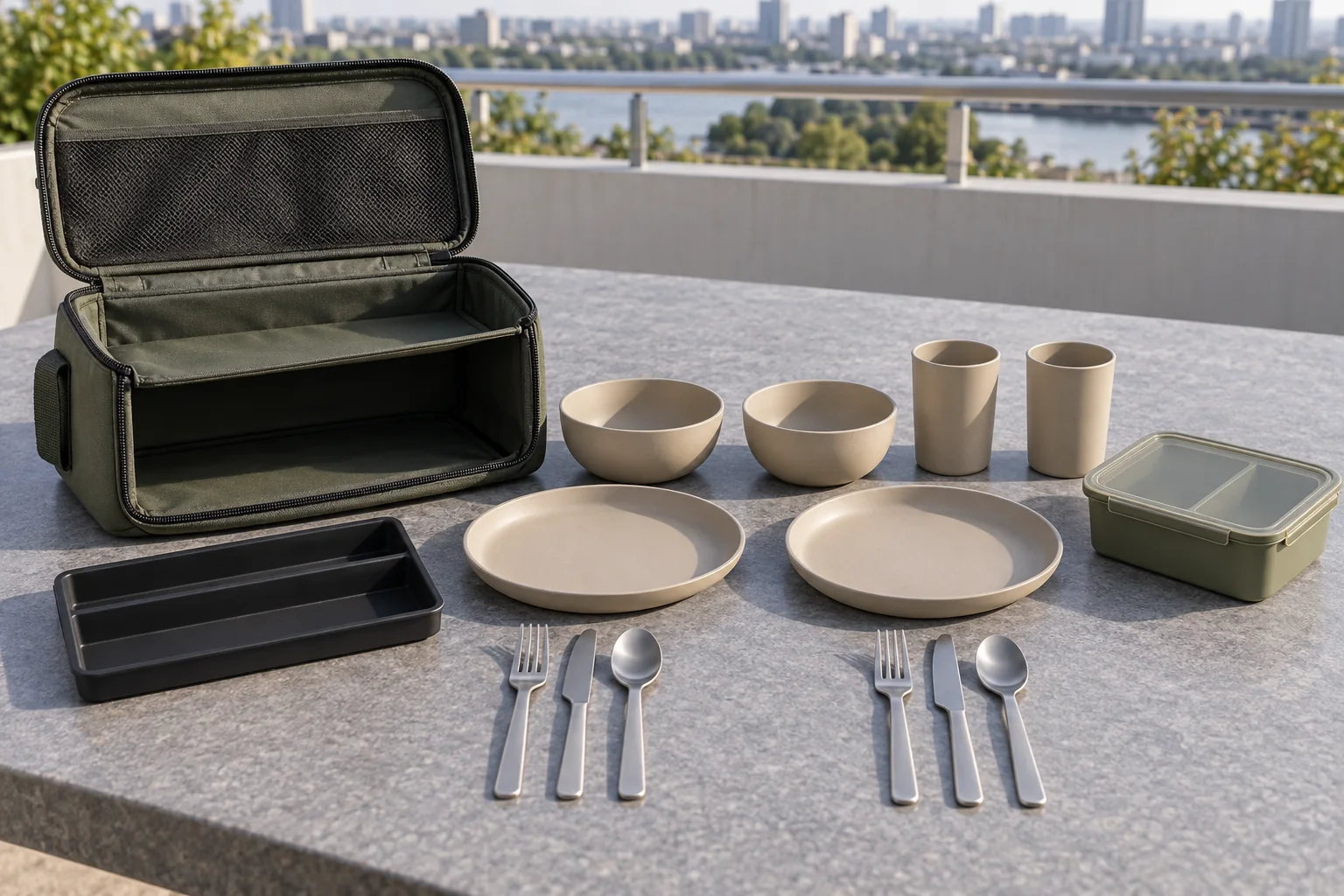
Description
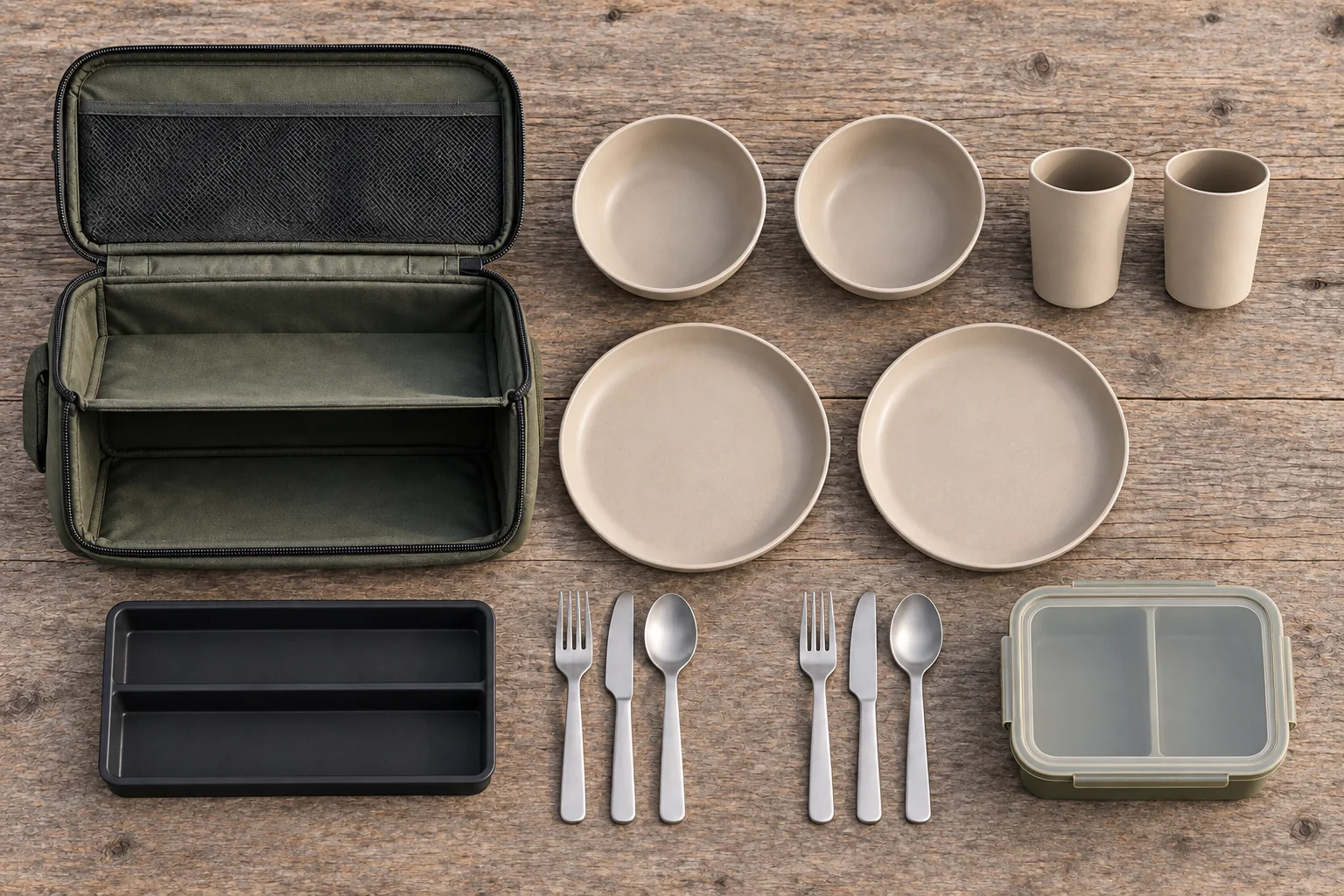
TWO-PERSON DOUBLE-DECK CARRY CONCEPT
Double-Deck Duo Camping Dinnerware Set
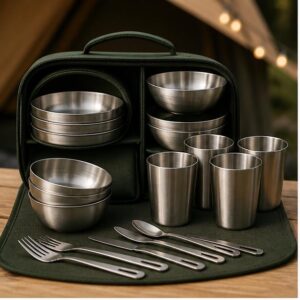
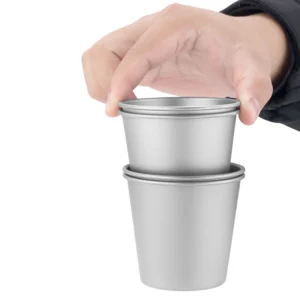
The double-deck camping dinnerware set explores a soft, double-deck carry bag with separate retention for oval plates, straight cups and eating utensils. Treat the low bowls and divided lunch box as selectable modules, and do not present them as automatically included parts. The concept gives B2B buyers a visible way to review component roles, access order, packed envelope and customization before approving a sample.
All images are configuration and outdoor-use concepts, not photos of a confirmed stock SKU. Final materials, quantities, dimensions, loaded fit, tooling feasibility, food-contact evidence, logo method and packaging are To be confirmed for the project.
Submit a set briefLast updated:
PRODUCT PARAMETER
| Concept architecture | Rectangular zip soft case with an upper service layer, lower containment layer, removable cutlery tray and side cup sleeves |
|---|---|
| Reference components | Two plates, two bowls, two cups, two knife-fork-spoon settings, a divided lunch box with lid and a removable packing tray; final count follows the approved component matrix |
| SKU | To be confirmed for the project |
| Material and contact surfaces | To be confirmed for the project |
| Dimensions, mass and capacity | To be confirmed for the project |
| Color and finish | To be confirmed for the project |
| Logo | Position and method to be confirmed after surface, flex and contact review |
| Packaging | To be confirmed for the project |
| MOQ, price and lead time | To be confirmed for the project |
| Applicable markets | Europe, North America and Australia are buyer targets, subject to configuration-specific evidence |
REFERENCE CONFIGURATIONS
Use the double-deck camping dinnerware set as a design brief, not as a fixed piece-count listing. Lock the two-user service brief and assign every component role before drafting pockets, dividers or tray clearances.
Individual meal settings
Map one plate, one bowl, one cup and one complete utensil group to each diner only when the intended menu requires all four roles. The pictured arrangement is a review reference and does not confirm a sellable quantity.
Food-container extension
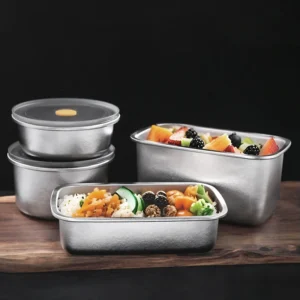
Review the divided lunch box as an independent food-container module. Its lid, divider, closure and cleaning requirements should be reviewed independently of the open dinnerware pieces.
Layer and sleeve retention
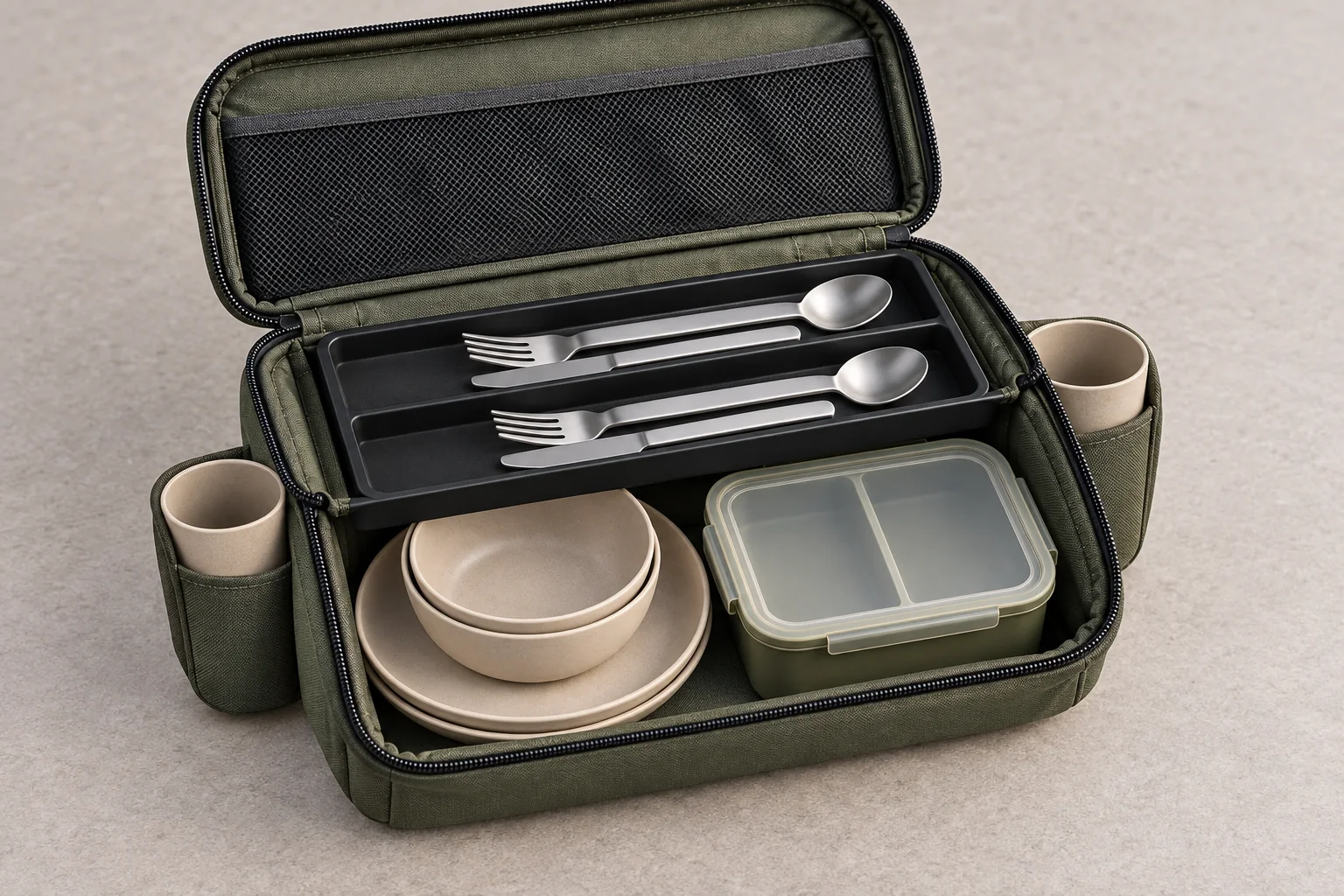
Explore a removable cutlery tray, paired cup sleeves, plate-and-bowl layer and a separate lunch-box position so the case can be packed in a repeatable sequence. Every clearance needs a physical sample check.
Compatibility to be confirmed by project sample and drawing. Nothing in the illustrated layout should be treated as an approved specification, available inventory or evidence of a customer order.
Separate the service layer from the pack layer
A double-deck case can keep the pieces used at the table separate from the parts that remain packed. The removable tray can hold two cutlery settings while cup sleeves and the lower layer control the larger pieces. Buyers should verify this sequence on the intended table, shelf or ground surface and record whether each component can be removed without unloading the whole case.
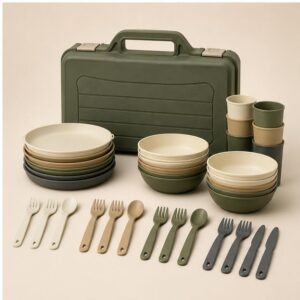
Use the component-list guide to decide which parts are individual, shared or optional. A double-deck fabric carrier differs from a roll-top frame, tiered tote or hexagonal pod because its panel geometry and retention loops control access. Compare competing carrier formats with one controlled bill of components; visual appeal alone cannot show which format protects and organizes the required pieces.
Prove the tray and case as one assembly
The tray, sleeves, dividers and zipper path must be reviewed together under the full load. A loose utensil can mark an eating surface, while a tight sleeve can slow repacking or hold moisture. Check whether the stacked plate-and-bowl layer supports the tray without forcing the case walls or lunch-box lid.
Use the rattle-risk checklist to note potential contact points. On the dated sample sheet, document the packing order, required separators and the case dimensions after the complete load is closed. Compatibility to be confirmed by project sample and drawing.
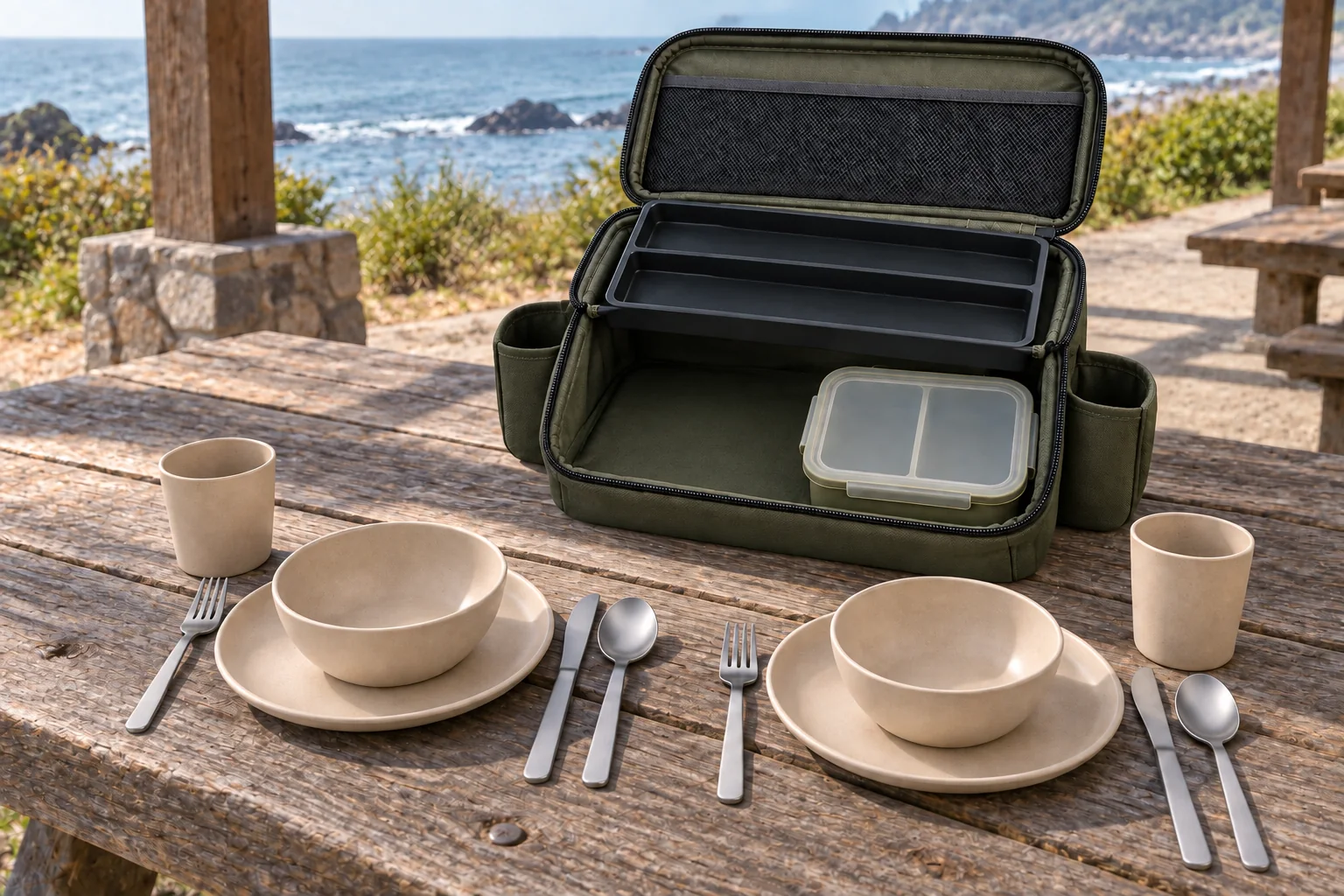
Coastal application illustration: the open case, paired settings and food container support configuration discussion only; they do not verify inventory, weather performance, dimensional fit or production status.
Double-deck camping dinnerware set development controls
Component map
Give every plate, bowl, cup, utensil and container a role, quantity, drawing reference and replacement decision.
Loaded envelope
Measure the closed bag with all approved components using the pack-volume worksheet.
Access and closure
Observe plate removal, cup reach, zipper path, hinge fold and the order of repacking with the exact sample.
Revision control
Recheck fit, mass, cleaning and evidence if a rim, divider, handle, bag panel or logo placement changes.
Materials and compliance boundary
The double-deck camping dinnerware set must be assessed as a group of finished components, not as one assumed material declaration.
Confirm food type, temperature, contact time, cleaning method and destination market before selecting any finished eating surface or decoration. The European Commission food-contact overview, FDA food and use-condition tables and FSANZ food-packaging guidance frame different evidence questions; none approves this concept or establishes the composition of the pictured items.
Build the evidence register at finished-part level, while keeping the textile carrier outside the list of eating surfaces. This is dinnerware, not cookware. This page makes no oven, stove, burner, campfire or direct-flame suitability claim for any component. Do not infer an environmental, heat-resistance or durability claim from image appearance.
Customization and sample controls
Buyers may ask to review a different user count, plate outline, bowl profile, cup form, lunch-box divider, utensil handle, layer and sleeve layout, color, logo placement or retail package. A buyer request begins a feasibility check; it does not confirm that a proposed resin, part or forming process is available. Any new molded geometry, sewn-case construction or tool concept needs written feasibility scope before price or timing can be discussed.
Begin the approval exercise with an empty case and a revision-controlled component list. Load parts in the proposed sequence and observe access, contact marks, wash-and-dry handling, final case envelope and carrying balance. Only after function is agreed should artwork and package presentation be approved. A later change to one component must reopen every affected fit and evidence check.
Compare the double-deck camping dinnerware set with your channel
A double-deck bag can present each component clearly at an outdoor meal, but its open footprint may be unsuitable for a narrow table or retail demonstration area. Ask a reviewer to open, access and repack it in the intended setting. Observe whether the bag remains stable, whether the clean and used pieces can be separated, and whether the divider or lid is still accessible when both layers are loaded.
Compare the fully loaded closed bag with the planned RV drawer, car trunk bin, shelf or shipping carton. A soft carrier can flex, but the packed components still impose a real minimum envelope. Capture closed dimensions and loaded mass on the same revision record and attach the exact pack-out instruction used for the measurement. Require an independent reviewer to reproduce the pack-out without verbal guidance.
Each concept image communicates design direction and is not product verification. Nesting, cup retention in transit and lunch-box closure performance all remain open until the selected material and physical sample are tested together. Those decisions belong to a project sample and drawing set, not to styling or SEO copy.
Packaging and evidence handoff
Define whether the soft case reaches the buyer as the primary package or is enclosed by a retail carton or shipping mailer. Include sleeves, protective inserts, barcode labels and instruction cards in the packaging bill because every added item affects pack dimensions. Leave SKU, color, case-pack and market-label entries marked for project confirmation until the configuration is frozen.
The project document index should link every finished food-contact part to its material record, drawing revision and declared use condition. Carrier fabric, zipper hardware and elastic restraints serve packaging functions and must not be represented by evidence intended for a plate surface. A scene image can support assortment planning, but acceptance still depends on samples, declarations, reports and controlled drawings.
Changing a divider, rim, cup height or utensil handle triggers a new check of case retention, closure, cleaning access and the evidence register. Mark every component as new proposal, existing verified item or unresolved candidate in the development record. This status coding prevents a configurable concept from being read as a promise of ready inventory.
Buyer control checklist
| Control | Question | Review record |
|---|---|---|
| Component matrix | Are personal, shared and optional roles counted? | Dated bill of materials and sample layout |
| Carrier fit | Can the full configuration close and reopen repeatably? | Loaded sample and pack-out sequence |
| Contact evidence | Which exact finished surfaces require market review? | Revision-matched document register |
| Customization | Which changed geometry or artwork requires new approval? | Drawing, color reference and change notice |
Procurement FAQ
Is the pictured double-deck set ready to ship?
No stock availability is claimed. The pictures describe a design direction only. Construction, supporting evidence and all commercial terms remain To be confirmed for the project.
Can the component count or layout change?
Yes, as a project request. Any component change requires renewed review of the case envelope, restraint plan, packing list and document index.
Are the pictured pieces guaranteed to fit the bag?
No. Compatibility to be confirmed by project sample and drawing.
Can existing components be used with a new bag?
Existing candidates may be screened, but their rim, base, handle, lid and sleeve clearances must be measured in the assembled sample.
Can logos be applied to the bag and dinnerware?
Logo locations depend on contact status, flexible zones, substrate, destination market and the proposed marking process. Approve artwork only after its scale, contrast and position have been inspected on the physical part.
What information is needed for a quotation?
Provide user count, component matrix, closed-case target, food and cleaning conditions, destination markets, color references, artwork, packaging brief and document expectations. Request two lists in the reply: confirmed scope and unresolved development questions.
Review a double-deck camping dinnerware set configuration
Send the component roles, quantities, intended foods, cleaning conditions, carrier target and drawing references for a controlled review. The response should distinguish verified company capability from a new material or geometry combination that requires feasibility work.
Request a set-development review
To compare a double-deck carrier with another architecture, share both configuration briefs using the same component matrix. No MOQ, price, lead time, tooling or compatibility promise is implied.
RELATED SOURCING PATHS
Compare Products and Plan Your Project
Review related product formats, then compare material, set configuration, logo, packaging, testing scope and order quantity with our B2B team.