FDA vs LFGB Certification for Tableware: What Buyers Need to Know
Understanding FDA vs LFGB certification for tableware is essential for global buyers.When sourcing tableware for international markets, one of the most important questions buyers ask is:
👉 What is the difference between FDA and LFGB certification?
Many importers compare FDA vs LFGB certification for tableware before choosing suppliers.Understanding these two standards is essential for importers, wholesalers, and brands to ensure product safety, compliance, and smooth customs clearance.
In summary, FDA vs LFGB certification for tableware depends on your target market.We’ll explain the key differences between FDA and LFGB certifications, and how to choose the right one for your market.
FDA vs LFGB: Quick Comparison (Featured Snippet)
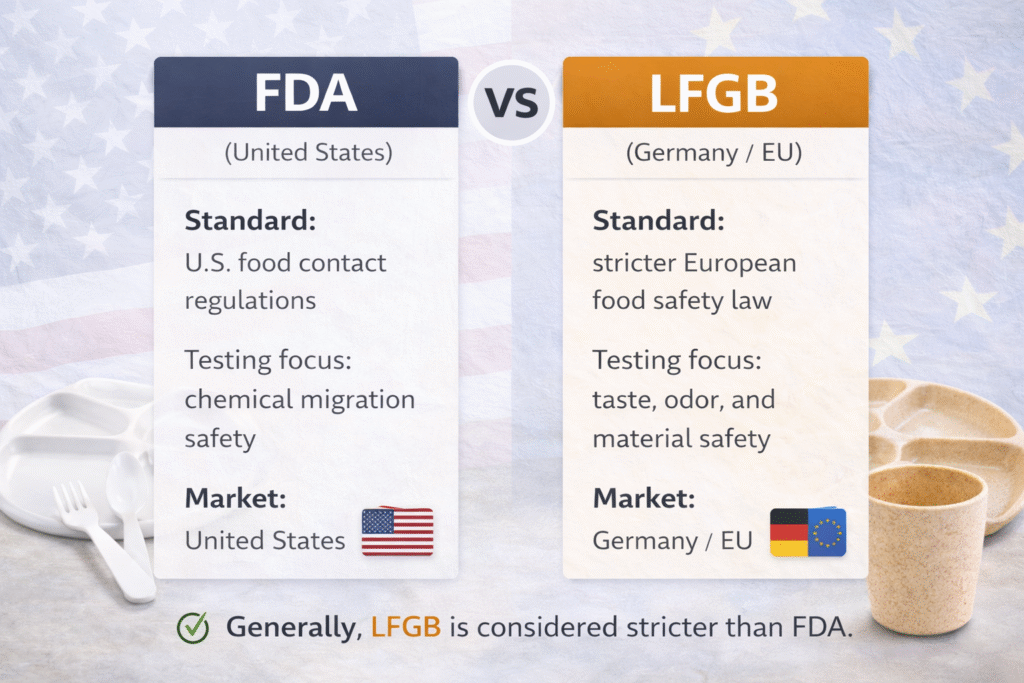
👉 FDA (USA)
- Standard: U.S. food contact regulations
- Testing focus: chemical migration safety
- Market: United States
👉 LFGB (Germany / EU)
- Standard: stricter European food safety law
- Testing focus: taste, odor, and material safety
- Market: Germany and EU
📌 Generally, LFGB is considered stricter than FDA.
What Is FDA Certification for Tableware?
FDA refers to the regulations set by the U.S. Food and Drug Administration for food-contact materials.
Key Points:
- Ensures materials are safe for food contact
- Limits harmful chemical migration
- Widely required for products entering the U.S. market
👉 FDA compliance is essential if you plan to sell on platforms like Amazon US or supply American retailers.
What Is LFGB Certification for Tableware?
LFGB stands for the German Food and Feed Code.
Key Features:
- One of the strictest food safety standards in Europe
- Includes odor and taste testing
- Requires higher material purity
👉 Products with LFGB certification are often considered premium quality in the market.
FDA vs LFGB Certification for Tableware: Key Differences
1. Testing Standards
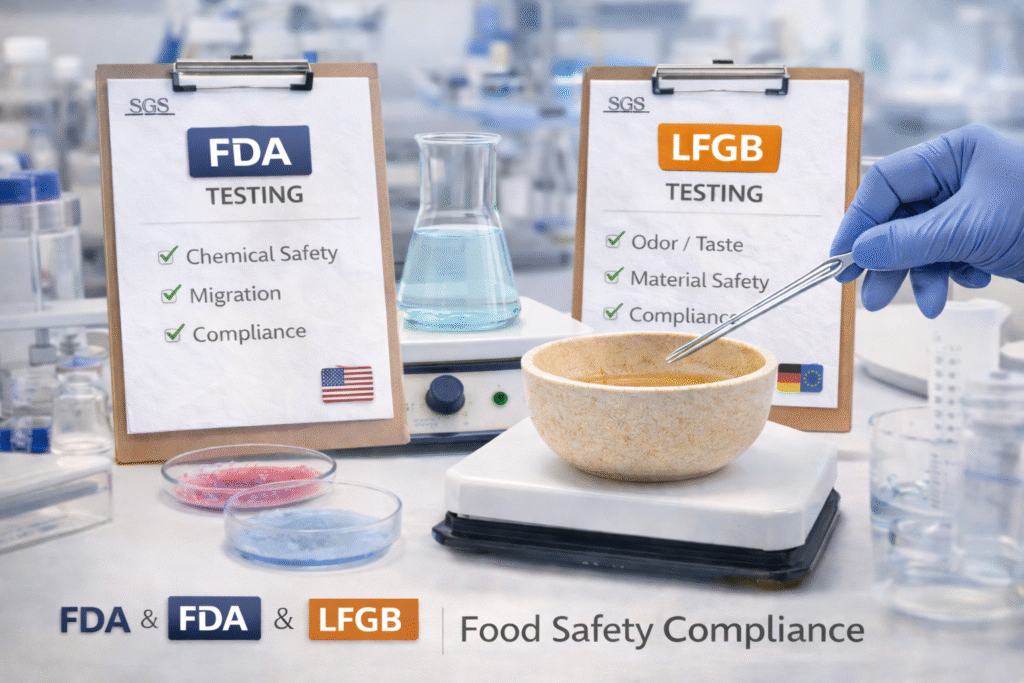
- FDA → Focus on chemical safety
- LFGB → Includes chemical + sensory testing
2. Strictness Level
- FDA → Standard safety requirement
- LFGB → More strict and comprehensive
3. Market Application
- FDA → United States
- LFGB → Germany and European Union
4. Cost of Certification
- FDA → Lower testing cost
- LFGB → Higher due to stricter requirements
Which Is Better: FDA or LFGB Certification for Tableware?
For U.S. Market
👉 Choose FDA certification
- Required by import regulations
- Accepted by major retailers
For European Market
👉 Choose LFGB certification
- Required for EU compliance
- Builds higher trust with buyers
For Global Brands
👉 Best strategy:
- Use both FDA + LFGB
- Expand market reach
- Increase product credibility
How to Choose FDA or LFGB Certification for Your Market
Certification is not just a requirement—it is a trust signal.
Benefits:
- Ensures product safety
- Reduces legal risk
- Improves brand reputation
- Helps pass customs inspections
👉 Buyers prefer certified suppliers for long-term cooperation.
Common Mistakes Buyers Should Avoid
❌ Assuming all tableware is automatically compliant
❌ Not verifying test reports
❌ Using outdated certificates
❌ Choosing suppliers without documentation
👉 Always request valid test reports from certified labs.
Internal Linking Strategy
- Explore our FDA & LFGB certified wheat straw dinnerware
- Learn more about our quality control process
- Check our OEM customization services
🚀 CTA Section
Looking for certified wheat straw tableware supplier?
We provide:
- FDA & LFGB certified products
- Full test reports available
- OEM & ODM customization
- Strict quality control
👉 Contact us now for certificates and samples.
Key Differences Between FDA and LFGB:
– Testing standards
– Safety requirements
– Market application
– Certification cost
FAQ – FDA vs LFGB
1. Is LFGB better than FDA?
Yes, LFGB is generally stricter than FDA.
2. Do I need both certifications?
If you sell globally, yes.
3. Is FDA certification mandatory?
Yes, for U.S. food-contact products.
4. Does LFGB apply to all EU countries?
Yes, widely recognized in Europe.
5. How to verify certification?
Check official test reports from accredited labs.

Microwave Safety of Wheat Straw Dinnerware
Microwave Safety of Wheat Straw Dinnerware: Is It Safe to Use? When choosing eco-friendly tableware, one of the most common questions buyers ask is:👉 Is

Common Quality Issues in Wheat Straw Tableware
Common Quality Issues in Wheat Straw Tableware: 7 Problems Buyers Must Avoid When sourcing eco-friendly products, many buyers focus on price and design—but overlook a

FDA vs LFGB Certification for Tableware
FDA vs LFGB Certification for Tableware: What Buyers Need to Know Understanding FDA vs LFGB certification for tableware is essential for global buyers.When sourcing tableware

Is Wheat Straw Dinnerware Safe
Is Wheat Straw Dinnerware Safe? A Deep Dive into Health Heat and Durability As eco-friendly products become more popular worldwide, many buyers are asking an

Cost Factors Buying Wheat Straw Dinnerware Set Wholesale
Cost Factors When Buying Wheat Straw Dinnerware Set: A Complete Guide for Importers Sourcing a premium Wheat Straw Dinnerware Set Wholesale is easy with Naike

Wholesale Wheat Straw Tableware: Complete Guide
Wholesale Wheat Straw Tableware: The Complete Guide to Sourcing from a Direct Manufacturer In the rapidly evolving market for sustainable household products, sourcing from a
Thanks for breaking down the differences between FDA and LFGB certifications—they really highlight how crucial it is to align your tableware compliance with your target market. I especially appreciated the note about LFGB being stricter, especially regarding taste and odor, which is often overlooked. This kind of clarity helps buyers make more informed decisions early in the sourcing process.
I always assumed FDA certification was the gold standard, but the additional factors LFGB considers really stand out. Great insight on the differences in market requirements.