
KIDS SET DEVELOPMENT
Custom Kids Outdoor Tableware Set Development
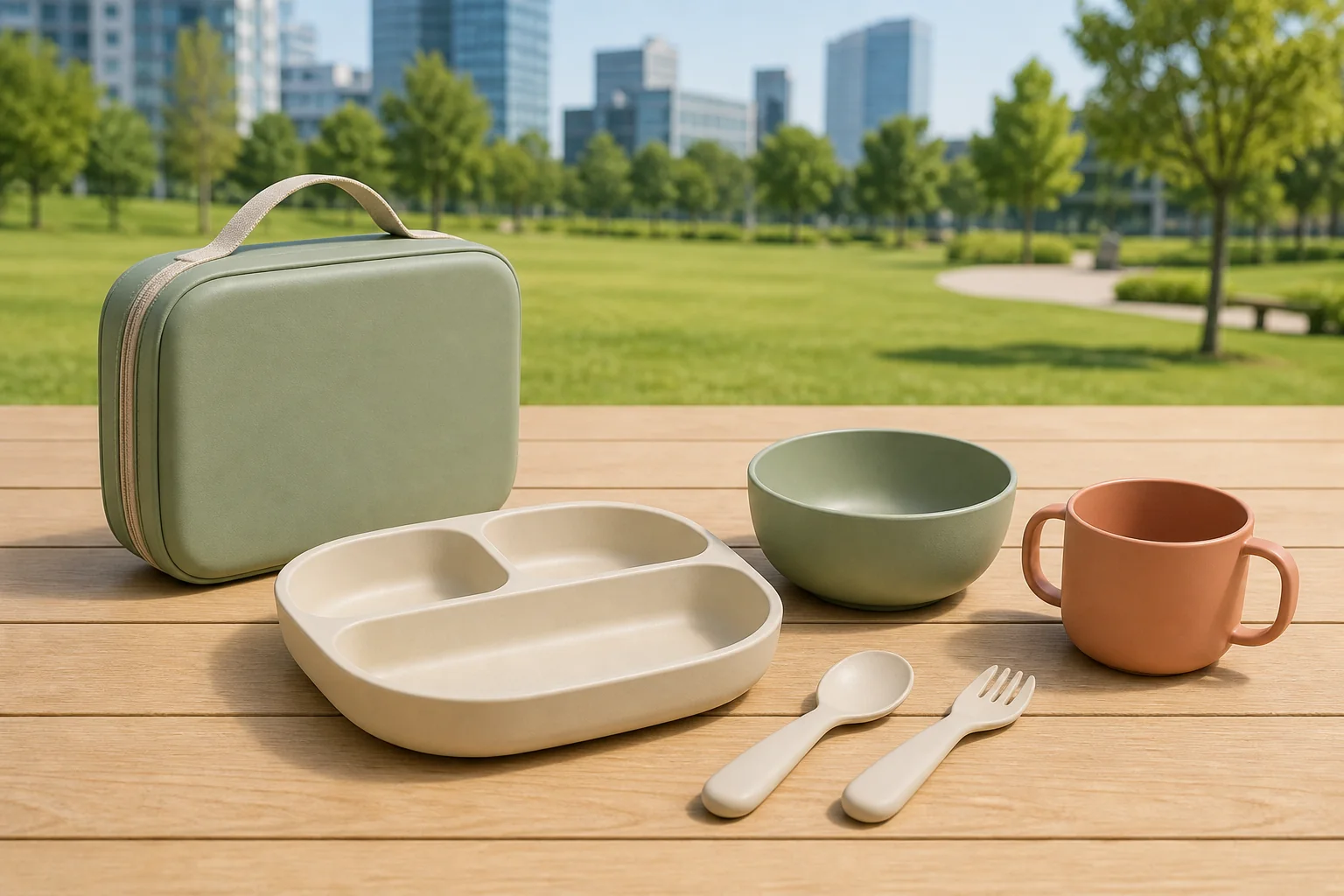
Build a child-focused outdoor tableware program around a controlled component brief, age positioning and sample approval. This page uses Naike Dinner’s published wheat-straw plus PP kids outdoor set direction as the development reference. It does not present the illustrated combination as a stocked or production-approved SKU.
- Base direction
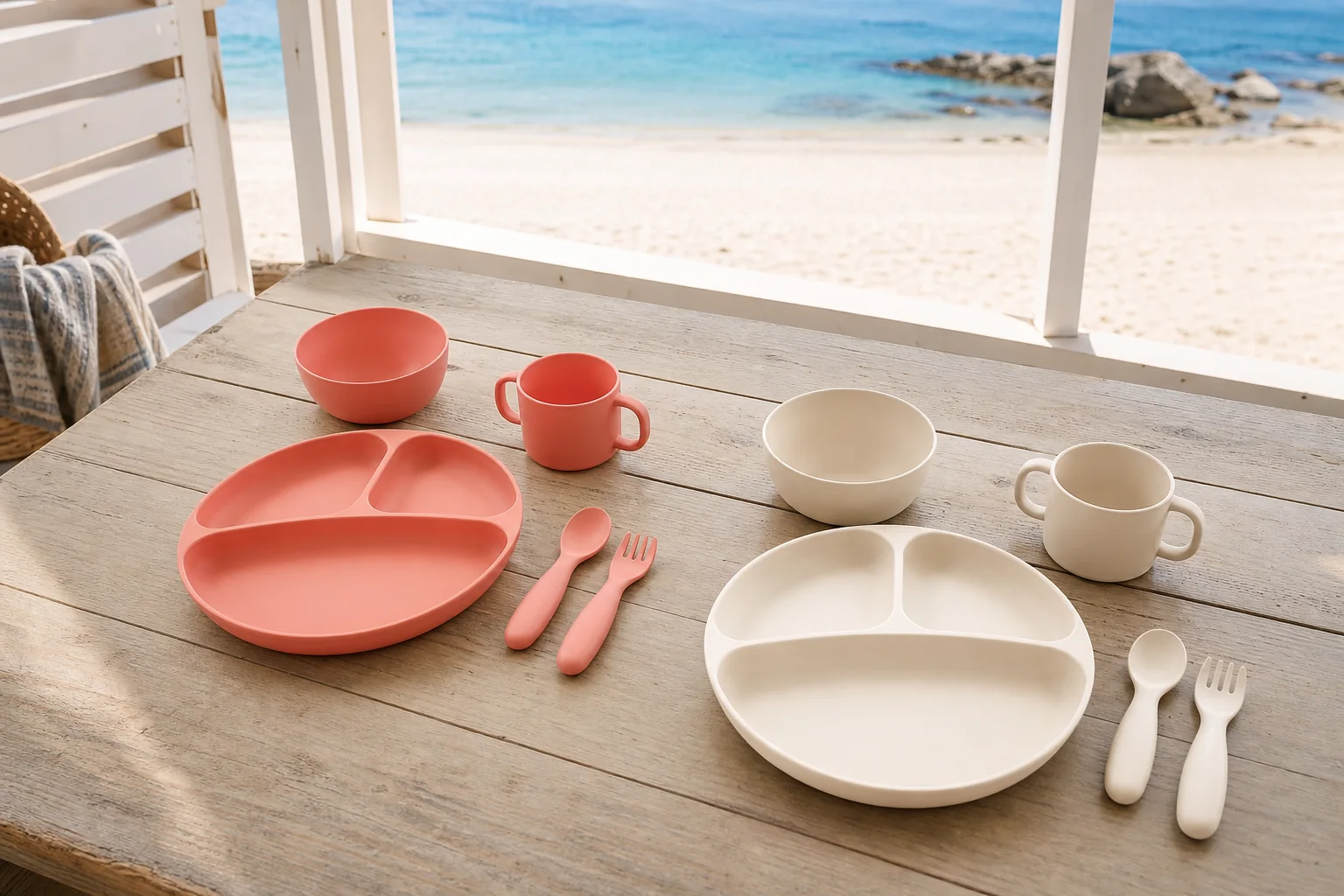
- Child-oriented divided plate, bowl, handled cup and rounded utensils
- Material direction
- Wheat-straw filler plus PP composite, subject to final formulation documentation
- Age group
- To be confirmed for the project
- Dimensions and capacity
- To be confirmed for the project
- Color, logo and packaging
- To be confirmed for the project
- Tooling and carry case
- To be confirmed for the project
Dinnerware scope: no burner, campfire, stove or direct-flame use is claimed.
Send a kids set configuration brief Request a component review
Start with the Intended Child User, Not a Headline Piece Count
A custom kids outdoor tableware set must be developed around the intended user group, destination market, meal format, grip and stability requirements. A smaller adult plate is not automatically suitable for children. The buyer brief should define the age positioning and supervised use before dimensions, edge geometry, handles, utensils, decoration and warnings are approved.
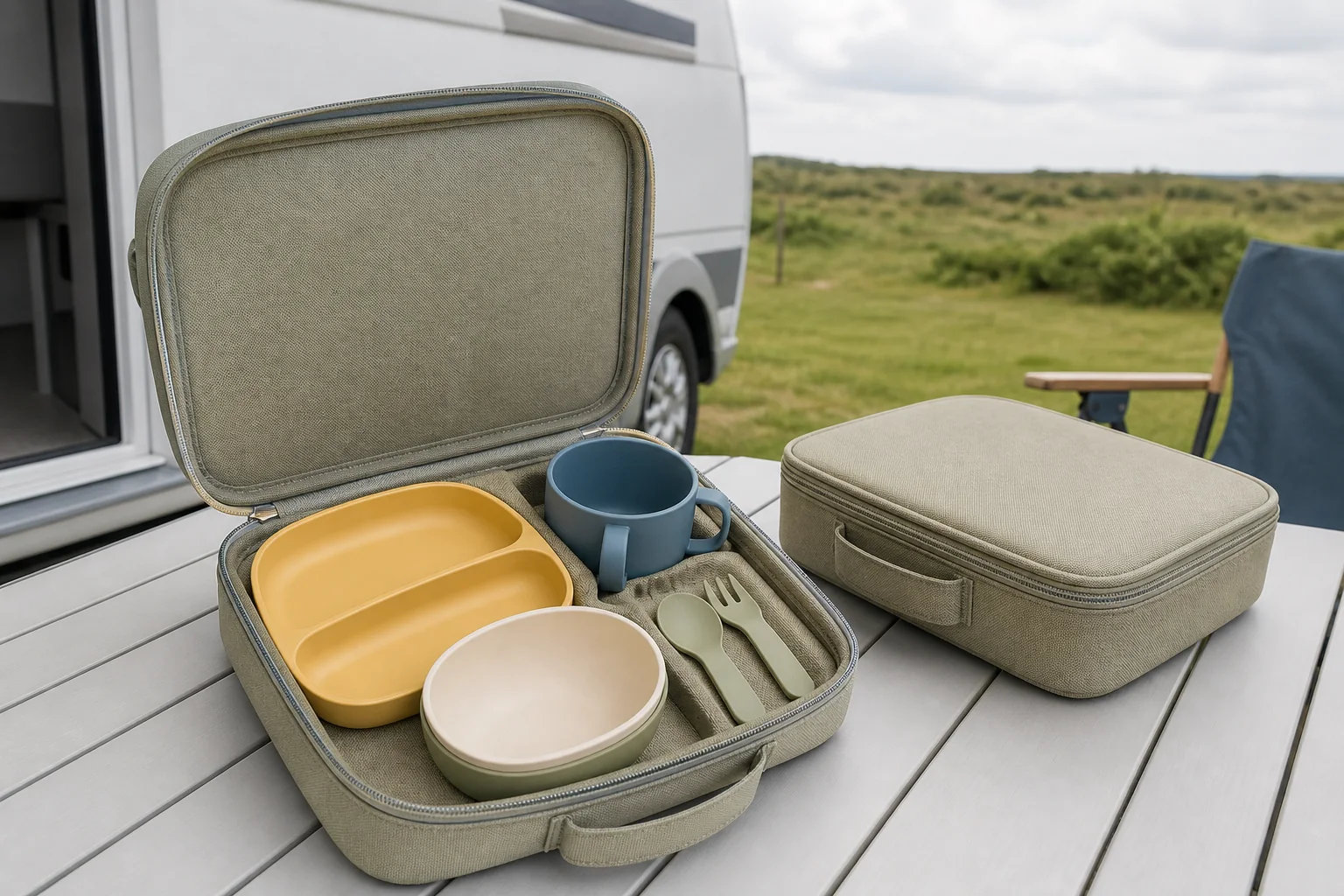
The published Naike Dinner reference describes a wheat-straw filler plus PP composite direction with a divided plate, bowl, two-handle cup, rounded utensils and carry case. That published development direction is the factual starting point. Finished formulation, component dimensions, small-part considerations, testing, claims and compatibility remain controlled project decisions.
VERIFIED DEVELOPMENT BOUNDARY
Custom Kids Outdoor Tableware Set Specification
| Field | Current status | Required confirmation evidence |
|---|---|---|
| Base architecture | Divided plate, bowl, handled cup, rounded spoon and fork | Selected component list and approved complete sample |
| Material direction | Wheat-straw filler plus PP composite | Final formulation declaration for each selected component |
| Intended age group | To be confirmed for the project | Buyer brief and destination-market review |
| Dimensions, weight and capacity | To be confirmed for the project | Controlled drawing and measured sample |
| Grip, stability and edge geometry | To be confirmed for the project | Functional review of the complete physical sample |
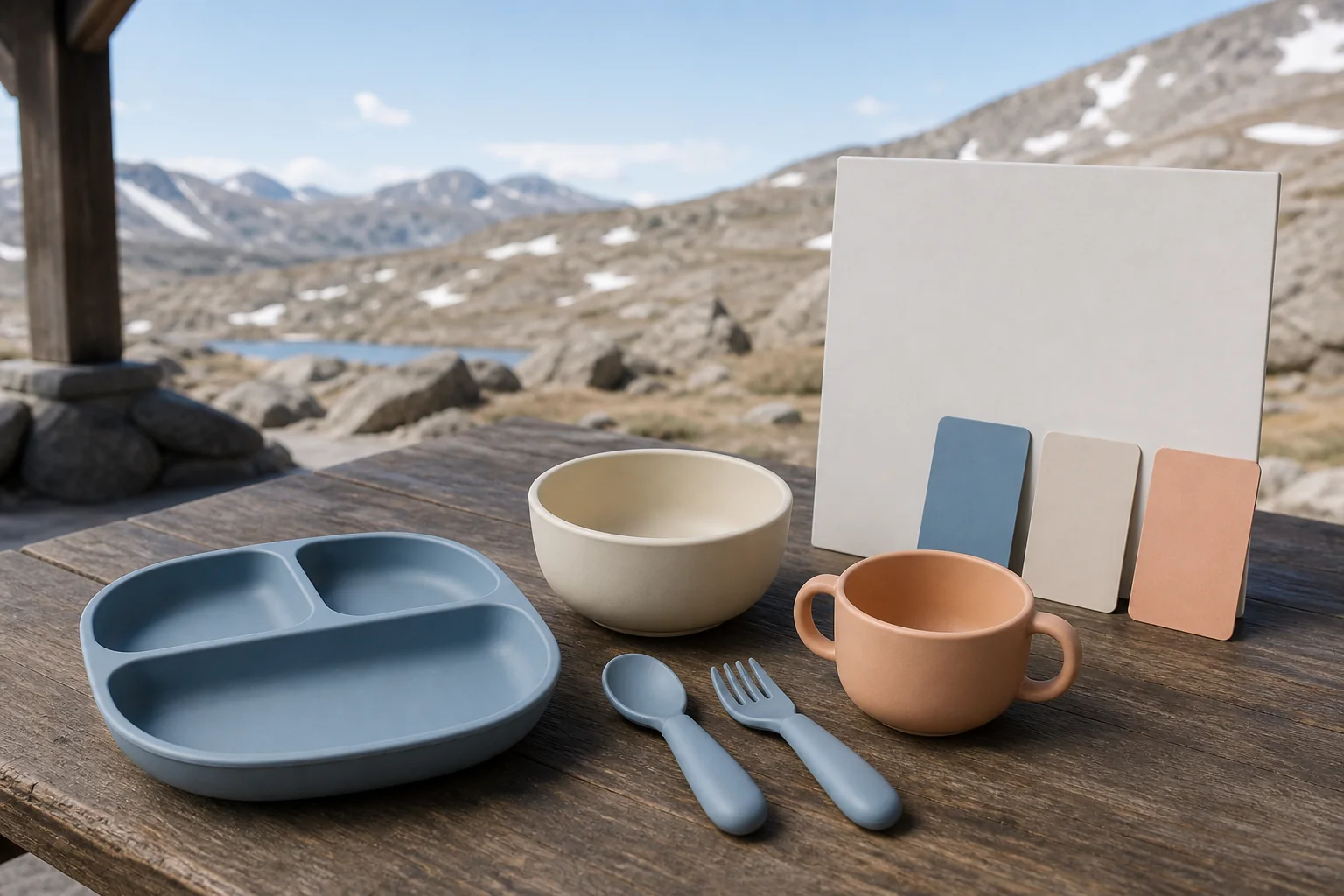
| Color and logo | To be confirmed for the project | Approved decorated color sample |
| Carry case and nesting | Compatibility to be confirmed by project sample and drawing. | Pack-out drawing and closure review with all components |
| Packaging and warnings | To be confirmed for the project | Destination-specific artwork and packaging mock-up |
| Tooling feasibility | To be confirmed for the project | Drawing-based tooling feasibility review |
| Compliance and test scope | To be confirmed for the project | Finished-SKU evidence plan for the intended market and use |
Material and claim limit: a wheat-straw appearance does not prove plastic-free, biodegradable or compostable performance. Food-contact suitability, heat limits, dishwasher or microwave use, drop performance and child-related safety claims must be supported for the finished components and intended market.
PRODUCT COMBINATION BUILDER
Build a Custom Kids Outdoor Tableware Set from Controlled Decisions
| Base Set | Optional Components | Buyer Decision | Confirmation Evidence |
|---|---|---|---|
| Divided plate | Round plate or additional snack dish | Meal format, compartment layout and user age | Compatibility to be confirmed by project sample and drawing. |
| Deep bowl | Lid or alternate bowl depth | Food type, grip, capacity and cleaning access | Selected drawing and measured sample |
| Two-handle cup | Handle-free cup or lid candidate | Grip direction, capacity and spill-control priority | Physical usability and component review |
| Rounded spoon and fork | Alternative utensil length or storage sleeve | Intended age, utensil count and storage method | Approved component schedule and sample |
| Color-coordinated set | Carry case, separator or retail box | Travel, picnic, gifting or seasonal retail channel | Complete pack-out mock-up |
| Existing development direction | New shape, dimensions or case structure | Functional differentiation required by the buyer | Request a tooling feasibility review |
CUSTOM SET ARCHITECTURE
Separate Functional Decisions from Color and Character Styling
A starter set can combine one divided plate, one bowl, one cup and two utensils for a clearly defined child user. A sibling or family program may use coordinated colors to identify users while keeping every component in a controlled bill of materials. A travel set can prioritize carry-case retention and compact retrieval. A retail gift set may prioritize presentation, but protective packaging and age-appropriate communication still require approval.
Buyer-owned character graphics or decorative themes should be reviewed only after artwork rights, decoration feasibility and the evidence scope are established. Surface decoration must not replace functional evaluation of edges, handles, stability, capacity, small parts and cleaning access.
- Define the intended user and destination market.
- Record every plate, bowl, cup, utensil and storage item.
- Separate confirmed components from candidate add-ons.
- Approve the complete physical set and pack-out before release.
BUYER VALUE
Why Use an Approval-Led Kids Tableware Development Process
Clear user definition
Age positioning and supervised use are agreed before dimensions, decoration and packaging claims are fixed.
Controlled component mix
Each plate, bowl, cup, utensil and case is reviewed independently and again as a complete set.
Responsible material language
The PP-based composite route is documented without unsupported plastic-free or biodegradability claims.
Buyer-ready approval evidence
Drawings, samples, pack-out mock-ups and project documents create a shared basis for quotation and production-intent approval.
OUTDOOR APPLICATIONS
Kids Set Directions for Different Buyer Programs
Family camping retail
Coordinate child-oriented pieces with the broader family assortment while keeping the user allocation and replacement logic clear.
Picnic and caravan
Review compact packing, handle access, stable forms and a component list that caregivers can understand quickly.
Travel and gifting
Use controlled colors, decoration and packaging after the functional specification and evidence plan are accepted.
Seasonal promotion
Confirm artwork, warnings, pack protection and component consistency through decorated samples and a packaging mock-up.
Compare the published kids camping dinnerware set hub, review kids outdoor plates, bowls and cups, and navigate the broader outdoor tableware range. The development source is the published custom wheat-straw and PP kids outdoor tableware set.
TOOLING AND CUSTOM DEVELOPMENT PATH
Move from Kids Set Brief to Production-Intent Approval
- Buyer brief: define company, role, market, sales channel, intended user, components, material direction, colors, logo, packaging and use.
- Feasibility review: compare the requested configuration with the published development direction and list unresolved safety, compatibility and documentation questions.
- Drawing review: control dimensions, wall sections, edge geometry, handles, utensil shape, interfaces and stack order.
- Material and component review: document the final formulation and evidence required for every selected part.
- Prototype or sample: inspect real components, decoration and intended-user handling without extending claims from concept imagery.
- Assembly and nesting review: test complete-set retrieval, stacking, case retention, closure and cleaning access.
- Packaging mock-up: verify component count, protection, artwork, warnings, labels and practical pack-out.
- Production-intent approval: release only the approved sample, bill of components, drawings, evidence plan and packaging specification.
If the project requires a new divided layout, cup handle, utensil geometry or dedicated case, request a tooling feasibility review. This page does not promise an existing mold, method, tolerance, capacity or development timeline.
SAMPLE AND QUALITY APPROVAL
Review the Complete Kids Set and Its Intended Use
Inspect dimensions, mass, edge finish, stability, handles, utensil geometry, color and surface against the controlled specification. Then review how every component contacts another during stacking and transport. Confirm case closure, separator placement, retrieval and cleaning access with a complete set.
The inspection plan should define measurable criteria, approved references and records for the finished configuration. Concept scenes support buyer discussion only; they are not inspection evidence, test reports or proof of confirmed compatibility.
PROCUREMENT FAQ
Custom Kids Outdoor Tableware Set Questions
Is the illustrated set a confirmed stocked SKU?
No. It is a development direction. Final availability and every unresolved field are To be confirmed for the project.
Can the set use a different age positioning?
The buyer must define the intended age group, market and use. Geometry, warnings, testing and packaging are then reviewed for that program.
Are all illustrated components confirmed compatible?
No. Compatibility to be confirmed by project sample and drawing.
Can the colors, logo and packaging be customized?
Those fields are To be confirmed for the project through feasibility, artwork and decorated-sample approval.
Can new shapes or a dedicated case be developed?
Send the intended geometry and use, then request a tooling feasibility review. No tooling scope is promised before review.
Is the material plastic-free or biodegradable?
No such claim is made. The published direction is a PP-based composite, and the complete formulation and claims require project documentation.
Is the set cookware or suitable for direct flame?
No. This is dinnerware, and no burner, campfire, stove or direct-flame use is claimed.
What should the buyer include in the inquiry?
Provide buyer role, company, business email, destination market, intended user, requested components, base reference, material direction, shape or tooling need, colors, logo, packaging, intended use and project notes.
RELATED NAVIGATION
Continue the Kids Outdoor Set Review
Kids Camping Dinnerware Sets · Kids Plates, Bowls and Cups · Wheat-Straw Composite Tableware · Contact Naike Dinner
CUSTOM CONFIGURATION BRIEF
Develop Your Custom Kids Outdoor Tableware Set
Send the intended user, destination market, component list, material direction and desired differentiation. Naike Dinner can review the configuration, identify evidence gaps and prepare the next sample, drawing, pack-out or tooling-feasibility step. Final availability, specifications and commercial documents are To be confirmed for the project.
Complete the project form Discuss the brief with Naike Dinner