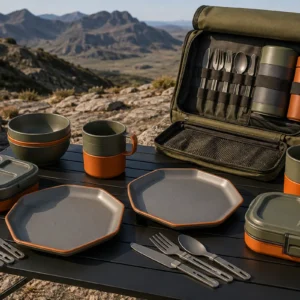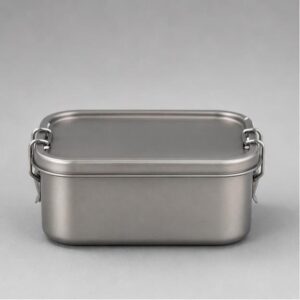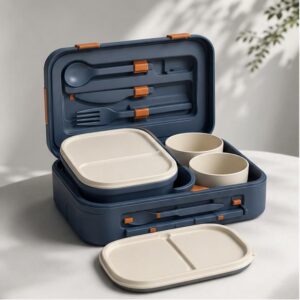
Description
TWIN-HOLSTER WAIST-BELT CAMPING DINNERWARE SET REVIEW
B2B HIP-WORN TWIN-HOLSTER CARRIER CONCEPT
Twin-Holster Waist-Belt Camping Dinnerware Set
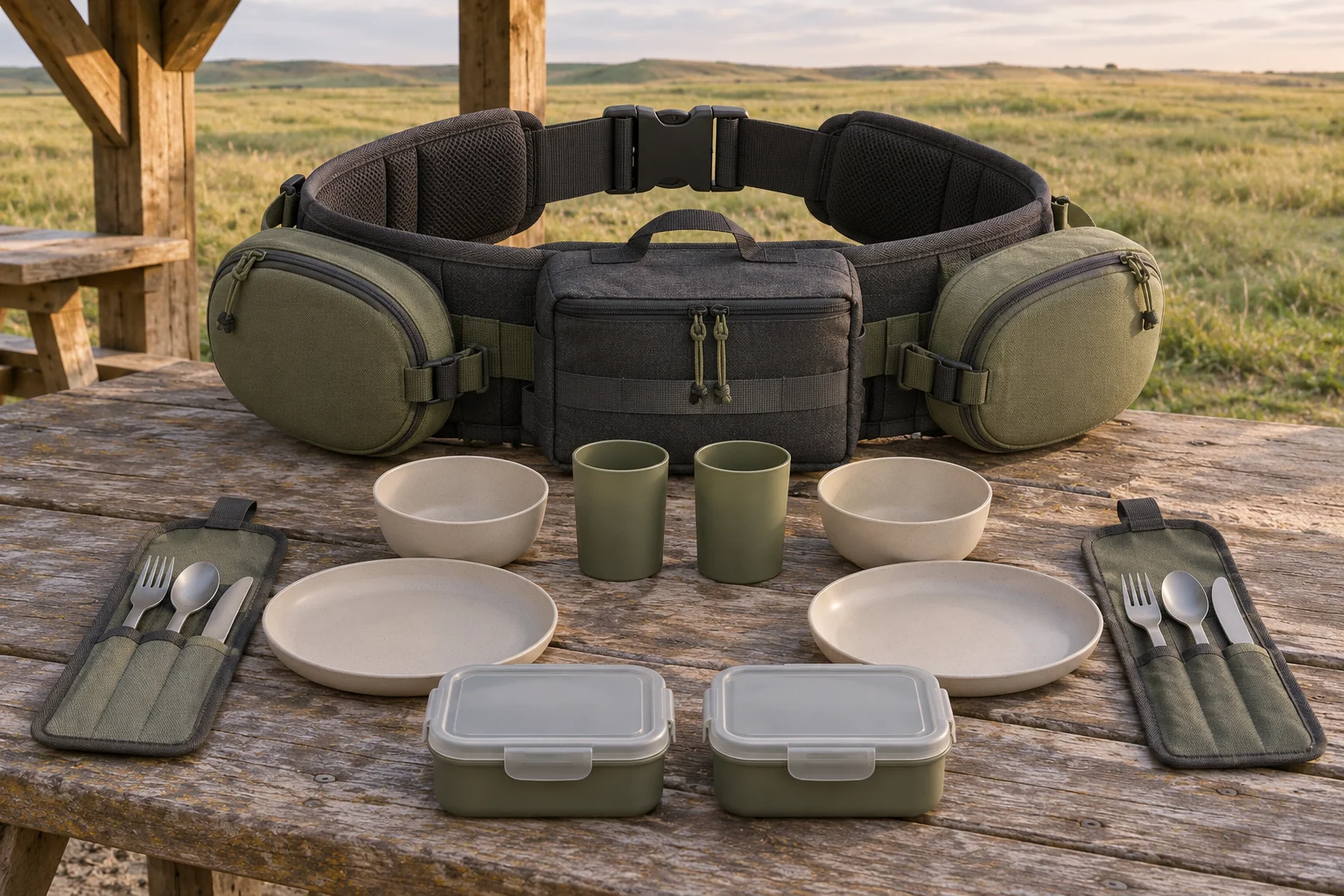
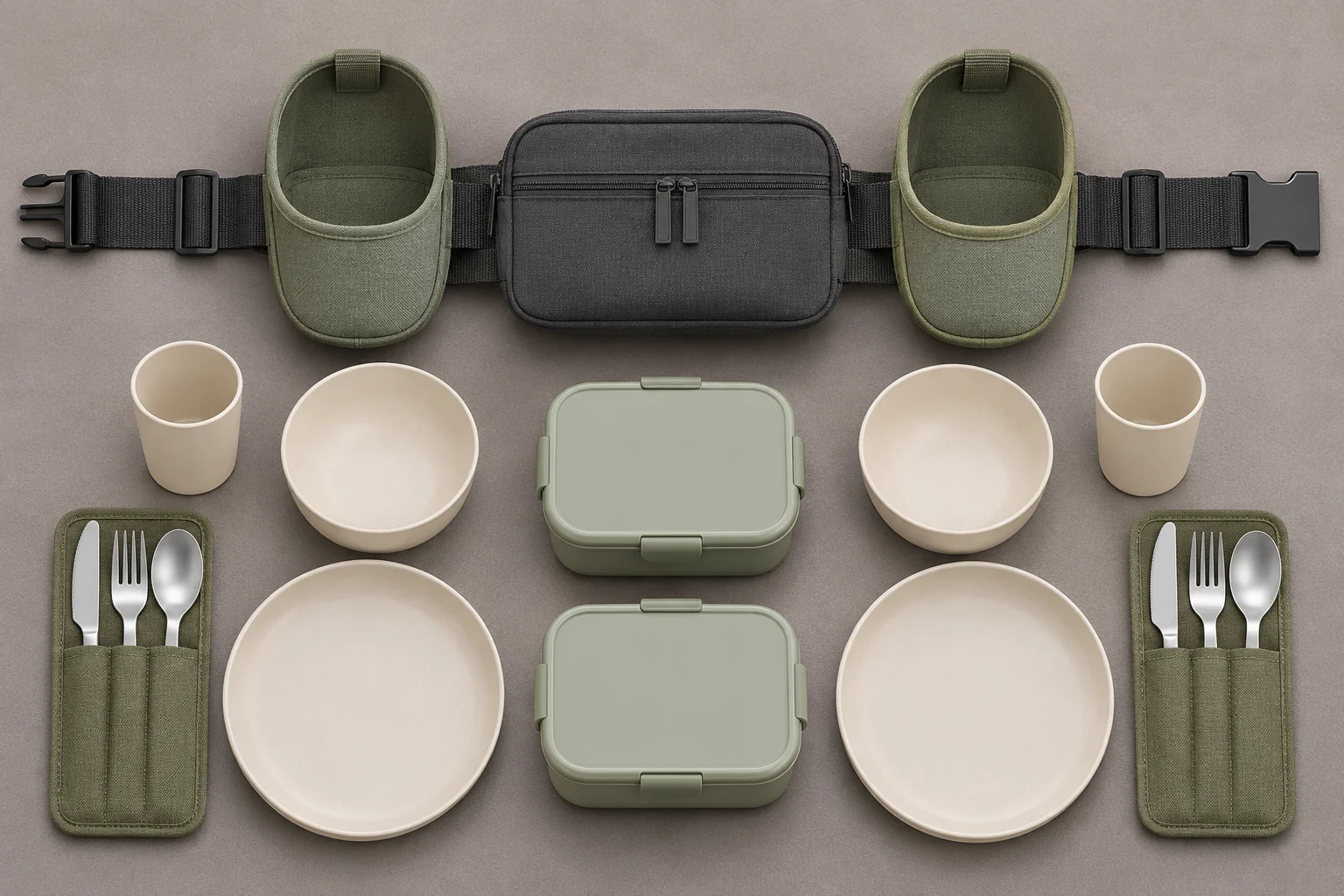
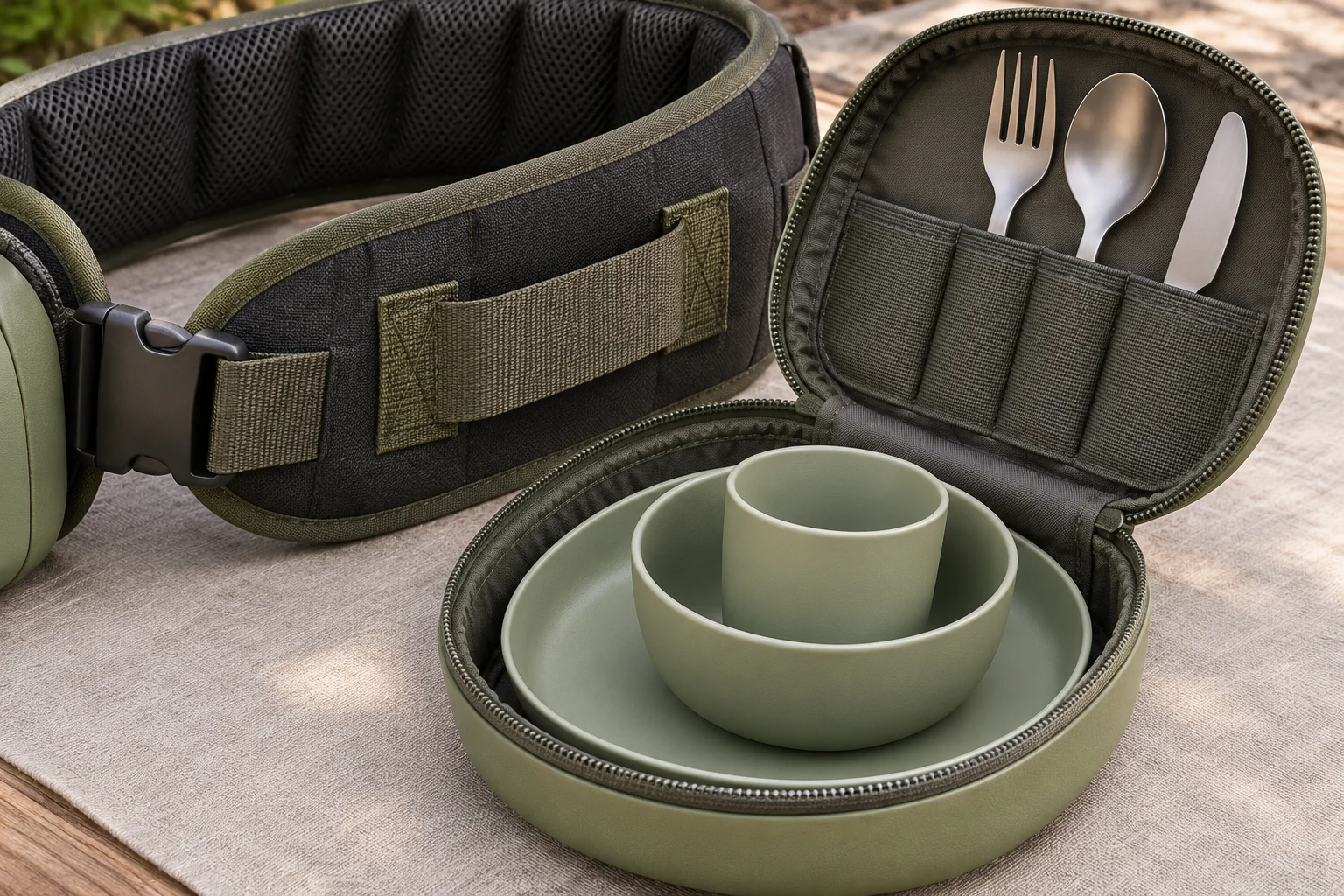
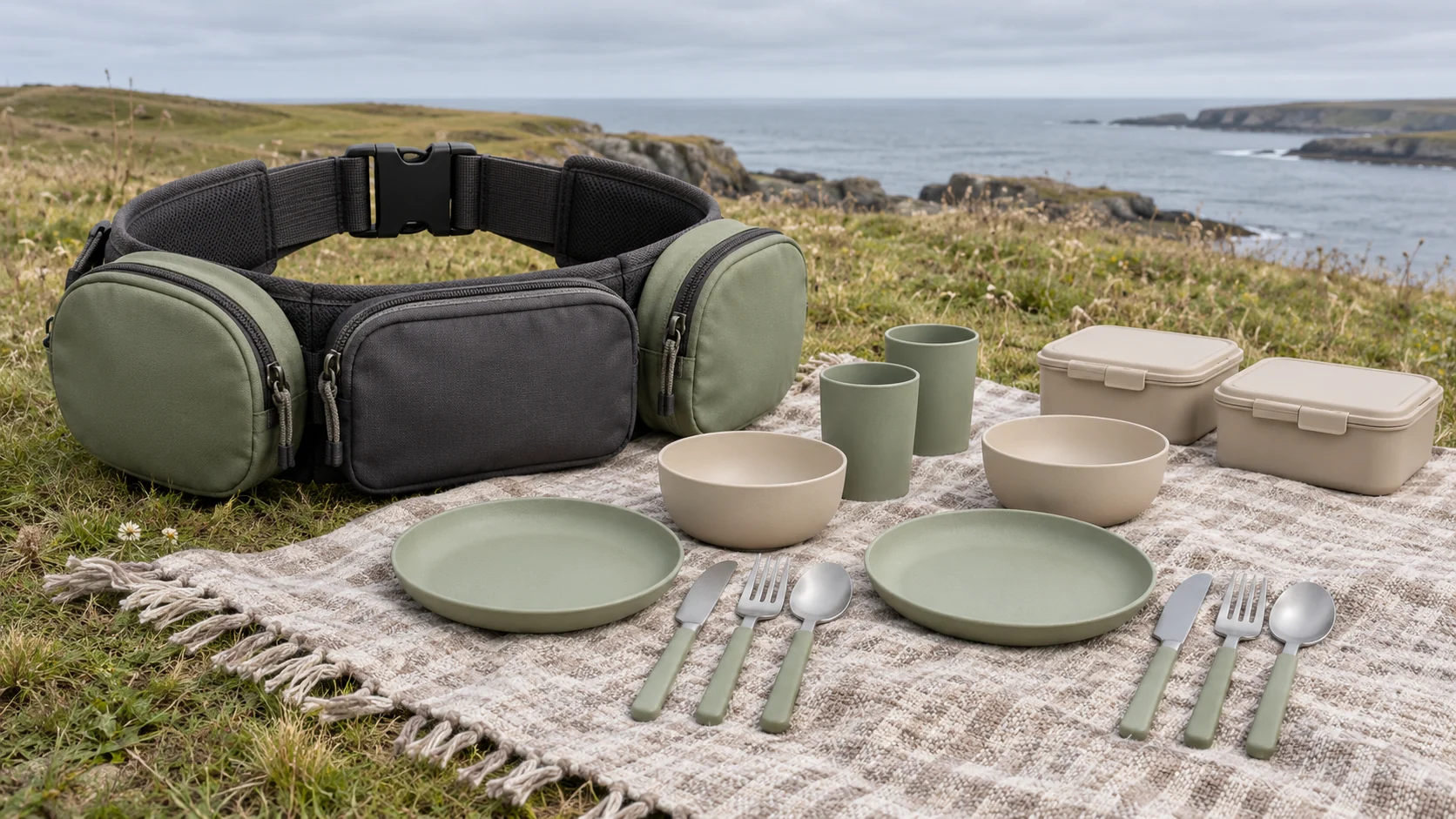
This waist-belt camping dinnerware set concept distributes two place settings across three detachable storage zones on one padded waist belt with mirrored detachable oval holster pods and a central rectangular pouch. The reference arrangement gives each place setting its own holster and stores the two reference lunch boxes in the central pouch so buyers can review access and return-pack handling before freezing a BOM. It is a development direction, not an existing SKU. Final dimensions, materials, component counts, attachment conditions, food-contact evidence, MOQ and lead time are To be confirmed for the project.
- Concept users
- Two people
- Architecture
- Padded waist belt with two detachable oval zippered holsters and one central rectangular pouch
- Reference content
- 2 plates, 2 bowls, 2 cups, 2 forks, 2 spoons, 2 knives and 2 lunch boxes
- Closed dimensions
- To be confirmed for the project
- Materials
- To be confirmed for the project
- Compatibility
- Compatibility to be confirmed by project sample and drawing.
PRODUCT PARAMETER
Waist-Belt Camping Dinnerware Set Specification Record
| Field | Current value | Approval evidence |
|---|---|---|
| Carrier architecture | Padded waist belt with two detachable oval zippered holster pods and one central rectangular pouch; concept only | Released carrier, belt, belt attachment and storage zone drawings |
| Reference place settings | Two conceptual settings | Signed BOM with component codes and quantities |
| Left holster pod | One oval zippered pod for one conceptual place setting | Plate profile, sleeve clearance and retention drawing |
| Right holster pod | One mirrored oval zippered pod for the second conceptual place setting | Matched component and pocket revisions |
| Lunch-box storage zone | One central rectangular pouch for two conceptual lunch boxes and project accessories | Box count, orientation and removal-clearance approval |
| Cutlery storage zone | Internal elastic sleeves for two conceptual fork-spoon-knife trios | Utensil profile, edge-protection and closure review |
| Belt, holster and pouch dimensions | To be confirmed for the project | Loaded drawing with units and tolerances |
| Materials and colorants | To be confirmed for the project | Component-level material and destination evidence |
| Loaded carry and attachment conditions | To be confirmed for the project | Buyer-approved load states, directions and sample review |
| Component compatibility | Compatibility to be confirmed by project sample and drawing. | Matched revisions and complete fit record |
| Logo, packaging, MOQ and lead time | To be confirmed for the project | Artwork, pack-out and project quotation approval |
REFERENCE CONFIGURATIONS
How Do Twin Holsters Separate Two Place Settings?
The waist belt with mirrored holsters is materially different from the closed body of the twin-pannier backpack set, the rigid carrier of the Arch-Sling set and the vertical pockets of the harness-rail set. Buyers can compare the wider camping dinnerware program before selecting a carrier direction.
Left holster pod
The left oval zippered holster is the proposed home for the first plate, bowl and cup. Review how those pieces nest and whether they can be removed independently.
Right holster pod
The right oval zippered holster is reserved for the second plate, bowl and cup. Check both holsters against the same drawing and record any differences in access after loading.
Central rectangular pouch
A rectangular storage zone holds two conceptual lunch boxes. Count, lids, seals, orientation and retention must match the released BOM.
Internal utensil sleeves
Internal elastic sleeves are proposed for the fork, spoon and knife in each setting. The buyer must define edge shielding and the separation of clean utensils from returned utensils.
DEVELOPMENT CONTROL
Release the Waist-Belt Architecture in Four Controlled Steps
A waist-belt camping dinnerware set should not move to quotation until the component bill, belt-to-pod interfaces and packed-use conditions agree.
- 01
Freeze the BOM
Assign codes and revisions to the waist belt, two oval holster pod shells and one central pouch shell, belt attachments, closures, lunch boxes and every dinnerware component.
- 02
Control interfaces
Approve belt pass-through spacing, pod orientation, pocket clearances, padding, closure paths and the worn carrier envelope.
- 03
Review loaded use
Check attachment, access, balance, clean/used separation, repacking and transport under buyer-defined conditions without assuming performance.
- 04
Release evidence
Connect materials, intended use, food-contact scope, artwork and packaging to one controlled revision before quotation.
MATERIAL AND COMPLIANCE BOUNDARY
Separate Carrier Hardware From Food-Contact Components
The waist belt, webbing, belt attachments, padding, zippers, dividers and holster and pouch shells need structural-material, edge, cleaning and intended-use review. Each food-facing component needs its own identified resin or other material, colorant record, intended food category, use temperature and contact-time scope. A textile or hardware decision must not be presented as evidence for a food-contact component.
For this waist-belt camping dinnerware set, the carrier bill and the food-contact bill should remain separate but linked by revision. Buyers should request component codes for the waist belt, belt attachments, sleeves, padding and every item that touches food. The review should identify which storage zone may receive used utensils, how detachable pods are cleaned and dried, whether closures can contact food surfaces, and whether printing, coatings or adhesives enter the intended contact area. These questions define the evidence package; they do not imply a material, cleaning result or compliance claim.
Packaging approval should verify that the delivered waist-belt camping dinnerware set uses the same component count, holster and pouch position and belt attachment revision used in the fit review. The pack-out record should show holster and pouch order, lunch-box orientation, protective layers, carton dimensions and identification method. Dimensions, component substances, decoration process and pack-out data are To be confirmed for the project and released in writing.
When plastic food-contact parts are considered for a U.S. destination, use 21 CFR 177.1520 as a scope reference; for an EU destination, separately examine Regulation (EC) No 1935/2004. GS1 General Specifications may inform identification if selected by the buyer. No certification or performance is claimed.
PROCUREMENT FAQ
Questions About the Waist-Belt Camping Dinnerware Set
These answers keep each project variable inside a controlled buyer brief.
Are the belt, holster and pouch dimensions final?
No. Belt, holster, pouch, dinnerware and carton dimensions are To be confirmed for the project.
Will every component fit the two oval side holsters and one central pouch?
Compatibility to be confirmed by project sample and drawing.
Are two lunch boxes included?
Two boxes are a reference concept. Their count, construction and sealing method are To be confirmed for the project.
How much loaded weight can the waist belt carry?
No load or comfort performance is claimed. Load, direction, duration and acceptance criteria require buyer approval.
Can buyers change the holster and pouch order?
Holster and pouch order is a project variable. Review the proposed positions on a loaded sample for access, clearance and distribution at the waist.
Can buyers customize color, logo and packaging?
Color, branding and pack-out can only enter the quotation after construction and decoration feasibility are confirmed; MOQ and lead time are To be confirmed for the project.
Is this an existing SKU?
No. The visuals communicate an architecture for buyer discussion only; they provide no evidence of existing tooling, manufacturing readiness or use performance.
CONTROL MODULE FIT, LOADED BALANCE AND CLEAN/USED HANDLING BEFORE QUOTATION
Request a Practical Waist-Belt Camping Dinnerware Set Review
Send the component bill, target belt, holster and pouch envelopes, intended use conditions, colors, artwork, packaging and destination evidence scope.
RELATED SOURCING PATHS
Compare Products and Plan Your Project
Review related product formats, then compare material, set configuration, logo, packaging, testing scope and order quantity with our B2B team.