
Material & Product Selection for Camping Tableware
Build a practical outdoor dining program by matching the product format, material, user count, pack volume, target market and evidence requirements before color or packaging is approved.
- Standard and custom product routes
- Four material families compared
- SKU-specific testing and documentation
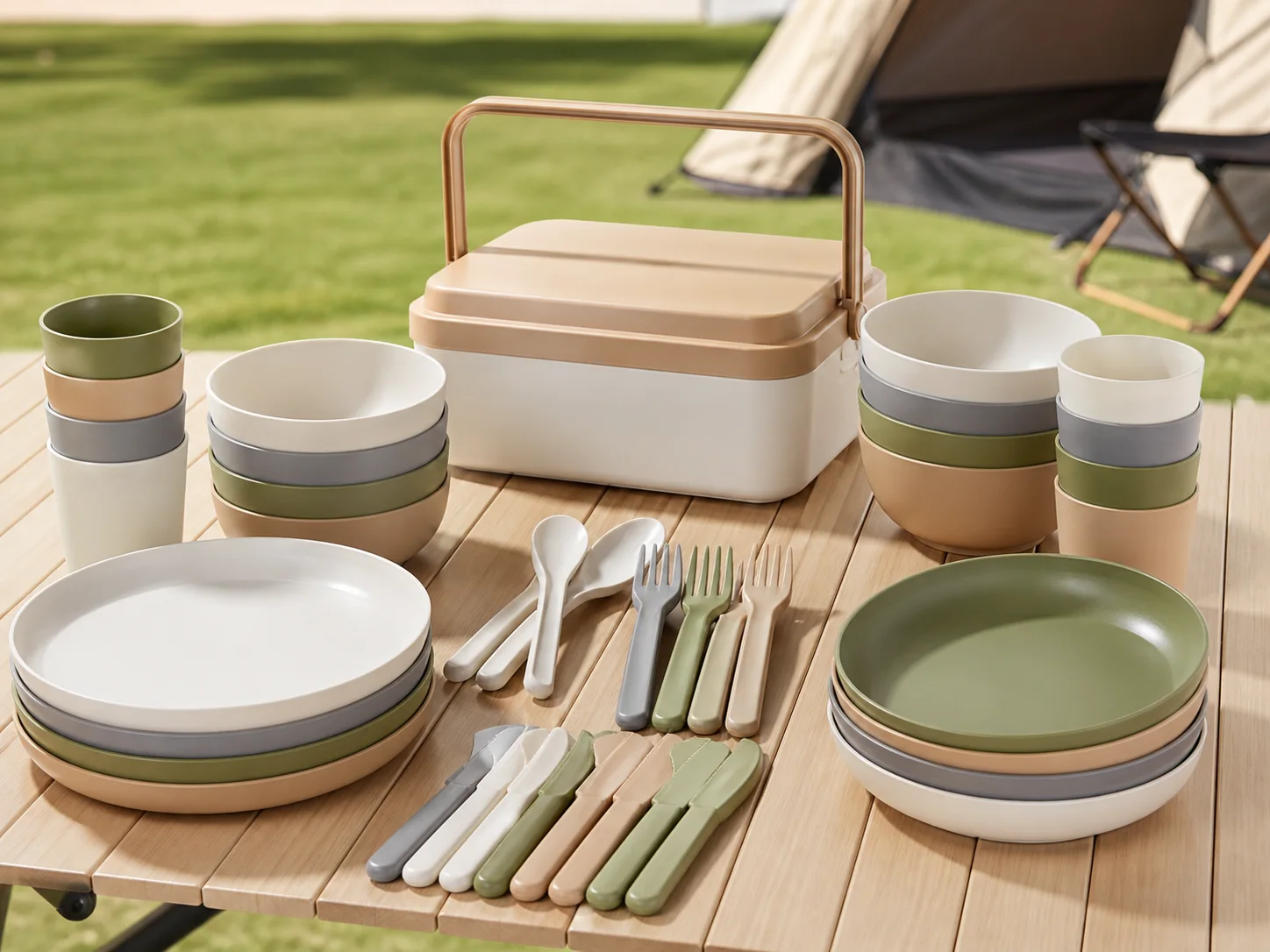
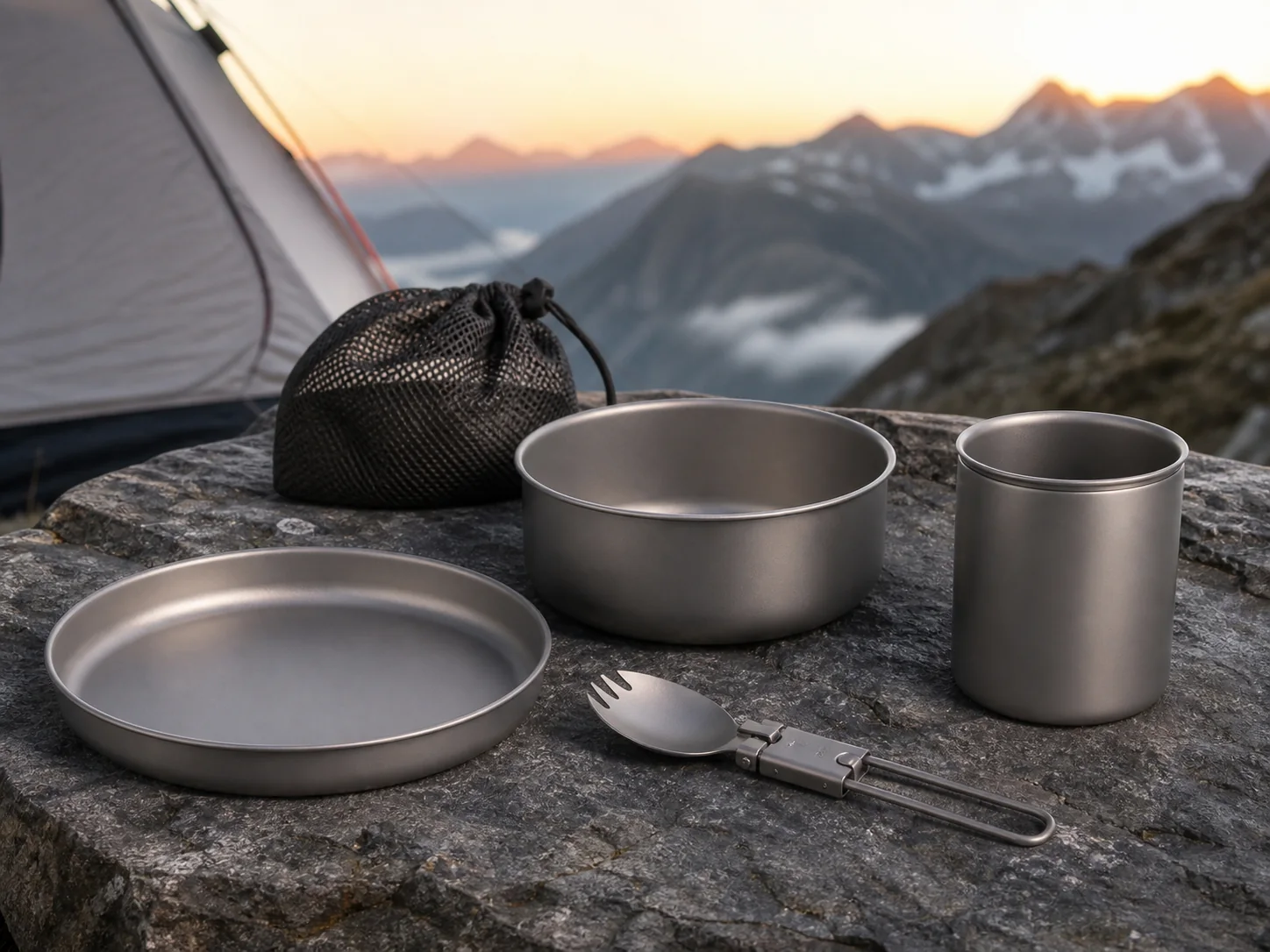
Start with the way the buyer will use and carry the set
A useful tableware brief begins with the number of users and required components. These product routes help define the piece count, nesting logic, storage method and target price before material selection.
Camping Dinnerware Sets
Coordinated plates, bowls, cups and cutlery for individual or family programs.
View set formats → 02Camping Mess Kits
Nesting or compact kits designed around pack volume, cooking and eating needs.
View mess kits → 03Portable Meal Kits
Complete meal systems with an insulated lunch bag, case or storage container.
View portable kit → 04Plates & Bowls
Round, deep, divided and stackable formats selected by meal type and material.
View plates → 05Cups & Mugs
Handled and straight-sided formats reviewed for capacity, rim and packability.
View cups and mugs → 06Camping Cutlery
Forks, spoons, knives and sporks configured by length, finish and carry method.
View cutlery →Match material performance to the program
Material choice affects weight, feel, nesting geometry, color options, tooling, testing and cost. Final suitability must be confirmed against the finished SKU and its intended conditions of use.
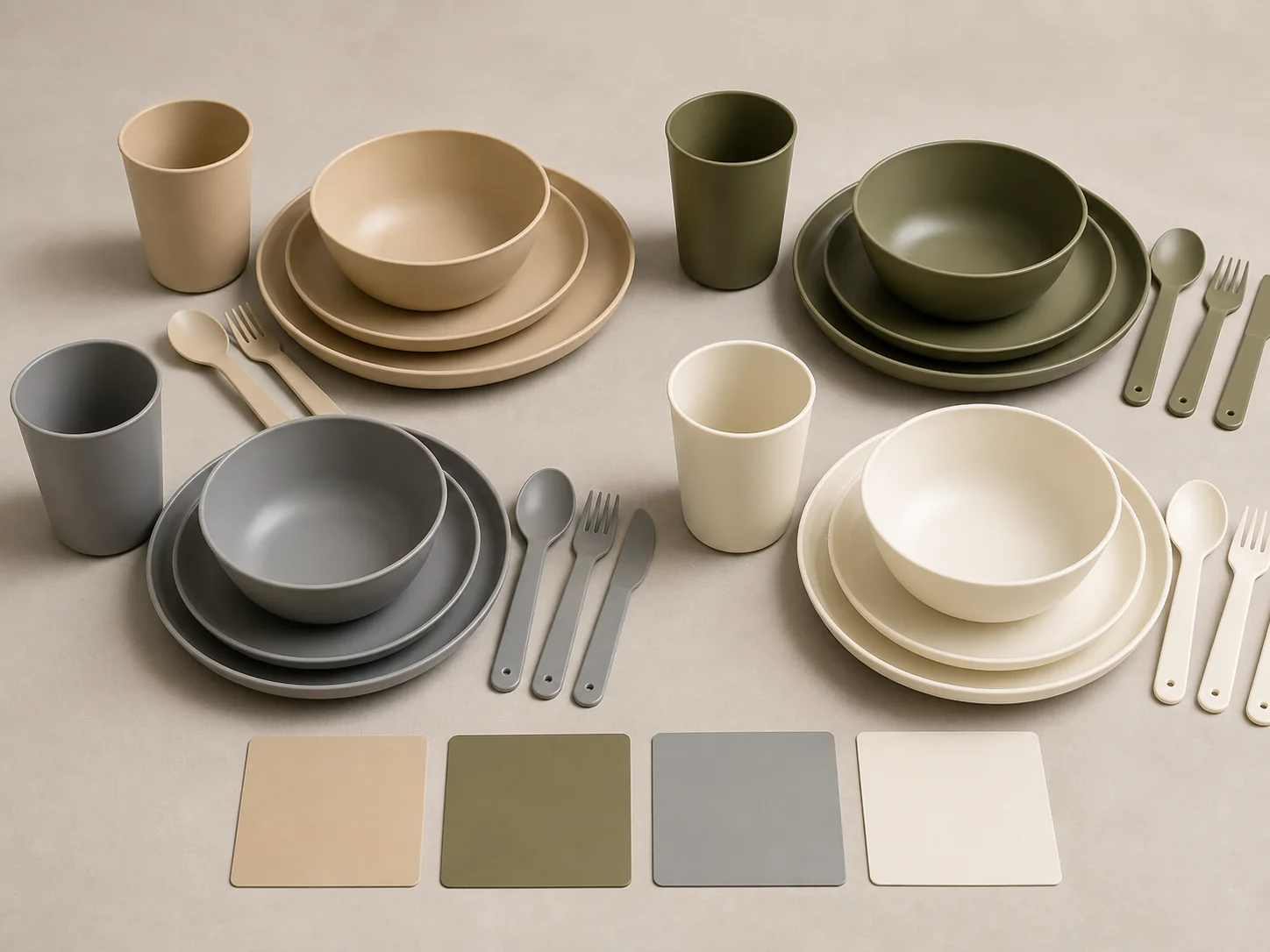
Reusable PP
Suitable for scalable family sets, molded colors and coordinated components when the selected resin and finished SKU meet the project requirements.
- Broad molded-color options
- Good route for nested sets
- Confirm temperature and care conditions
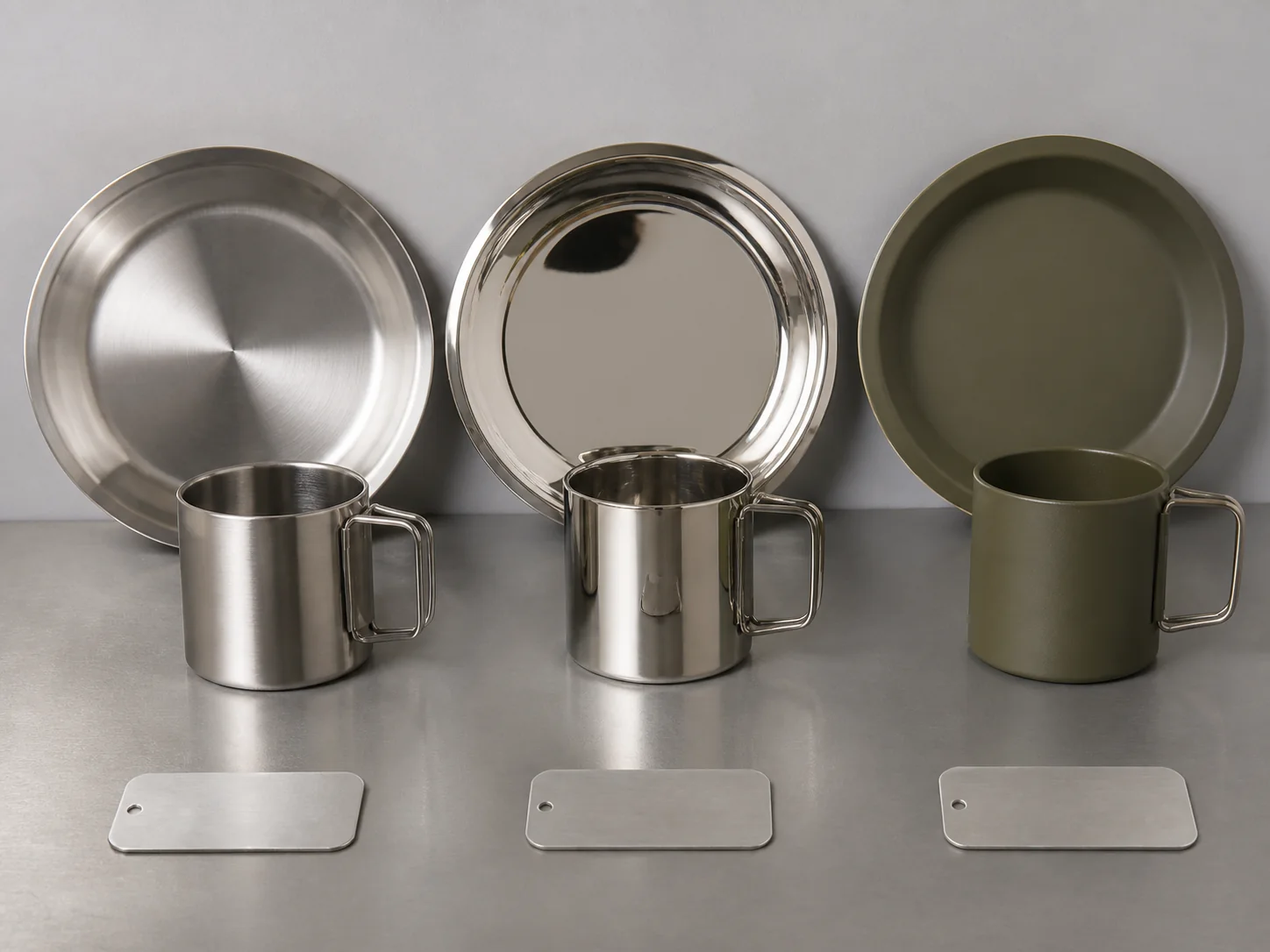
Stainless Steel
Often selected for RV, glamping and repeated-use programs where buyers prioritize durability, surface finish and a substantial hand feel.
- Specify steel grade by SKU
- Review rim, weld and finish quality
- Suitable for long-service positioning
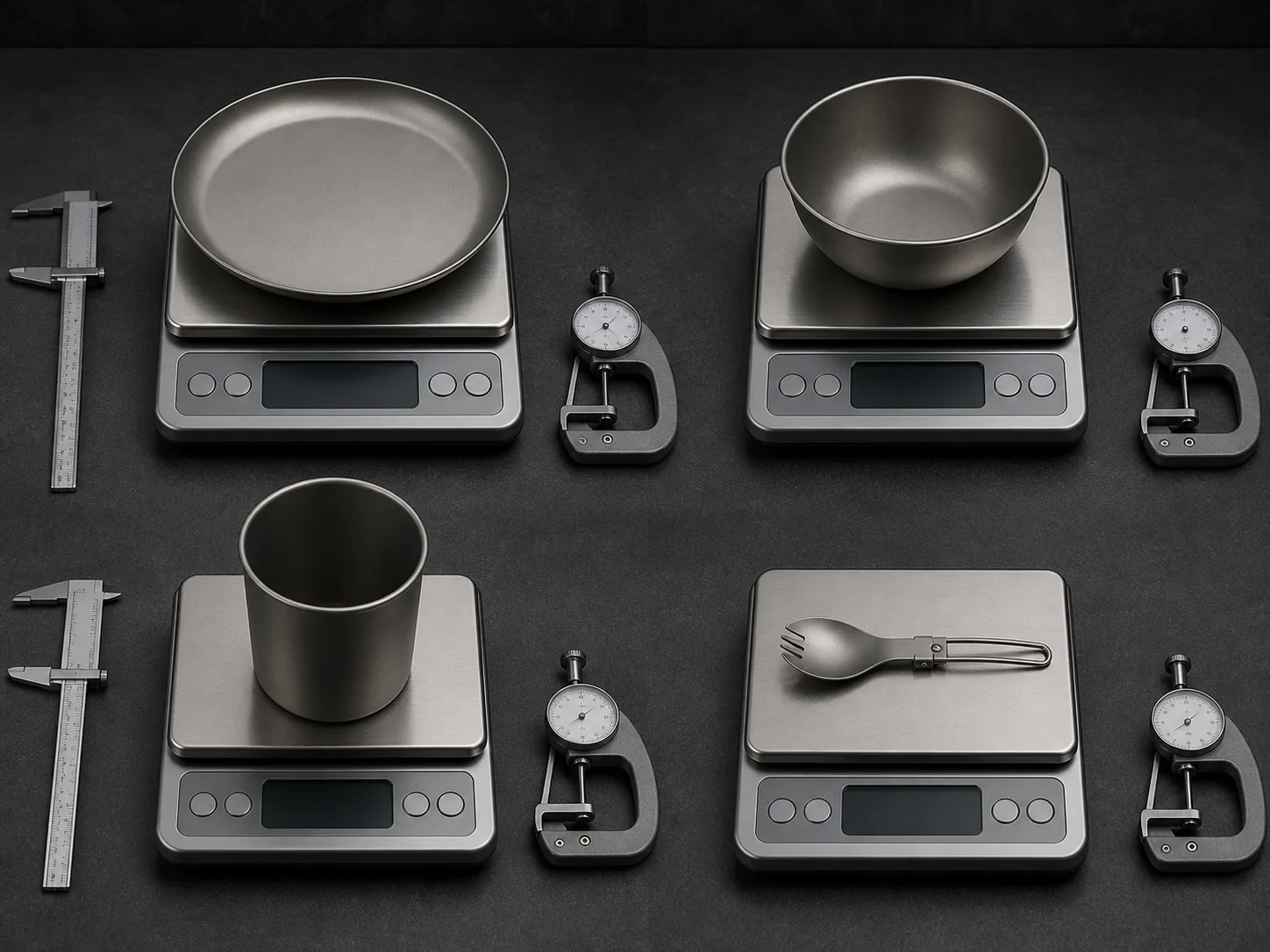
Titanium
Best suited to lightweight and premium outdoor ranges where measurable unit weight, wall thickness and nesting efficiency matter.
- Record grade and unit weight
- Control wall thickness and edge finish
- Compare cost against weight targets
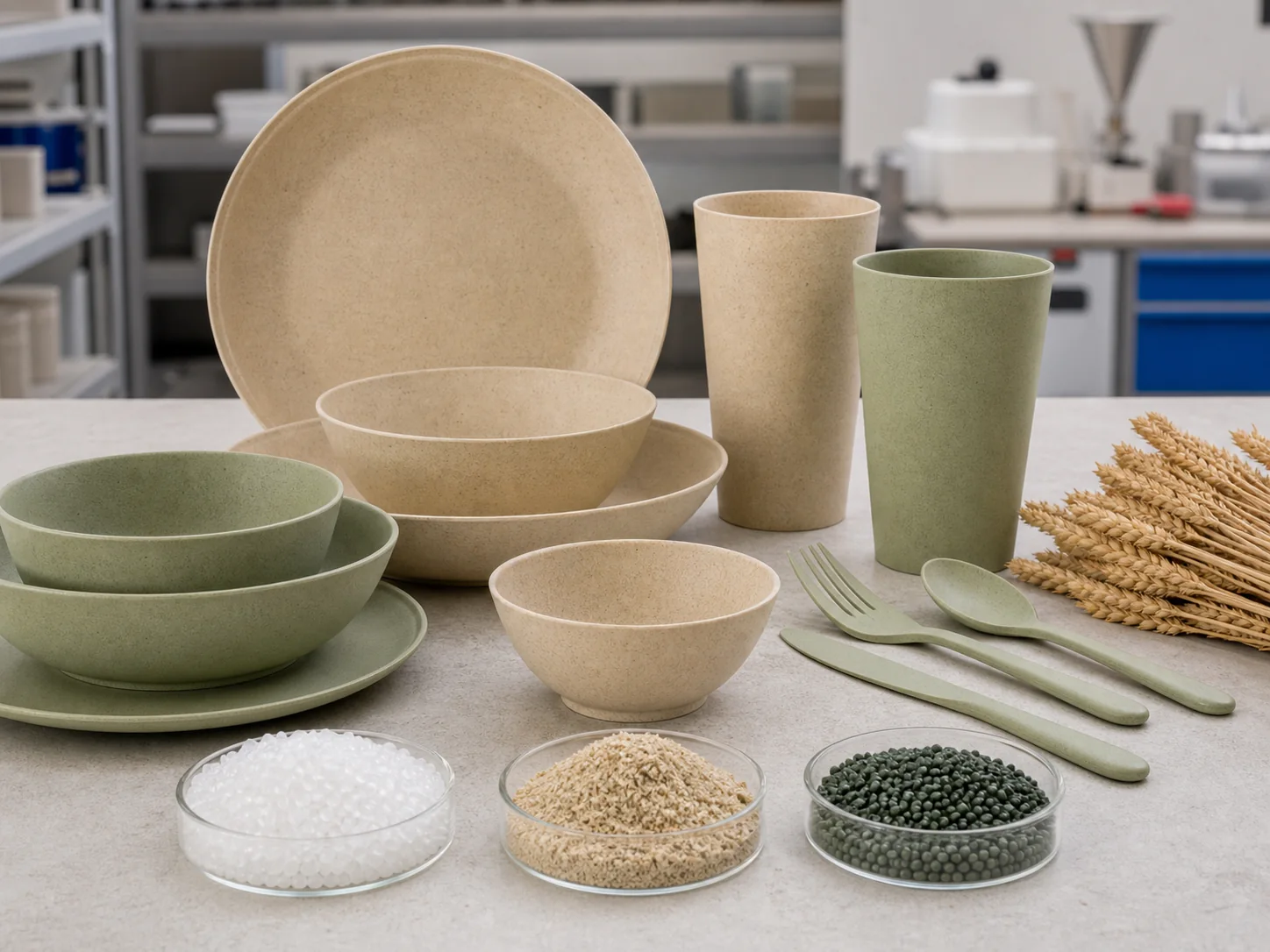
Wheat-Straw Composite
Commercial products commonly combine plant-fiber filler with a polymer matrix. Composition and environmental claims must follow project-specific evidence.
- Confirm resin and filler formulation
- Do not assume plastic-free or biodegradable
- Match reports to the finished SKU
What to define before requesting a quotation
State the person count and required plates, bowls, cups, cutlery, containers and carry items.
List target diameter, usable volume, nesting limit, pack size and any weight target.
Identify destination market, food types, contact time, temperature and care expectations.
Share logo artwork, color references, retail channel, pack count, barcode and instruction needs.
Qualified standard SKUs may start from 500 pieces; custom-project MOQ is confirmed in the quotation.
Name the required document or target-market test so its scope can be reviewed against the exact SKU.
A practical first-pass comparison
| Buyer priority | Start with | Verify before approval |
|---|---|---|
| Molded colors and scalable family sets | Reusable PP | Resin specification, geometry, care conditions and finished-product test scope |
| Durability for RV or glamping | Stainless steel | Grade, gauge, rim, weld, finish and corrosion-test conditions |
| Low weight and premium positioning | Titanium | Grade, unit weight, wall thickness, finish and nesting dimensions |
| Plant-fiber appearance in a reusable molded range | Wheat-straw composite | Full formulation, claims language and report coverage for the finished SKU |
From initial idea to approved product route
- Share the use caseBuyer type, market, user count, product list and target timing.
- Shortlist product and material routesCompare existing SKUs, customization limits and whether new tooling is required.
- Confirm the sample scopeRecord dimensions, color, logo, packaging and the evidence required for approval.
- Quote the approved routeMOQ, sample cost, lead time, packaging and commercial terms are stated for the selected configuration.
Material and product selection questions
Which material is best for camping dinnerware?
There is no single best material for every program. Reusable PP supports molded colors and scalable sets, stainless steel emphasizes durability, titanium suits premium lightweight programs, and wheat-straw composite can support selected reusable ranges when its formulation and claims are properly documented.
Can different materials be combined in one set?
Yes, when component dimensions, nesting, finish, care instructions, packaging and the responsible supply route are reviewed together. The quotation should identify the material of every component.
Can samples be ordered before bulk production?
Yes. Existing and custom samples follow different charges and timelines. The quotation states the sample scope, freight, approval criteria and whether any fee may be credited to a bulk order.
Are all products microwave-safe or dishwasher-safe?
No category-wide claim should be assumed. Suitability must be confirmed for the exact material, finished SKU and stated use conditions using the current care instructions and applicable test scope.
How are MOQ and lead time confirmed?
Qualified standard SKUs may start from 500 pieces, while custom projects are quoted according to product, material, decoration, packaging and tooling. Some confirmed standard programs may start from 7 days after the required approvals.
Get a product and material recommendation for your program
Send the user count, target market, quantity, packaging and testing requirements. The team will respond with the appropriate existing-SKU or custom-development route.