Existing SKU Customization
Select an available plate, bowl, cup, cutlery item or set, then review color, logo, component count and packaging.

OEM · ODM · PRIVATE LABEL
Develop camping dinnerware sets, mess kits and portable meal systems around your target user, material, component list, brand identity, packaging and destination-market requirements.
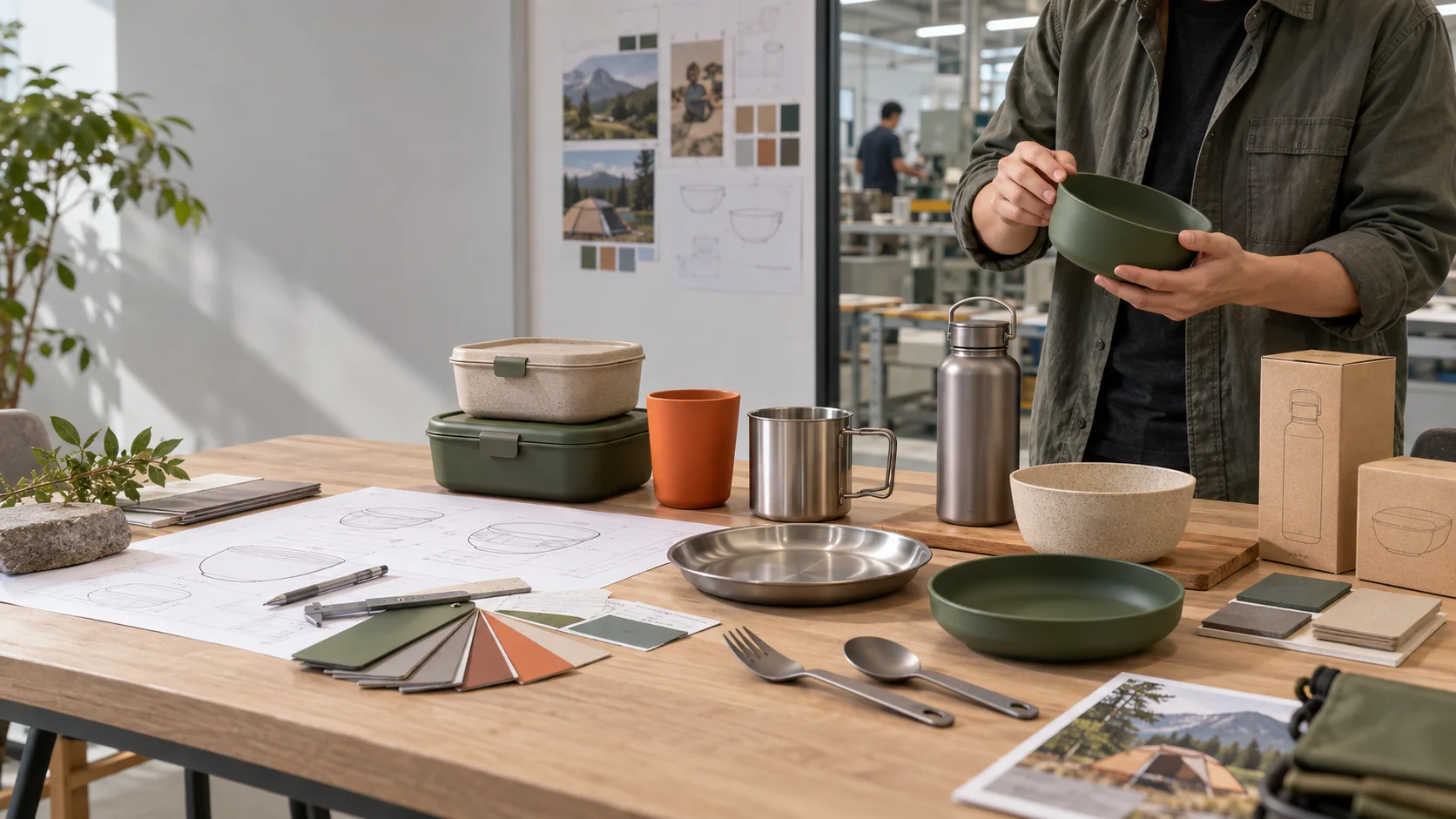
Naike began operations in 2008 and has maintained an Alibaba supplier profile since 2012. Production route and responsible facility are confirmed by project.
PROGRAM ARCHITECTURE
Custom outdoor tableware does not always require a new mold. The most efficient route depends on how much of the product must change and which approvals the buyer needs before launch.
Select an available plate, bowl, cup, cutlery item or set, then review color, logo, component count and packaging.
Combine compatible pieces into a 1-, 2- or 4-person system with a storage case, lunch bag or retail pack.
Control brand color, decoration, artwork, barcode, instructions, pack structure and carton identification.
Define geometry, dimensions, nesting, wall thickness and tooling ownership before prototype and mold approval.
MATERIAL SELECTION
Material choice affects product weight, tooling, finish, care instructions, testing scope, packaging and landed cost. Compare quotations only after the same specification has been issued to every supplier.
| Material route | Best suited to | Specification priorities | Project note |
|---|---|---|---|
| Food-grade PP | Family camping, picnic, retail sets and high-color programs | Resin declaration, color, wall thickness, drop performance and nesting | Molded colors and scalable set architecture; care claims require SKU-specific review. |
| Stainless steel | RV, glamping, durable mess kits and repeated outdoor use | Steel grade, thickness, rim finish, joints, surface and corrosion plan | Supplied through the responsible production route confirmed in the quotation. |
| Titanium | Premium outdoor and weight-led backpacking programs | Grade, unit weight, thickness, surface finish, handle and nesting tolerance | Qualified manufacturing partner and evidence route are disclosed by project. |
| Wheat-straw composite | Selected reusable molded programs with a natural-fiber visual direction | Full formulation, PP content, color, odor, care conditions and claim evidence | Not described as plastic-free or biodegradable without suitable finished-product evidence. |
DESIGN · TOOLING · PACK-OUT
Each image below represents a different project activity. No image is reused on this page.
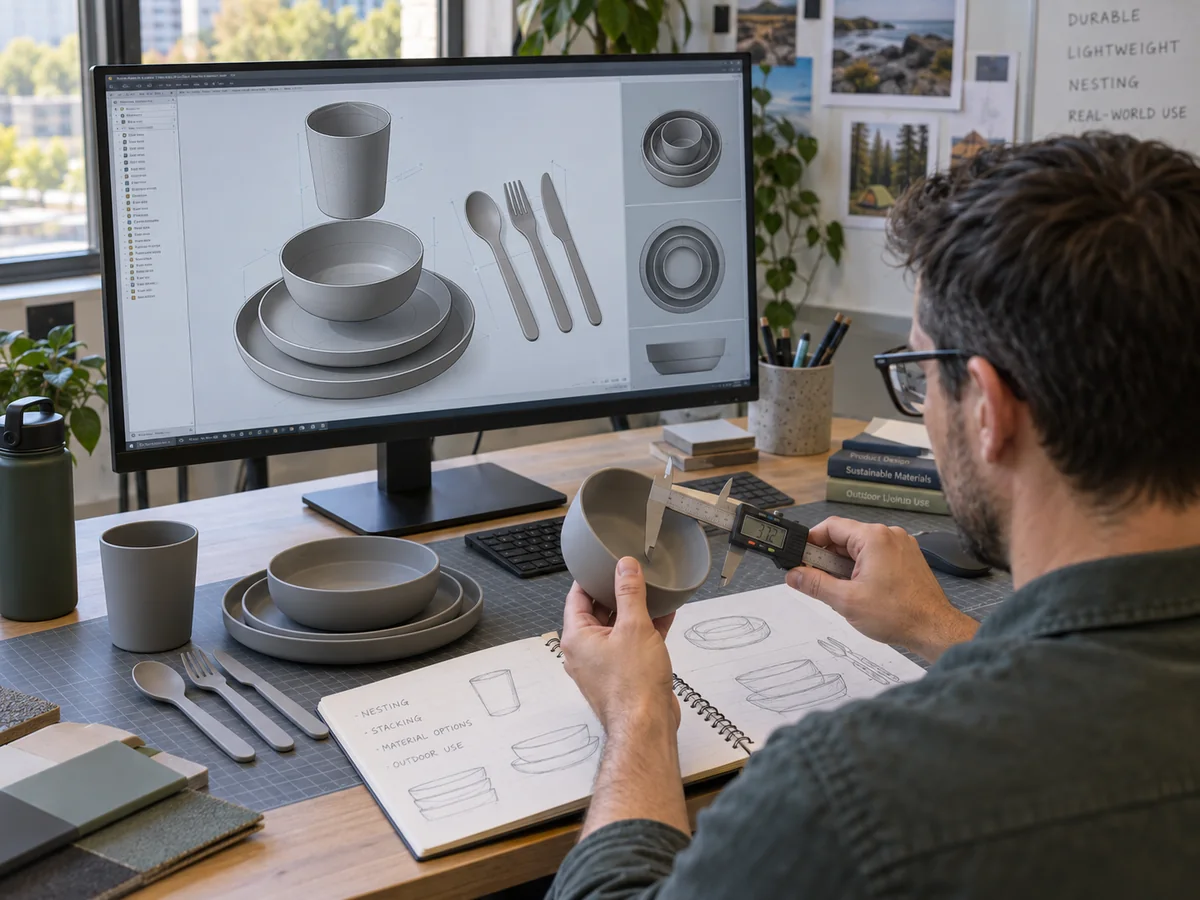
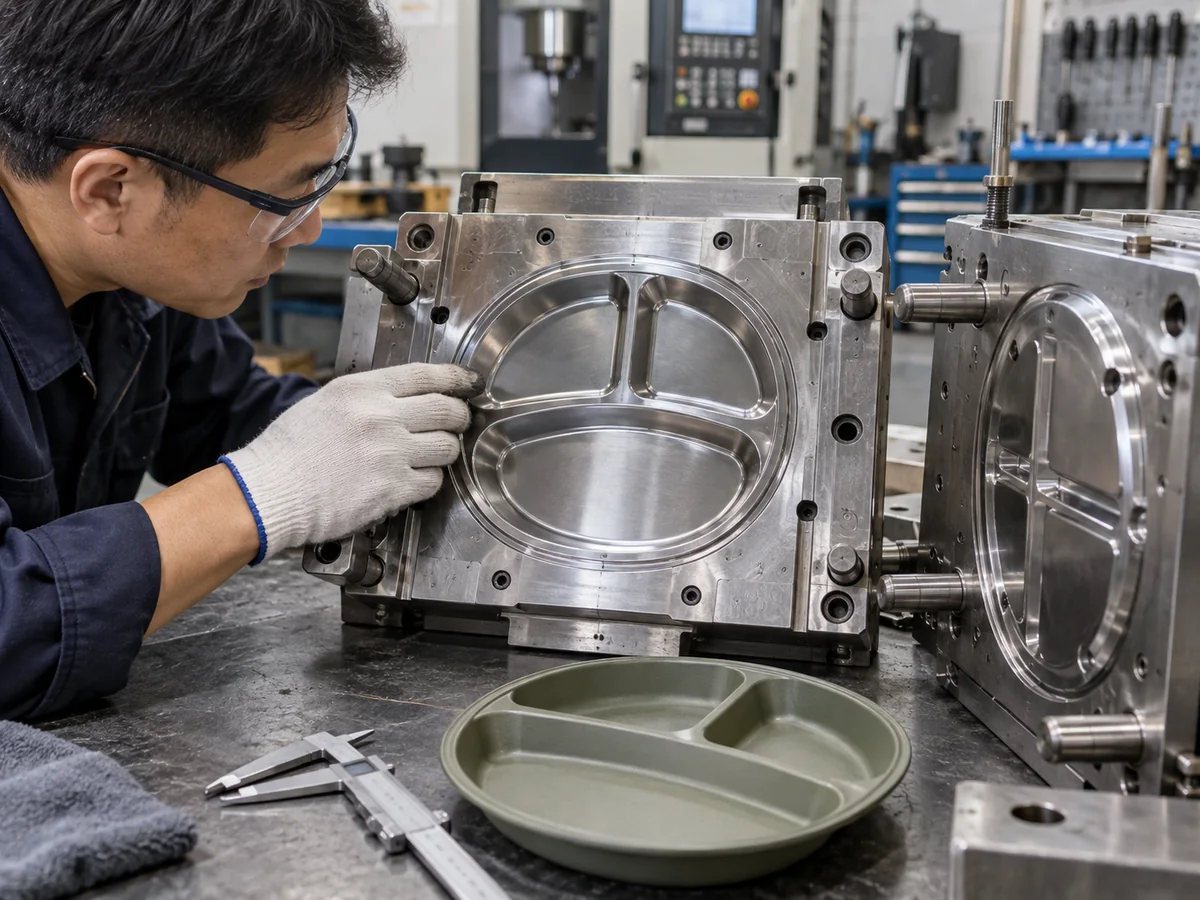
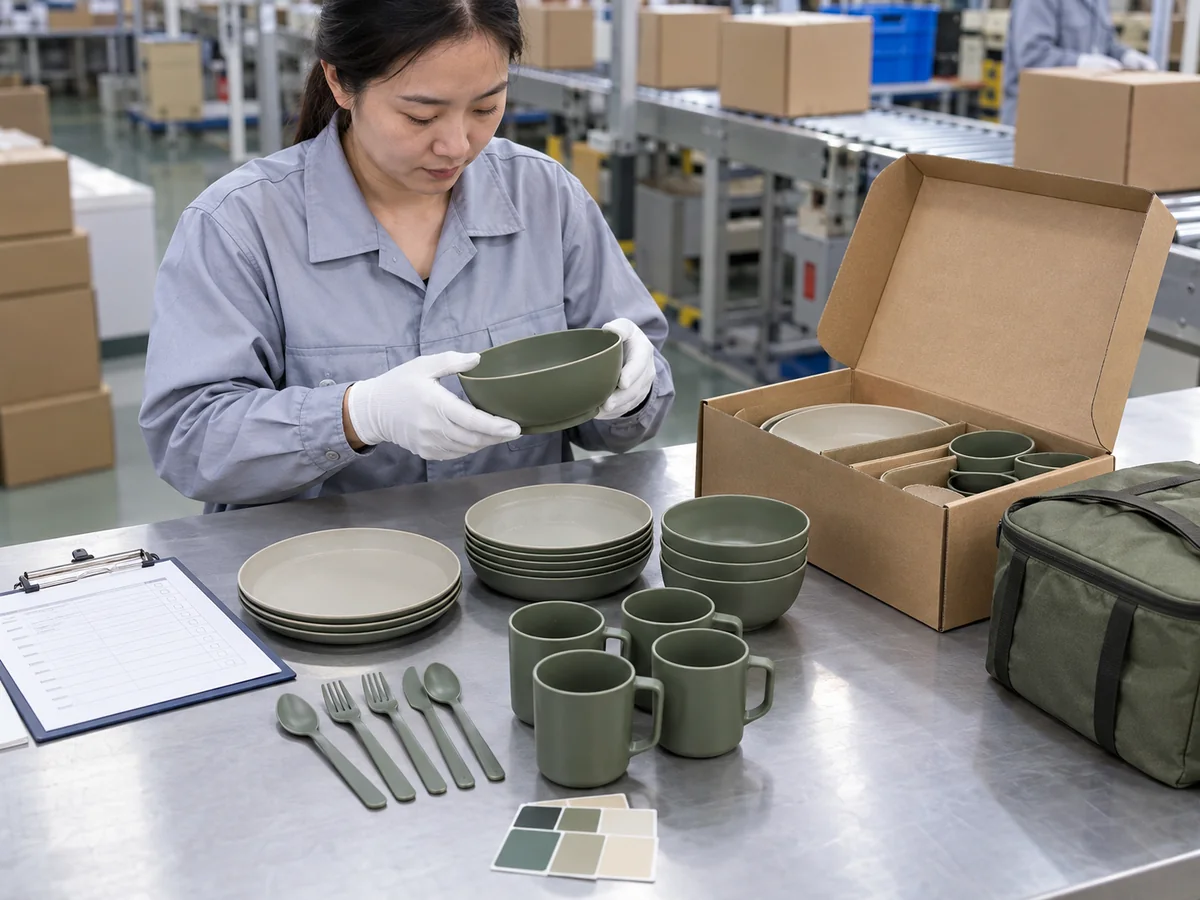
OEM DEVELOPMENT PROCESS
A controlled sequence reduces repeated sampling, unclear quotations and late packaging changes.
Confirm user, market, material, pieces, dimensions, quantity, target cost and launch date.
Choose an existing SKU, configured set, decoration program or new mold development.
Lock drawings, material, color, finish, logo location, tolerances and care conditions.
Record changes against the same reference and approve a signed golden sample.
Match testing, declarations, artwork, component count and carton details to the SKU.
Use the approved specification for in-process control, final inspection and shipment release.
RFQ SPECIFICATION
A short but complete brief lets engineering, sourcing, packaging and quality teams review the same commercial target.
RELATED SOURCING PAGES
Use these internal links to move from a broad project brief to a more specific product, material or evidence page.
BUYER FAQ
Eligible standard SKUs start from 500 units; custom projects are quoted individually. Material, color, logo, packaging and new tooling can change the final MOQ.
Yes. Existing and custom samples follow different charges and timelines. The quotation states sample scope, freight and approval requirements.
Depending on the SKU, options may include configuration, color, logo, finish, geometry, carry case and retail packaging.
Timing depends on mold availability, material, decoration, packaging, testing and quantity. Some confirmed standard programs can be produced in as little as 7 days.
Available documents are reviewed against the exact SKU, material, color, decoration, intended use and destination market.
The agreed plan may include incoming checks, first-article approval, in-process inspection, functional checks, packaging inspection and pre-shipment AQL inspection.
No. Molded PP and wheat-straw composite follow the responsible route confirmed for the project. Titanium and stainless-steel items may use qualified manufacturing partners disclosed during review.
Send the product or sketch, target market, material, quantity, logo, packaging, testing requirements and required delivery date.
START WITH A CONTROLLED BRIEF
Share the target product, SKU or sketch, material, market, estimated quantity, logo, packaging, testing requirements and delivery target. Our B2B team will return with the appropriate product and quotation route.