
What Is Wheat Straw Tableware? A Complete Guide to Eco-Friendly Dinnerware
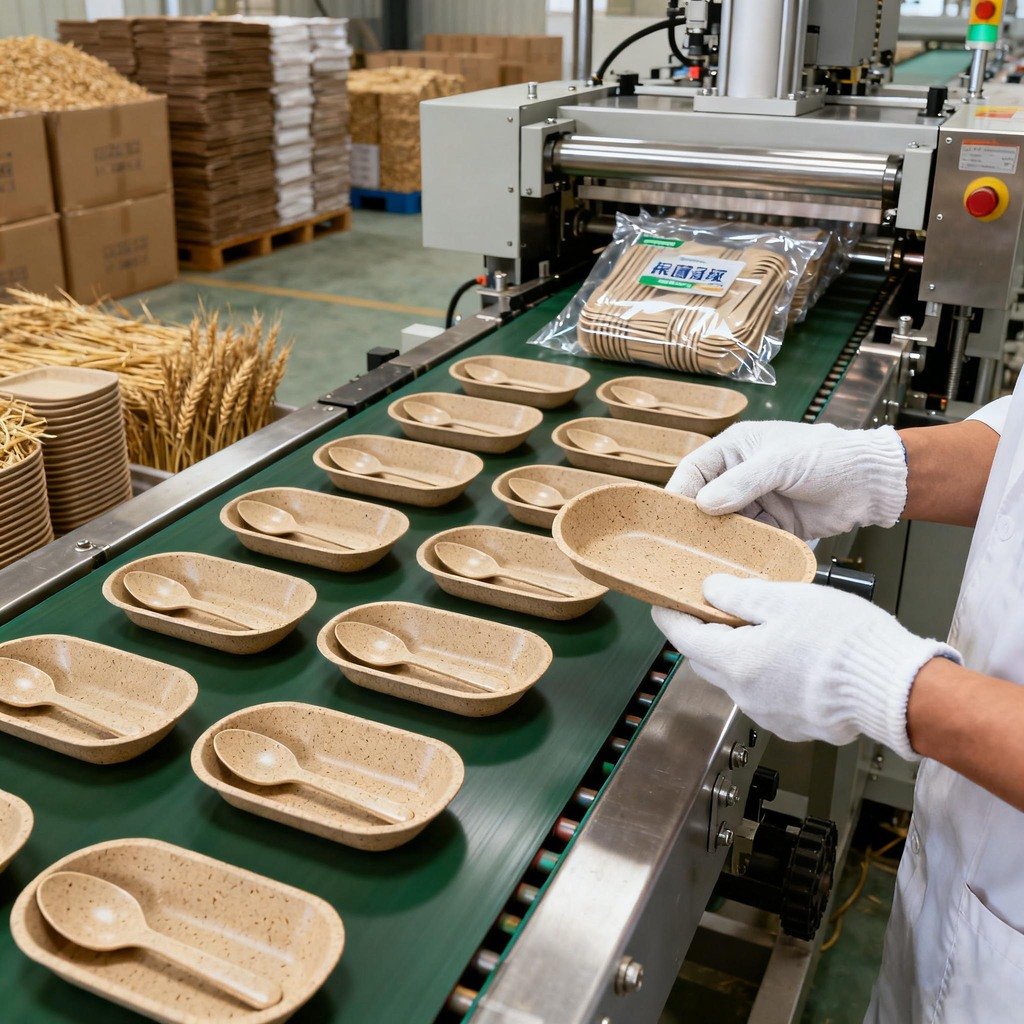
The manufacturing process typically includes:
Collecting and processing wheat straw residues
Grinding wheat straw into fine fiber powder
Mixing wheat straw fiber with food-grade PP
Injection molding under high temperature
Surface finishing and quality inspection
This process ensures the tableware maintains strength, safety, and consistent quality suitable for export markets.
Is Wheat Straw Tableware Safe for Food Use?
Yes. High-quality wheat straw tableware is BPA-free, non-toxic, and odorless when produced with certified food-grade materials.
Reputable manufacturers provide compliance with major international standards such as:
This makes wheat straw tableware safe for everyday use by adults and children.
Key Benefits of Wheat Straw Tableware for Importers
1. Why Eco-Friendly Dinnerware Is Becoming a Global Trend
In recent years, the global demand for eco-friendly tableware has increased significantly. More brands, restaurants, and retailers are actively replacing traditional plastic products with sustainable alternatives.
The main reasons include:
- Growing environmental regulations in Europe and North America
- Increasing consumer awareness of plastic pollution
- Corporate ESG (Environmental, Social, Governance) goals
- Rising demand for biodegradable and renewable materials
👉 According to industry reports, plant-based tableware materials such as wheat straw, bamboo fiber, and bagasse are becoming mainstream in food packaging and household use.
🍽️ 2. Main Types of Eco-Friendly Dinnerware Materials
Eco-friendly dinnerware is not limited to one material. The most common sustainable options include:
🌾 Wheat Straw Tableware
Made from agricultural waste (wheat straw fiber + food-grade PP).
✔ Lightweight
✔ Durable
✔ Cost-effective for mass production
🎋 Bamboo Fiber Tableware
Made from natural bamboo powder and resin.
✔ Strong and heat-resistant
✔ Premium feel
✔ Popular in high-end eco brands
🌱 Bagasse (Sugarcane Fiber)
Made from sugarcane residue.
✔ 100% compostable in industrial conditions
✔ Ideal for disposable food packaging
♻️ PLA Bioplastic Tableware
Made from corn starch or plant starch.
✔ Renewable material source
✔ Suitable for cold food packaging
🏭 3. How Wheat Straw Dinnerware Is Manufactured
Understanding the production process helps buyers evaluate quality suppliers.
The manufacturing process typically includes:
Step 1: Raw Material Collection
Wheat straw is collected after wheat harvest as agricultural waste.
Step 2: Fiber Processing
The straw is cleaned, crushed, and refined into fine natural fiber.
Step 3: Mixing with Food-Grade Resin
Wheat straw fiber is blended with PP or PLA to improve durability and moldability.
Step 4: Injection Molding
The mixture is heated and injected into molds to form plates, bowls, cups, or cutlery.
Step 5: Cooling and Finishing
Products are cooled, polished, and quality-checked before packaging.
👉 This process ensures consistency, strength, and food safety for mass production.
🌍 4. Advantages of Wheat Straw Dinnerware for B2B Buyers
For importers, wholesalers, and brand owners, wheat straw tableware offers strong commercial value:
- ✔ Lower production cost compared to bamboo or ceramic
- ✔ Stable supply chain (agricultural byproduct)
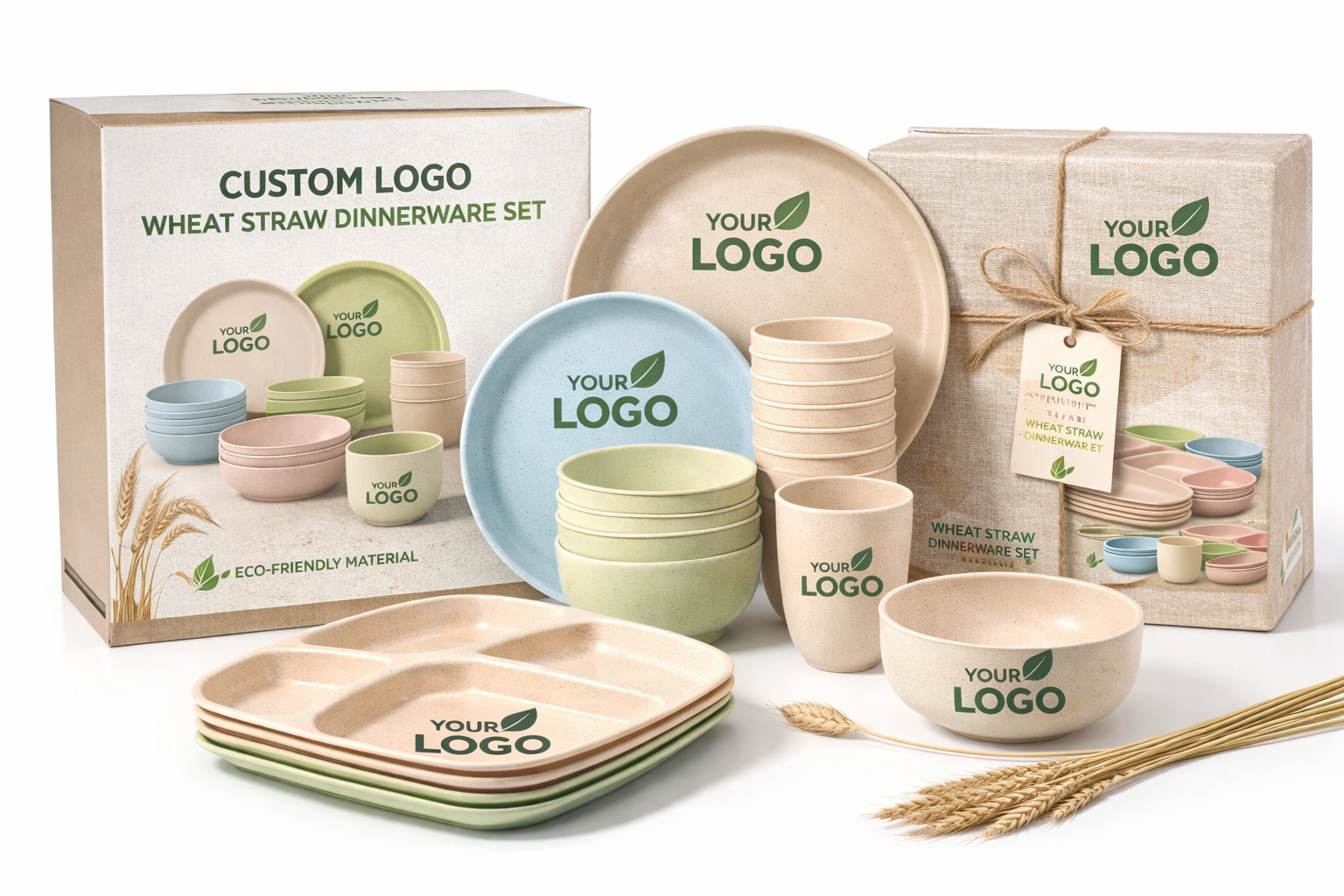
- ✔ Easy customization (logo printing, color, packaging)
- ✔ Lightweight for shipping cost reduction
- ✔ Suitable for retail, Amazon, and supermarket distribution
👉 This makes it a highly competitive product in the eco-friendly market.
🔥 5. Safety and Compliance Standards
When sourcing eco-friendly tableware, safety certification is critical.
Key certifications include:
- FDA (U.S. food contact safety)
- LFGB (EU food safety standard)
- SGS testing reports
- BPA-free certification
👉 High-quality wheat straw dinnerware should always meet food-grade standards and be tested for heavy metals and chemical migration.
♻️ 6. Is Eco-Friendly Dinnerware Truly Biodegradable?
This is a common misconception in the market.
- Wheat straw + PP products ❌ are NOT fully biodegradable
- Bagasse and PLA products ✔ can be compostable under industrial conditions
👉 Eco-friendly does not always mean 100% biodegradable. It often means reduced environmental impact compared to traditional plastic.
🧠 7. How to Choose a Reliable Supplier
For B2B buyers, supplier selection is key.
You should evaluate:
- Factory production capacity
- Quality control system
- Certification availability
- OEM/ODM customization ability
- Sample testing before bulk order
👉 A reliable manufacturer ensures consistent quality and stable long-term supply.
📦 8. Applications of Eco-Friendly Dinnerware
Eco-friendly tableware is widely used in:
- Restaurants and catering services
- Supermarkets and retail chains
- Hotel and hospitality industry
- Outdoor camping and travel kits
- Promotional gift products
Limitations Importers Should Know
While wheat straw tableware offers many advantages, it’s important to understand its limitations:
Not biodegradable like pure natural fiber products
Temperature resistance is lower than ceramic or stainless steel
Not suitable for ovens or direct flame
These factors should be clearly communicated to end customers to avoid misuse.
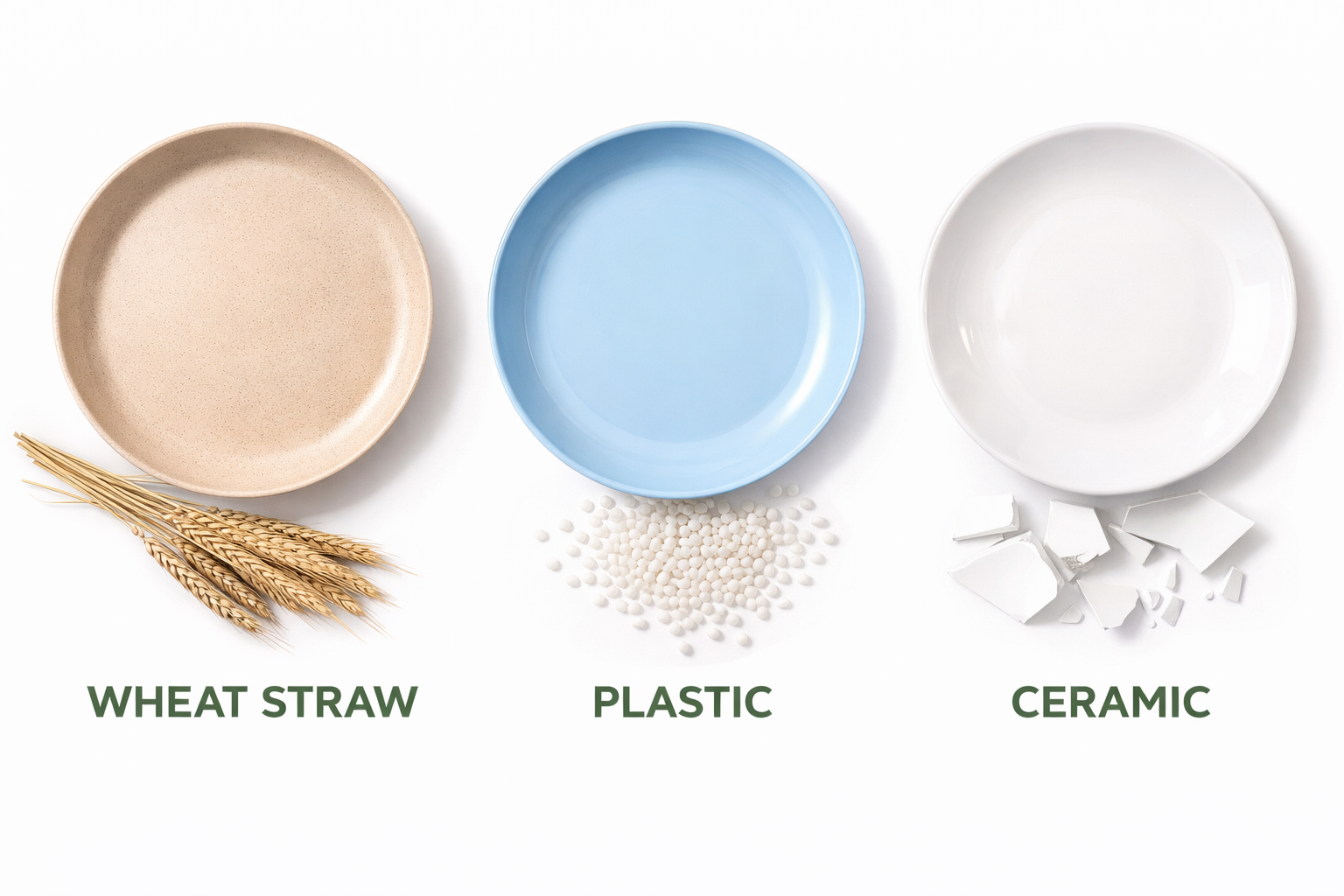
Wheat Straw vs Other Tableware Materials
| Material | Eco-Friendly | Durability | Cost | Customization |
|---|---|---|---|---|
| Wheat Straw | High | Medium | Competitive | High |
| Plastic | Low | High | Low | Medium |
| Bamboo Fiber | Medium | Medium | Medium | Medium |
| Ceramic | Low | High | High | Low |
This balance makes wheat straw especially attractive for mass-market eco-friendly collections.
Common Applications of Wheat Straw Tableware
Wheat straw tableware is widely used in:
Retail and wholesale eco-friendly brands
Promotional gifts and corporate giveaways
Family and kids tableware collections
Outdoor, camping, and travel sets
Hotel and restaurant eco-concept projects
Why Importers Are Choosing Wheat Straw Tableware
Global buyers are increasingly under pressure to meet sustainability goals while maintaining competitive pricing. Wheat straw tableware offers a practical solution by combining eco-conscious positioning, reliable performance, and strong branding potential.
For importers looking to expand eco-friendly product portfolios, wheat straw tableware represents a proven and scalable opportunity.
Final Thoughts
Understanding what wheat straw tableware is — and what it is not — helps importers make smarter sourcing decisions. By working with experienced manufacturers, buyers can ensure product safety, quality consistency, and market competitiveness.
If you’re planning to develop or source wheat straw tableware for your brand, partnering with a reliable OEM/ODM supplier is the key to long-term success.