1-Person Mess Kit
Plate or shallow bowl, bowl, cup and cutlery arranged for individual camping, travel or promotional projects.

Wholesale | OEM | Private Label
Custom camping mess kits for outdoor brands, retailers and distributors. Available in food-grade PP, wheat-straw composite, titanium and stainless steel, with custom logo, colors, packaging and set configurations.
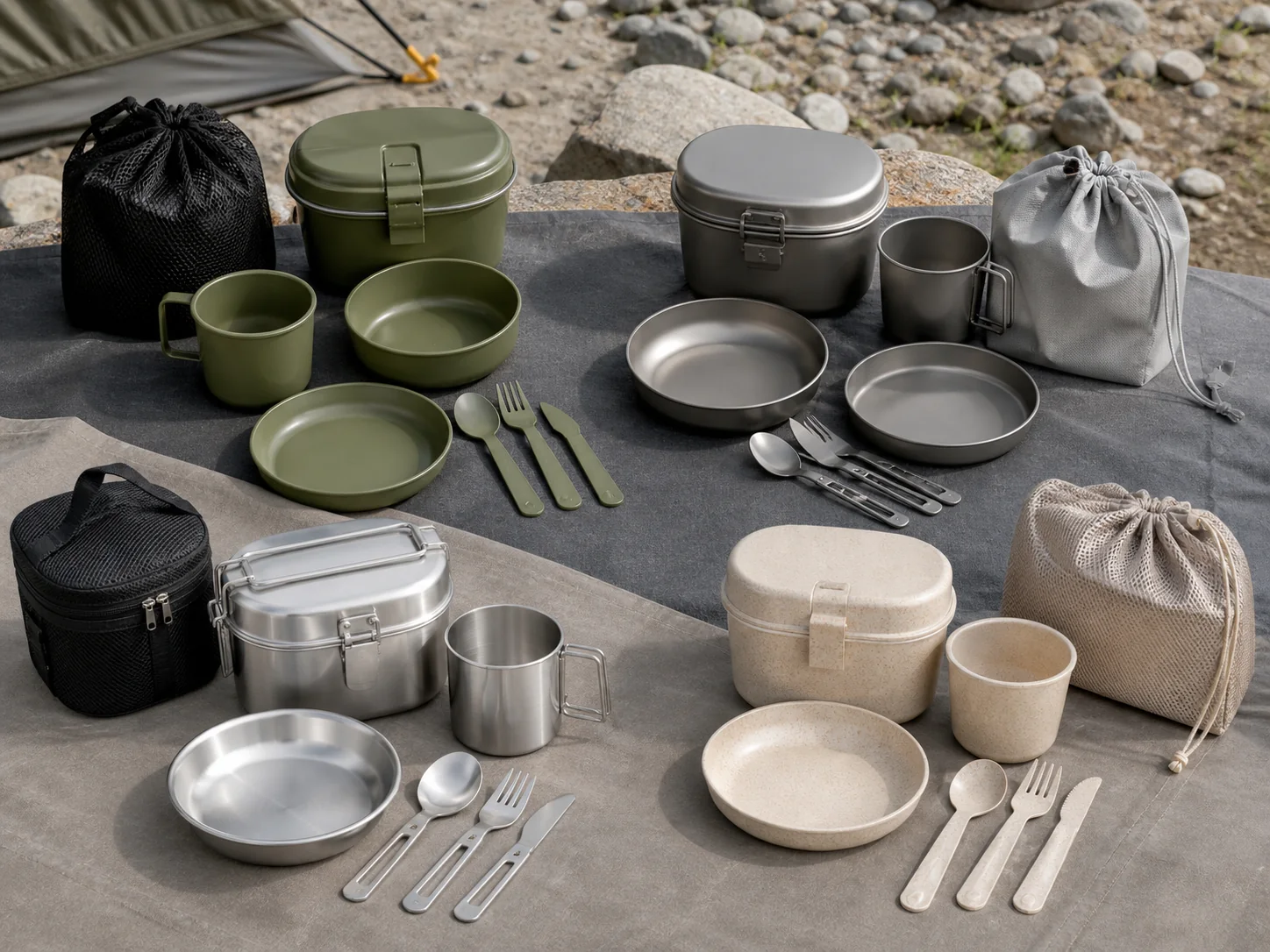
Choose the person count, component mix and storage method first, then confirm the material against target price, weight, durability and destination requirements.
Plate or shallow bowl, bowl, cup and cutlery arranged for individual camping, travel or promotional projects.
Paired components with nesting dimensions, separated cutlery and a compact carry case or fabric pouch.
20- or 24-piece concepts with replaceable components, color coding and handled storage options.
Explore camping dinnerware setsRound, deep, divided or rimmed formats selected for portion, stack height and intended meals.
Explore camping platesForks, spoons, knives and sporks supplied loose, sleeved or integrated into the main mess kit.
Hard cases, handled boxes or fabric bags configured around pack volume, shelf presentation and carry use.
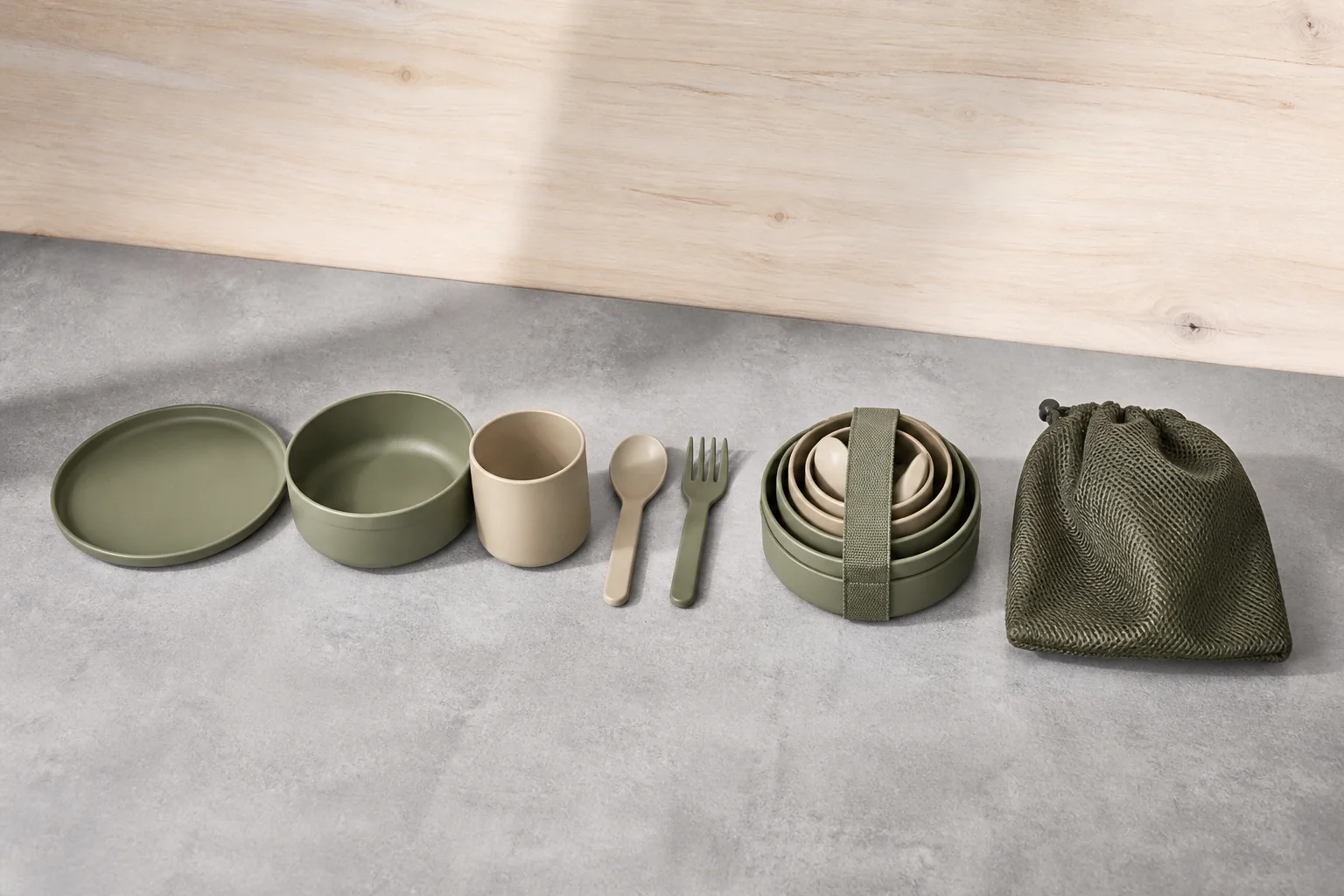
The four material routes are not interchangeable. Specifications, claims, testing and pricing must follow the actual product and destination.
Premium ultralight programs where buyers compare grade, thickness, unit weight, finish, corrosion resistance and nesting compatibility.
Durable camp dining for RV, glamping and retail programs, defined by steel grade, thickness, surface finish and construction.
A scalable route for nesting family sets, molded colors, replaceable pieces and cost-controlled private-label programs.
A PP-based composite considered only after the buyer confirms market acceptance and the complete formulation is documented.
A sourcing brief should define who uses the kit, how it is packed and what must fit inside before tooling or quotation begins.
Build around one, two or four users with a controlled component list and replacement-piece plan.
Confirm stack height, lid fit, rattle control, cutlery position and carry dimensions.
Combine plates, bowls, mugs, cups and utensils according to retail price and use case.
Select a hard case, handled box, drawstring pouch or zippered bag against target pack volume.
Use coordinated or person-specific colors subject to resin, finish, MOQ and color tolerance.
Review CAD, prototype, tooling, pilot samples and approval criteria for custom molded components.
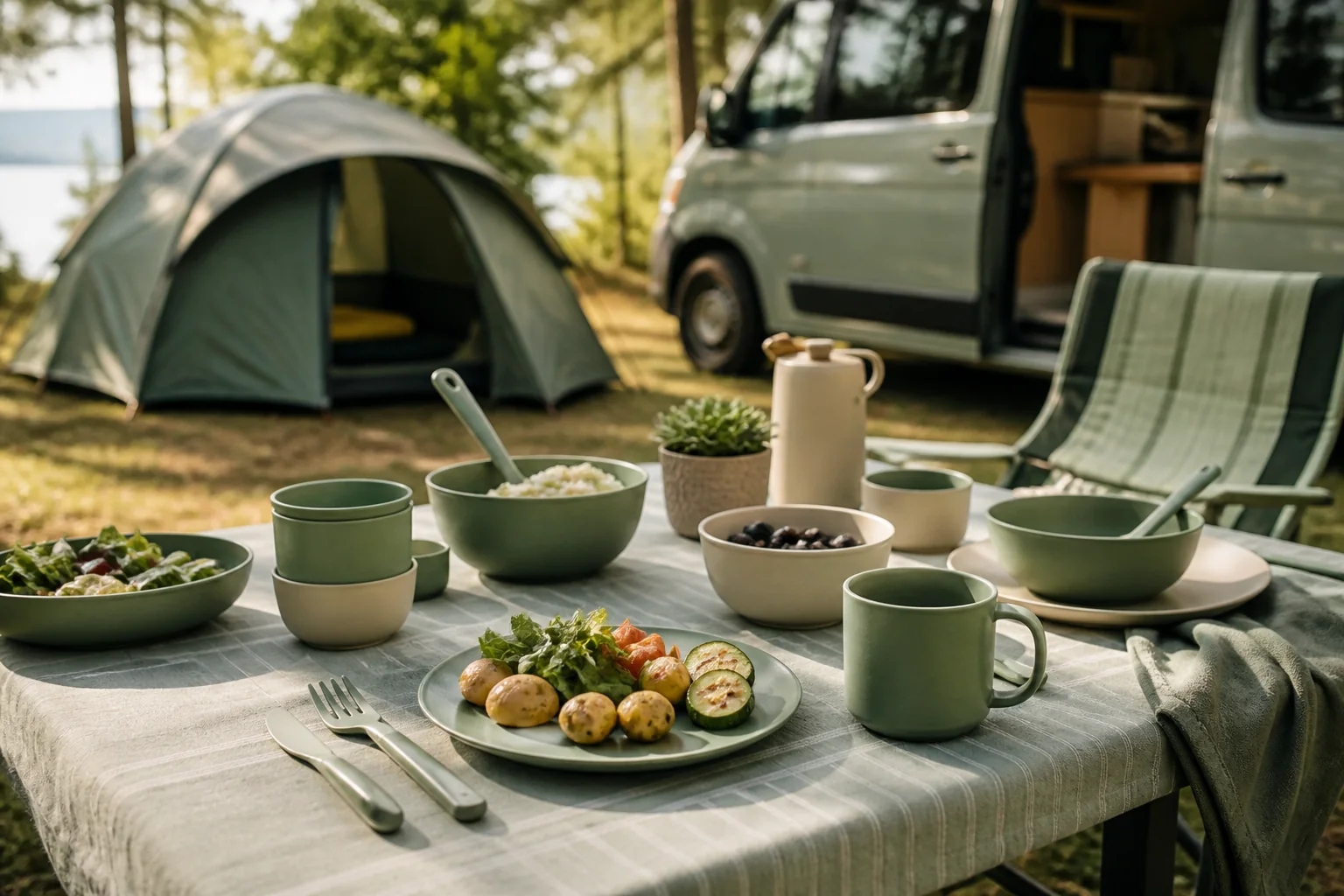
OEM and ODM support is organized as a controlled project rather than a generic logo application.
Brand execution depends on material, surface, order quantity, abrasion requirements and retail channel.
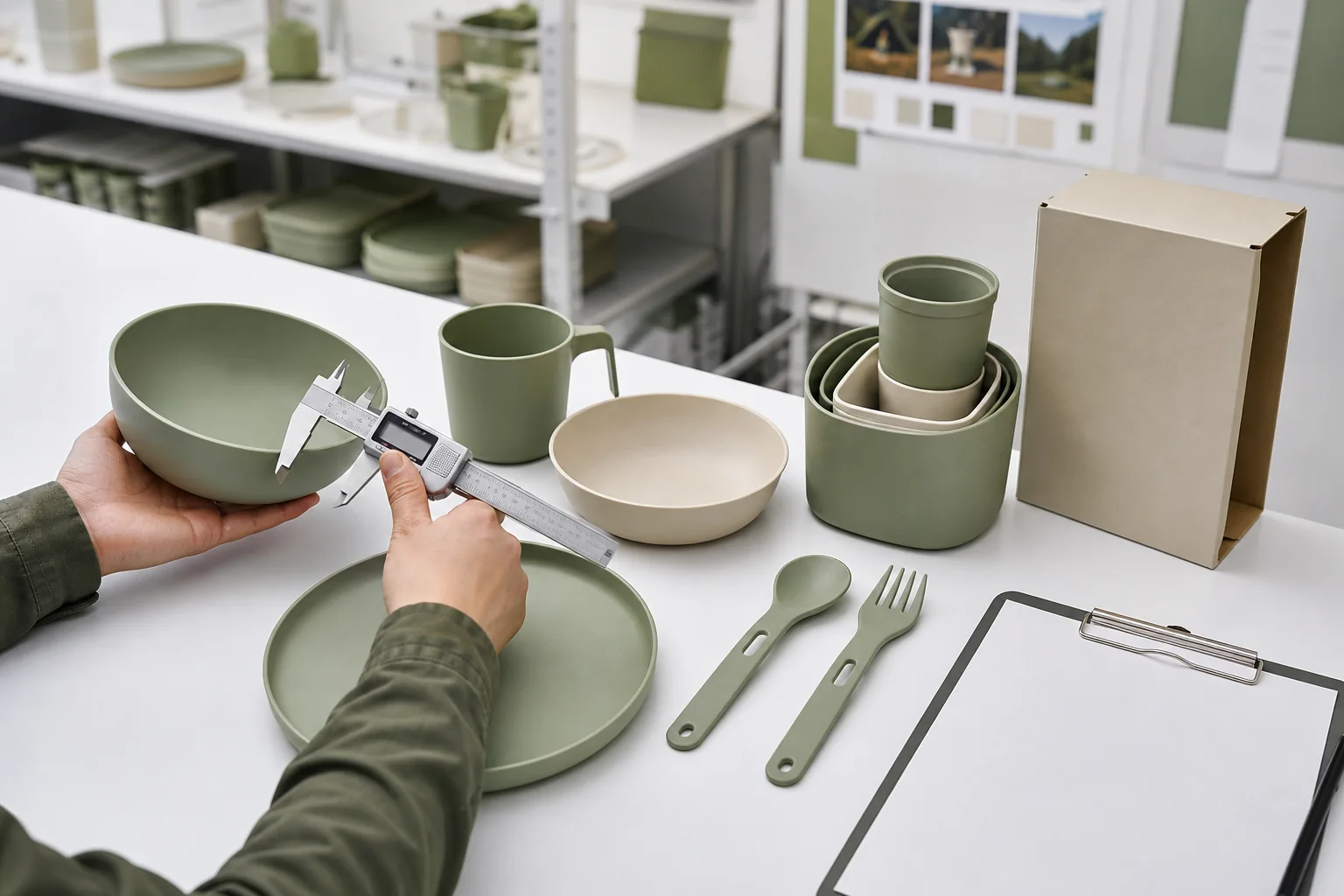
Testing is defined by material, destination, food type, contact time and temperature. A report for one SKU is not treated as universal evidence for every mess kit.
Confirm PP resin, composite formulation, titanium grade or stainless steel grade against the approved specification.
Record piece dimensions, capacity, thickness, unit weight, stack height and agreed tolerances.
Evaluate lid fit, nesting, handle operation, cutlery retention, sharp edges and component count.
Define temperature, impact, dishwasher or corrosion tests only where relevant to the actual product claim.
Confirm pack count, barcode, carton measurements, case fit and project-specific drop requirements.
Use approved samples, visual criteria, functional checks and an agreed AQL inspection plan.
Commercial terms depend on whether the project uses available components, custom color, custom packaging or new tooling.
A practical kit normally includes eating and drinking components plus portable utensils. The correct count depends on the user, meal type, storage volume and retail price.
PP suits many volume family programs, stainless steel supports durable camp dining, titanium serves premium ultralight buyers, and wheat-straw composite requires destination and formulation review.
Yes, when the chosen material and process support color matching. Color count, tolerance and MOQ must be confirmed before quotation.
Yes, provided dimensions, lid clearance, cutlery position and acceptable stack height are designed and sampled as one system.
Custom molding can follow a staged route covering product brief, CAD, prototype, tooling, pilot samples and approval before production.
The project must define destination, intended use and material first. Testing and documentation are then matched to the actual SKU rather than copied across unrelated products.
Send the person count, component list, preferred material, target market, quantity, logo, packaging and required delivery date.
B2B RFQ checklist
Mess kit quotations become comparable only when every supplier receives the same person count, component list, material specification, storage method and packaging brief.
Confirm 1-, 2- or 4-person use, pieces per set, replacement parts, nesting order and packed dimensions.
Provide logo artwork, color references, carry-case requirements, retail pack format, barcode data and carton limits.
Provide sample quantity, order forecast, launch date, target market, test scope and delivery terms for an actionable quotation.
Configuration workshop
A useful camping mess kit is not defined by a long component list. It is defined by the number of users, meal type, transport method, cleaning routine and target retail price. We start with those constraints, then select the plate, bowl, cup and utensil geometry that can nest without creating unnecessary pack volume.
One-person kits prioritize minimum packed size. Two-person kits balance shared components and individual place settings. Four-person kits need replaceable pieces and a storage system that remains easy to repack.
PP supports color programs and value retail; stainless steel supports robust repeated use; titanium targets weight-sensitive premium buyers; wheat-straw composite is reviewed only after formulation and destination-market requirements are confirmed.
We review stack height, lid retention, rattle control, wet-item ventilation, carry-handle load and the sequence in which customers return each item after use.
| Decision | What to specify | Why it matters |
|---|---|---|
| User count | 1, 2 or 4 people | Controls piece count and replacement strategy |
| Meal pattern | Dry meals, soup, hot drinks | Determines rim depth and cup capacity |
| Transport | Backpack, car, RV or retail gift | Sets the weight and pack-volume priority |
| Cleaning | Hand wash or validated dishwasher cycle | Guides finish and test plan |
For a wider product map, explore all outdoor tableware. Buyers comparing one material can review titanium, stainless steel, food-grade PP, or wheat-straw composite. Food-contact documentation should be matched to the finished article and destination market; the US FDA food-contact substances overview explains the regulatory context for the United States.