

Why More Brands Are Switching to Wheat Straw Tableware in 2026
In the past few years, something interesting has been happening across restaurants, retail shelves, and corporate supply chains.
More brands are switching from traditional plastic products to wheat straw tableware — and it’s not just about trends.
It’s about regulations, sustainability goals, consumer expectations, and long-term brand positioning.
If you’re sourcing eco-friendly tableware or exploring alternatives to plastic plates and cutlery, this shift is worth paying attention to.
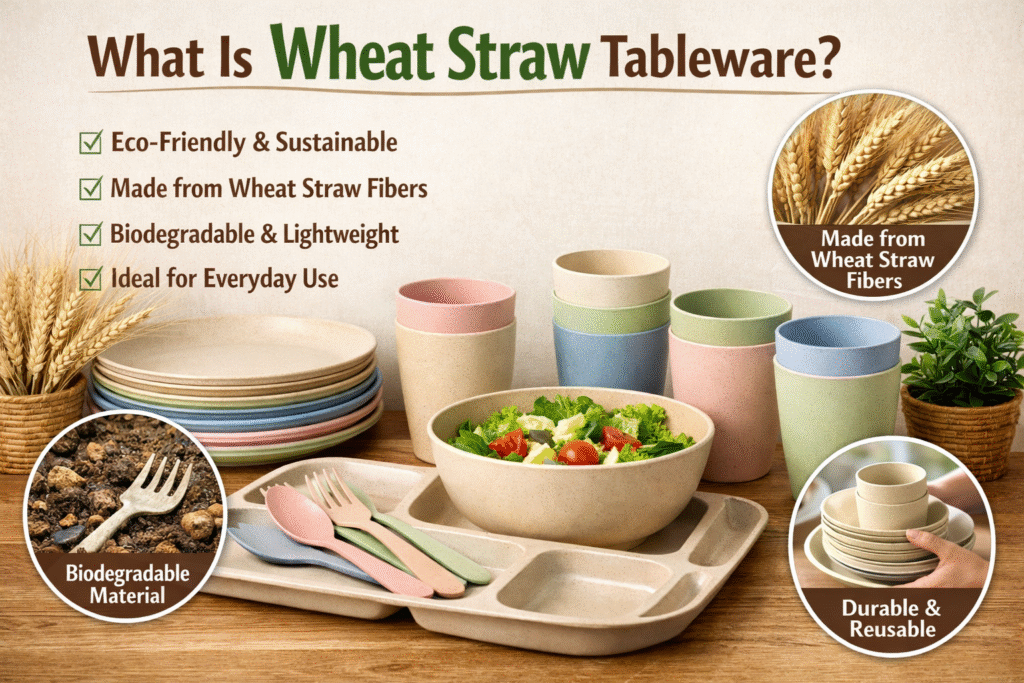
What Is Wheat Straw Tableware?
Wheat straw tableware is made from agricultural byproducts — specifically the stalks left over after wheat harvesting. Instead of burning or discarding this material, manufacturers combine wheat straw fiber with food-grade binders (typically PP) to create durable, reusable dinnerware.
Common products include:
Wheat straw plates
Wheat straw bowls
Wheat straw cups
Wheat straw cutlery sets
Custom wheat straw dinnerware
This makes it one of the most practical eco-friendly plastic alternatives currently available.
1️⃣ Global Plastic Reduction Policies Are Accelerating the Shift
One of the biggest drivers behind this transition is regulation.
Governments worldwide are implementing restrictions on single-use plastics. For example, the European Union’s Single-Use Plastics Directive has directly impacted the demand for alternative tableware solutions.
As a result, businesses must rethink their packaging and dining solutions — especially in:
Food service
Catering
Hospitality
Events
Retail
Switching to wheat straw tableware helps brands stay compliant while strengthening their sustainability messaging.
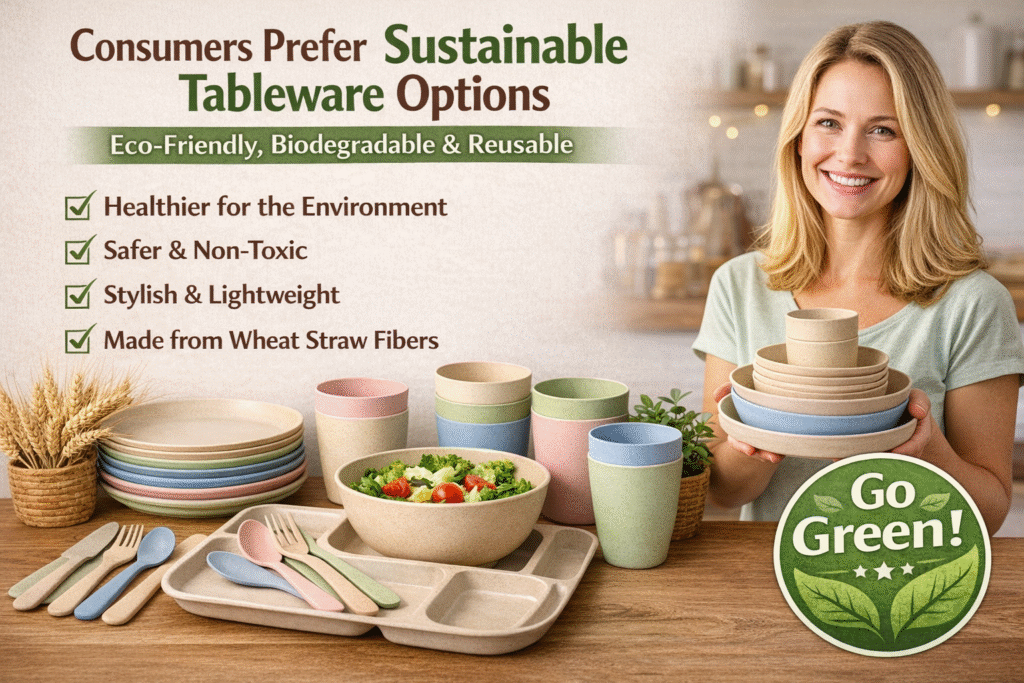
2️⃣ Consumers Prefer Sustainable Tableware Options
Today’s consumers care about environmental responsibility.
Multiple global sustainability surveys show that younger demographics and environmentally conscious buyers are willing to support brands that reduce plastic waste.
For brands, this means:
✔ Eco-friendly materials increase brand trust
✔ Sustainable packaging enhances perceived value
✔ Green products improve long-term customer loyalty
Wheat straw tableware gives companies a visible way to show environmental commitment without compromising functionality.
3️⃣ ESG and Corporate Sustainability Reporting
Environmental responsibility is no longer optional for many companies.
Public brands increasingly publish ESG (Environmental, Social, Governance) reports. Replacing plastic tableware with sustainable alternatives supports:
Carbon footprint reduction
Waste reduction goals
Responsible sourcing commitments
This makes wheat straw products not just an operational decision — but a strategic one.
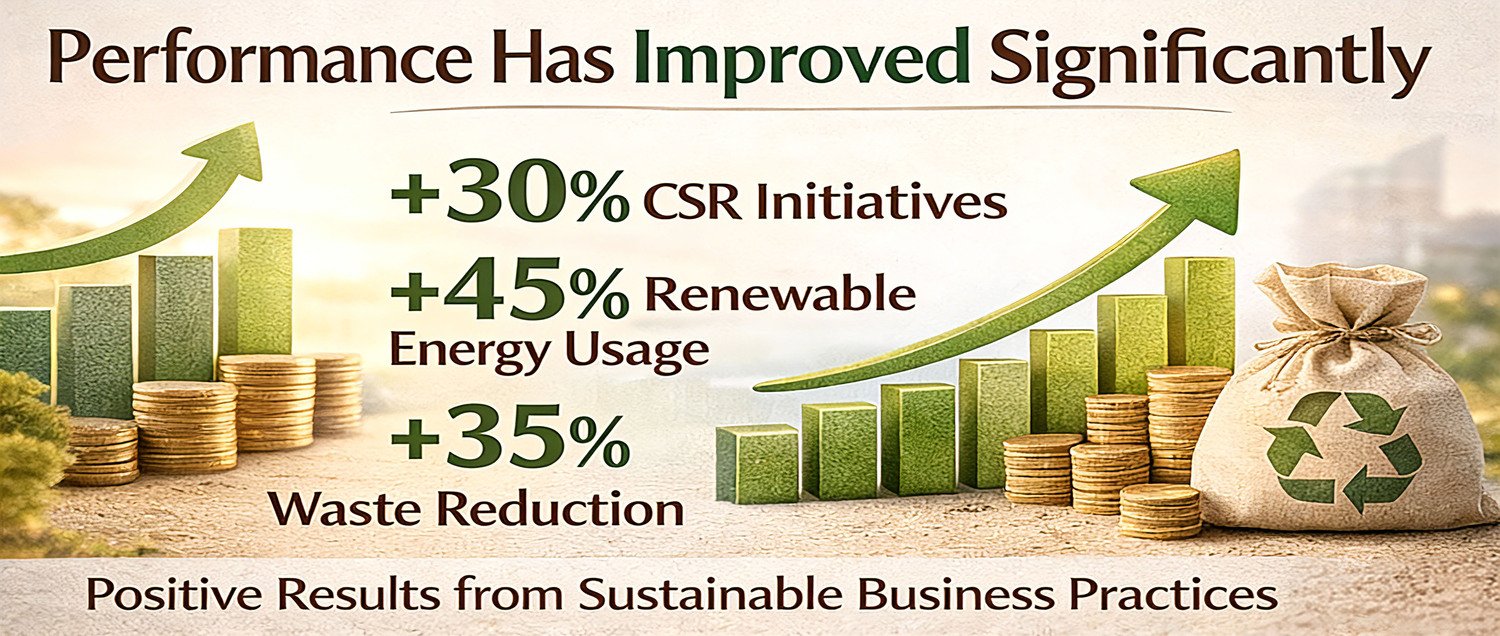
4️⃣ Performance Has Improved Significantly
A few years ago, eco-friendly alternatives sometimes lacked durability.
That’s no longer the case.
Modern wheat straw tableware now offers:
Strong structural integrity
Heat resistance (depending on formulation)
Dishwasher compatibility
Lightweight design
Reusable functionality
For many everyday use cases, it performs comparably to traditional plastic — but with a better environmental narrative.
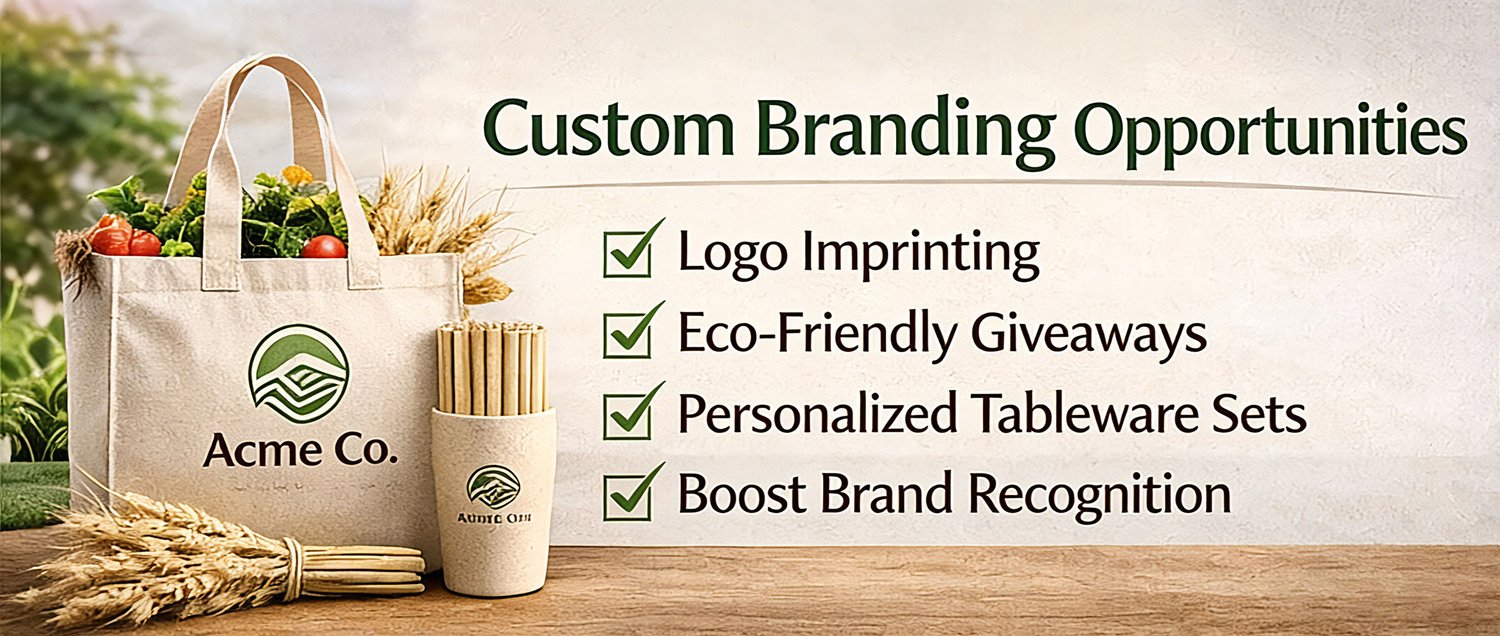
5️⃣ Custom Branding Opportunities
Another major reason brands are switching is customization.
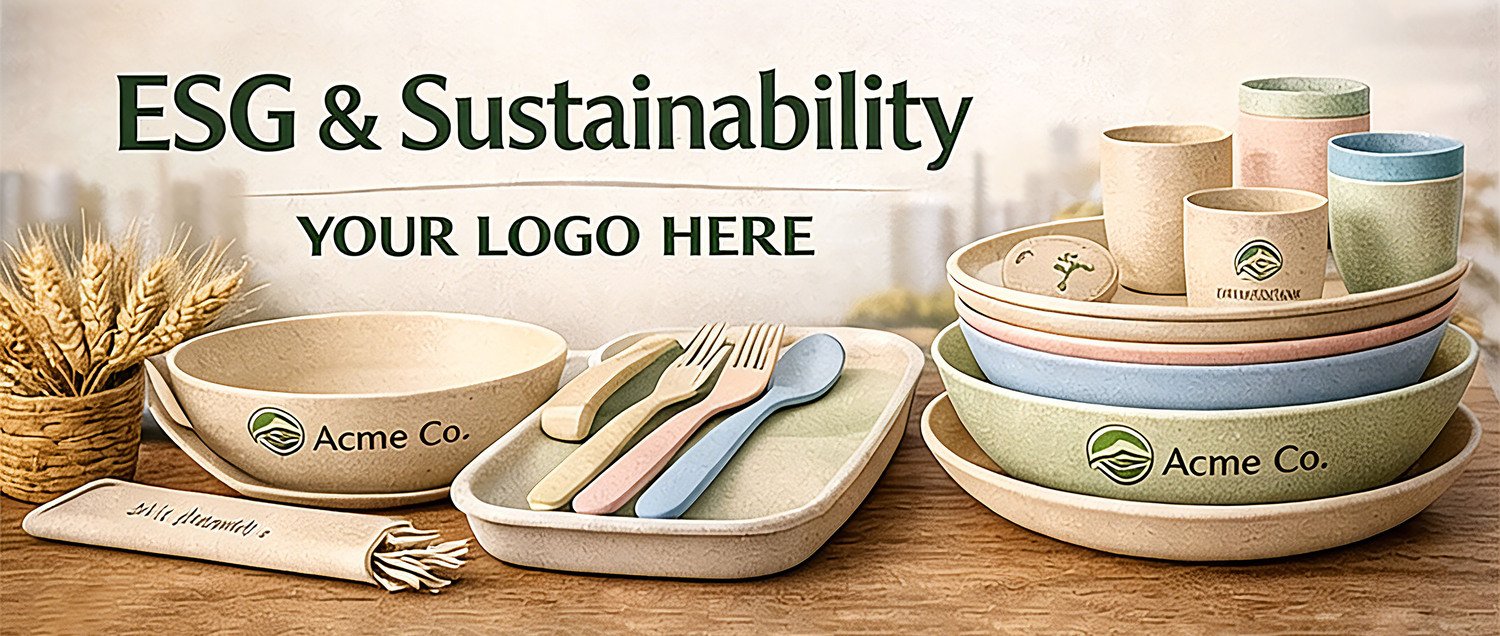
Unlike disposable plastics, wheat straw dinnerware can be:
Custom-colored (Pantone options)
Logo embossed or debossed
Private label packaged
Retail-ready boxed
This makes it ideal for:
Restaurant chains
Eco lifestyle brands
Promotional product companies
Corporate gift programs
Amazon private label sellers
The product becomes part of the brand story — not just a utility item.


6️⃣ Supply Chain Stability in Asia-Pacific
China and Southeast Asia currently dominate global wheat straw tableware manufacturing due to:
Abundant agricultural resources
Mature injection molding technology
Competitive production costs
Strong export experience
As global demand increases, more suppliers are improving quality control, certifications (FDA, LFGB), and customization flexibility — making sourcing easier for international buyers.
7️⃣ Cost Efficiency at Scale
While eco-friendly products used to carry a significant price premium, wheat straw tableware has become more cost-competitive.
For medium to large MOQ orders, the unit price difference between standard plastic and wheat straw products is shrinking — especially when factoring in:
Branding value
Regulatory compliance
Consumer preference
Long-term sustainability positioning
For many brands, the added value outweighs the slight cost increase.
Is Wheat Straw Tableware the Future?
The shift toward wheat straw tableware is not just a trend — it reflects deeper structural changes in:
Global environmental policy
Consumer purchasing behavior
Corporate responsibility standards
Sustainable manufacturing innovation
As we move further into 2026 and beyond, brands that adapt early are likely to benefit from stronger positioning and long-term customer trust.

Microwave Safety of Wheat Straw Dinnerware
Microwave Safety of Wheat Straw Dinnerware: Is It Safe to Use? When choosing eco-friendly tableware, one of the most common questions buyers ask is:👉 Is
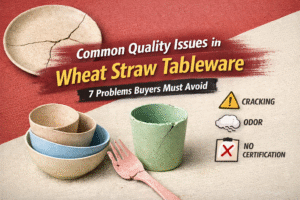
Common Quality Issues in Wheat Straw Tableware
Common Quality Issues in Wheat Straw Tableware: 7 Problems Buyers Must Avoid When sourcing eco-friendly products, many buyers focus on price and design—but overlook a
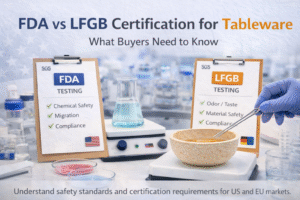
FDA vs LFGB Certification for Tableware
FDA vs LFGB Certification for Tableware: What Buyers Need to Know Understanding FDA vs LFGB certification for tableware is essential for global buyers.When sourcing tableware

Is Wheat Straw Dinnerware Safe
Is Wheat Straw Dinnerware Safe? A Deep Dive into Health Heat and Durability As eco-friendly products become more popular worldwide, many buyers are asking an

Cost Factors Buying Wheat Straw Dinnerware Set Wholesale
Cost Factors When Buying Wheat Straw Dinnerware Set: A Complete Guide for Importers Sourcing a premium Wheat Straw Dinnerware Set Wholesale is easy with Naike

Wholesale Wheat Straw Tableware: Complete Guide
Wholesale Wheat Straw Tableware: The Complete Guide to Sourcing from a Direct Manufacturer In the rapidly evolving market for sustainable household products, sourcing from a